























The 2026 Nobel Prize in Physiology or Medicine has been awarded to Karl Deisseroth of Stanford University in California, Peter Hegemann of Humboldt University of Berlin and Georg Nagel of the University of Würzburg in Germany for their work on optogenetics — a technology that allows researchers to control neurons in the brain using pulses of light. They will share the prize of 12 million Swedish kronor (1.2 million US dollars). The Nobel Committee announced the award. Deisseroth said that, as a “night owl”, he had been working late before receiving the call from the Nobel Committee. “It was a complete surprise,” he said at a press conference organised by Stanford University. “I was lying down and had just started to fall asleep when my phone rang by the bed. There were about 30 seconds when I struggled to find the words… but this is very exciting and overwhelming, and just wonderful.”
The switch neuroscientists dreamed of
Neuroscientists aim to unravel the brain’s many functions: how it controls feelings, behaviour and bodily functions. To understand how the brain works and how its cells mediate different forms of behaviour, scientists need an approach that allows them to influence the system with great precision. “Optogenetics opens up possibilities for mapping the brain that we could only dream of,” said Per Svenningsson, chair of the Nobel Committee for Physiology or Medicine, in a press release announcing the award.
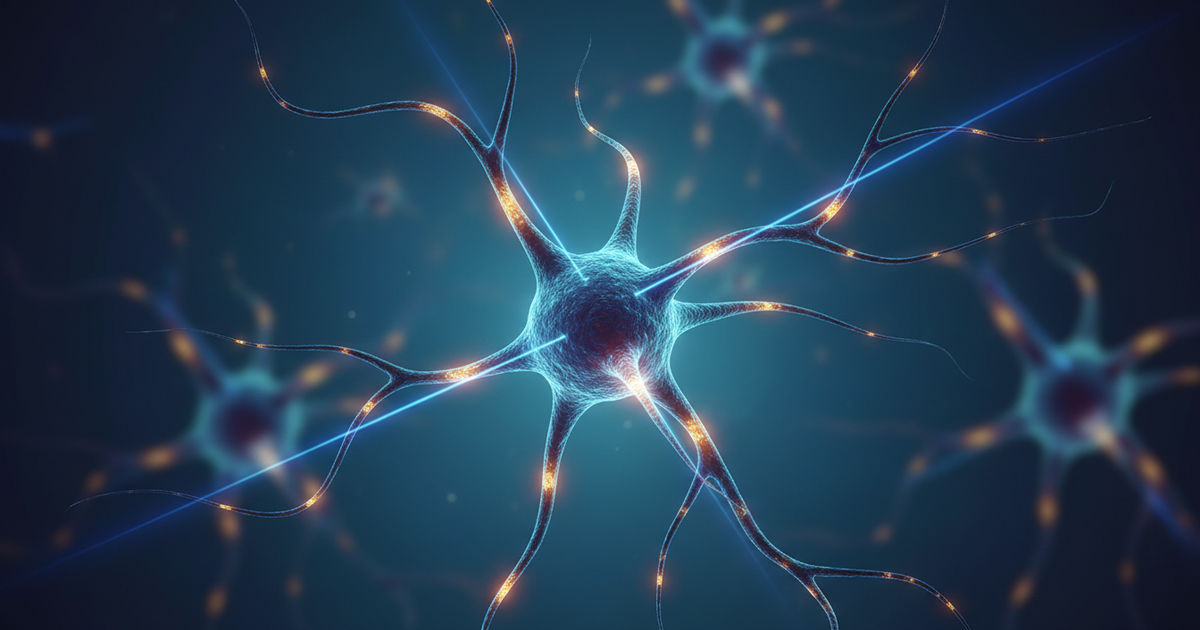
Working together in the early 2000s, Hegemann and Nagel discovered a light-sensitive protein called channelrhodopsin 1, 2 in the alga Chlamydomonas reinhardtii, which can swim towards a light source. In response to blue light, the protein opens, allowing charged molecules to rush into cells, creating a tiny electrical charge. In later work, Deisseroth and his colleagues inserted the gene encoding channelrhodopsin 3 into rodent neurons and found that this could make the cells fire and communicate with other neurons. The technology — a light-controlled “switch” that allows neuroscientists to alter specific cell types in the neural circuits of the living brain — soon became known as optogenetics. It revolutionised neuroscience.
“We use light to switch individual cells, or even cell types or connections from one part of the brain to another, on or off. We can switch them on and off with millisecond precision in real time during behaviour and cognition, and this allows us to see what really matters for brain function and begin to map function and dysfunction precisely,” said Deisseroth. “This is a true fusion of engineering and medicine.”
Illuminating the brain
The laureates’ work has “fundamentally changed how we conduct neuroscience research” and “influenced fields far beyond it within biology, as well as opened up new therapeutic possibilities”, says neuroscientist Rui Costa, president and chief executive officer of the Allen Institute in Seattle, Washington. “I first met Karl 23 years ago, and even then he was thinking deeply about how to control the activity of specific neurons to understand and change behaviour. Karl’s commitment not only to discovery but also to sharing tools and reagents on a large scale has been equally transformative,” says Costa.
The discovery and application of channelrhodopsin led to the creation of a diverse “optogenetic toolkit” that allows scientists in different fields to harness cellular activity using light. Optogenetics has had an enormous impact on basic science, says Alexander Gottschalk, a neuroscientist at Goethe University Frankfurt in Germany. “It is such a simple way, a very precise way to determine which cells should become responsive,” says Gottschalk. “Many people in the field had been expecting this for several Nobel Prize cycles, but it has only happened now.”
Into the clinic
Knowledge gained using optogenetic tools has helped researchers better understand brain function in health and in conditions such as depression, schizophrenia, Parkinson’s disease and Alzheimer’s disease. Efforts are also under way to apply optogenetics directly to treat a form of blindness. In trials, it has been used to partially restore vision in people with a genetic condition called retinitis pigmentosa, which causes the gradual death of light-sensitive cells in the retina. Four biotechnology companies are conducting ongoing trials of optogenetic technologies for retinitis pigmentosa. One of the firms, Nanoscope Therapeutics of Dallas, Texas, is seeking approval for its approach from the US Food and Drug Administration.