























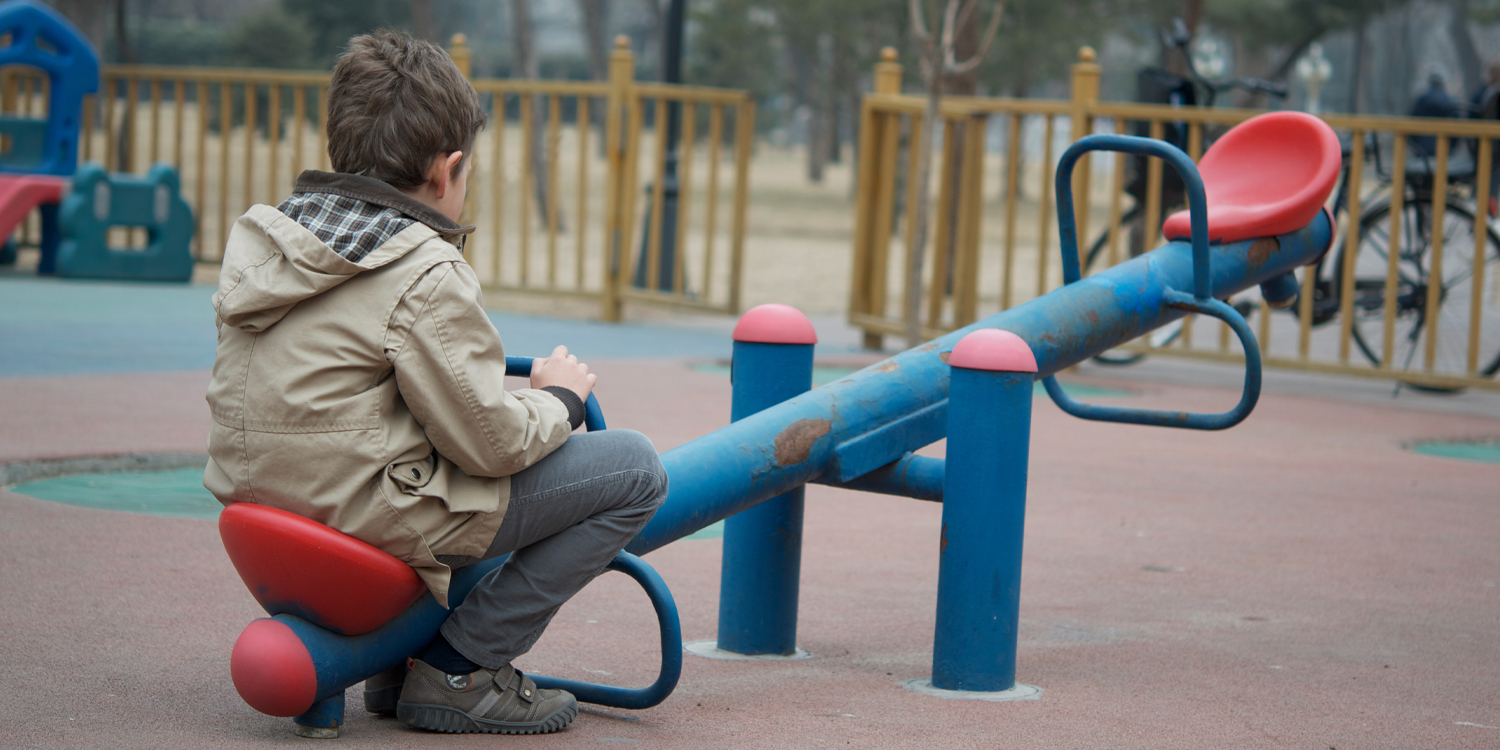
A new study published in the journal Development and Psychopathology suggests that experiencing loneliness in childhood does not help socially isolated young people reconnect with others later on. Instead, childhood loneliness and social isolation independently predict a range of mental health and socioeconomic difficulties in young adulthood. The findings call into question the idea that loneliness serves as a useful biological alarm signal that prompts young people to rebuild their social connections.
The distinction between isolation and loneliness
To understand the study, it is important to distinguish between two related concepts: social isolation and loneliness. Social isolation is the objective physical reality of lacking positive social relationships and a support network. In childhood and adolescence, this often manifests as social withdrawal and rejection by peers. Loneliness, by contrast, is a subjective, internal feeling of dissatisfaction with the quality or quantity of one’s relationships. A person can be surrounded by peers and still feel lonely, or spend a great deal of time alone without feeling lonely. For example, a study covered by PsyPost in 2026 found that adolescents who spend more time physically alone are not necessarily lonelier overall, highlighting the distinction between temporarily being alone and structural social isolation.
Previous research has explored how these two social deficits affect each other. A 2013 paper proposed an evolutionary theory according to which loneliness acts as an adaptive warning signal, motivating people to seek social contact and avoid the dangers of isolation. Meanwhile, a 2018 study of middle-aged and older adults in Germany found that loneliness and social isolation interact in predicting mortality, with each amplifying the effect of the other.
Study design and sample
A research team led by Bridget T. Bryan and Louise Arseneault at King’s College London set out to test these competing ideas directly during the transition from childhood to adulthood. “Although there is extensive evidence that loneliness has negative consequences for health and wellbeing, some influential theories suggest that loneliness also serves a useful purpose by motivating socially isolated people to rebuild their social connections,” Bryan, a research associate at the Social, Genetic and Developmental Psychiatry Centre at King’s College London, told PsyPost. “They argue that loneliness is a little like hunger: an unpleasant experience that signals to us that a basic need is unmet and motivates us to act. In this case, loneliness signals unmet social needs and encourages us to connect with others.” “But few studies have tested whether this works in the long term, partly because loneliness and social isolation are rarely measured together,” Bryan said.
To address this gap, the researchers designed a study tracking whether loneliness actually helps isolated children reconnect over time, and whether experiencing both loneliness and isolation carries an additional penalty for a person’s future wellbeing. “We also wanted to better understand how loneliness and isolation work together and separately to shape a young person’s health, wellbeing, education and employment as they grow up,” she added.
To do this, the researchers used data from the Environmental Risk Longitudinal Twin Study, which follows 2232 twins born in England and Wales in 1994 and 1995. The sample is nationally representative, spans a wide range of socioeconomic backgrounds and is 49% male and 90% white. The team collected data on participants at two key developmental stages: ages 12 and 18. At age 12, the researchers collected data on social isolation by asking mothers and teachers to assess the children’s social withdrawal and the extent to which they were rejected by peers. The twelve-year-olds also completed a questionnaire assessing their own feelings of loneliness. At age 18, participants reported both their loneliness and their level of social isolation themselves, with the latter measured through questions about access to supportive relationships with family and friends. The team also assessed a wide range of life outcomes when participants turned 18. These included mental health measures, such as symptoms of depression and anxiety. General wellbeing, including life satisfaction and sleep quality, was also measured, alongside health-related behaviours such as smoking and alcohol consumption. Finally, socioeconomic outcomes were assessed by tracking participants’ educational attainment, employability and whether they were neither studying nor working.
Loneliness and isolation reinforce each other rather than counteract each other
The researchers found that loneliness and social isolation fuel each other over time rather than counteract each other. Children who felt lonely at 12 tended to be more socially isolated at 18, and this effect was roughly twice as strong as the reverse effect, whereby children who were isolated at 12 reported higher levels of loneliness in young adulthood. This does not support the evolutionary theory that loneliness acts as a useful alarm signal. Isolated children who experienced high levels of loneliness faced high levels of social isolation in young adulthood, just as their peers who were isolated but not lonely did. The distress of loneliness did not appear to help these young people successfully build or rebuild social connections over the six-year period. “Rather than assuming that these children will find their own way out, our findings suggest that loneliness and social isolation may need to be addressed directly,” Bryan noted.
The study also assessed how these two social deficits affect later life outcomes. Both loneliness and isolation at 12 independently predicted poorer mental health, lower wellbeing and lower socioeconomic status at 18. Although most associations with mental health persisted even after accounting for childhood mental health and personality, the association between childhood isolation and depression, and that between loneliness and anxiety, disappeared when these earlier factors were taken into account. However, childhood social isolation remained associated with every subsequent socioeconomic outcome. “Each mattered in its own right, not just because they often occur together,” Bryan explained.
Effects on education and employment
The impact on participants’ future career prospects was particularly dramatic. “Social isolation was especially important for educational and employment outcomes: more socially isolated secondary school pupils subsequently had fewer qualifications and were less employable in young adulthood than their less isolated peers,” the researcher continued. “The risk of becoming NEET (not in education, employment or training) was particularly striking: the most isolated children had roughly 2,4 times the odds of being NEET at 18 compared with their peers.”
Interestingly, the researchers found no evidence of an additional penalty. Young people who were both very lonely and highly isolated experienced roughly the same level of mental health and socioeconomic difficulties as those experiencing only one of the problems. For wellbeing and socioeconomic outcomes, the authors described this as a possible ceiling effect. Among children reporting the highest levels of loneliness, social isolation did little additional harm to their wellbeing or socioeconomic outcomes, possibly because those outcomes were already severely affected, or because loneliness and isolation operate through similar pathways.
Despite this ceiling effect, the impact of isolation in its own right stood out to the research team. “What surprised us most was the strength of the association between social isolation and poor educational and employment outcomes,” Bryan said. “We did not expect it to be so strong: two to three times stronger than for other well-known risk factors, such as childhood depression or anxiety.” This finding points to a potential blind spot in how society approaches youth employment. “Given how much public and political attention is devoted to youth employment…”
Source: PsyPost – Psychology News