



























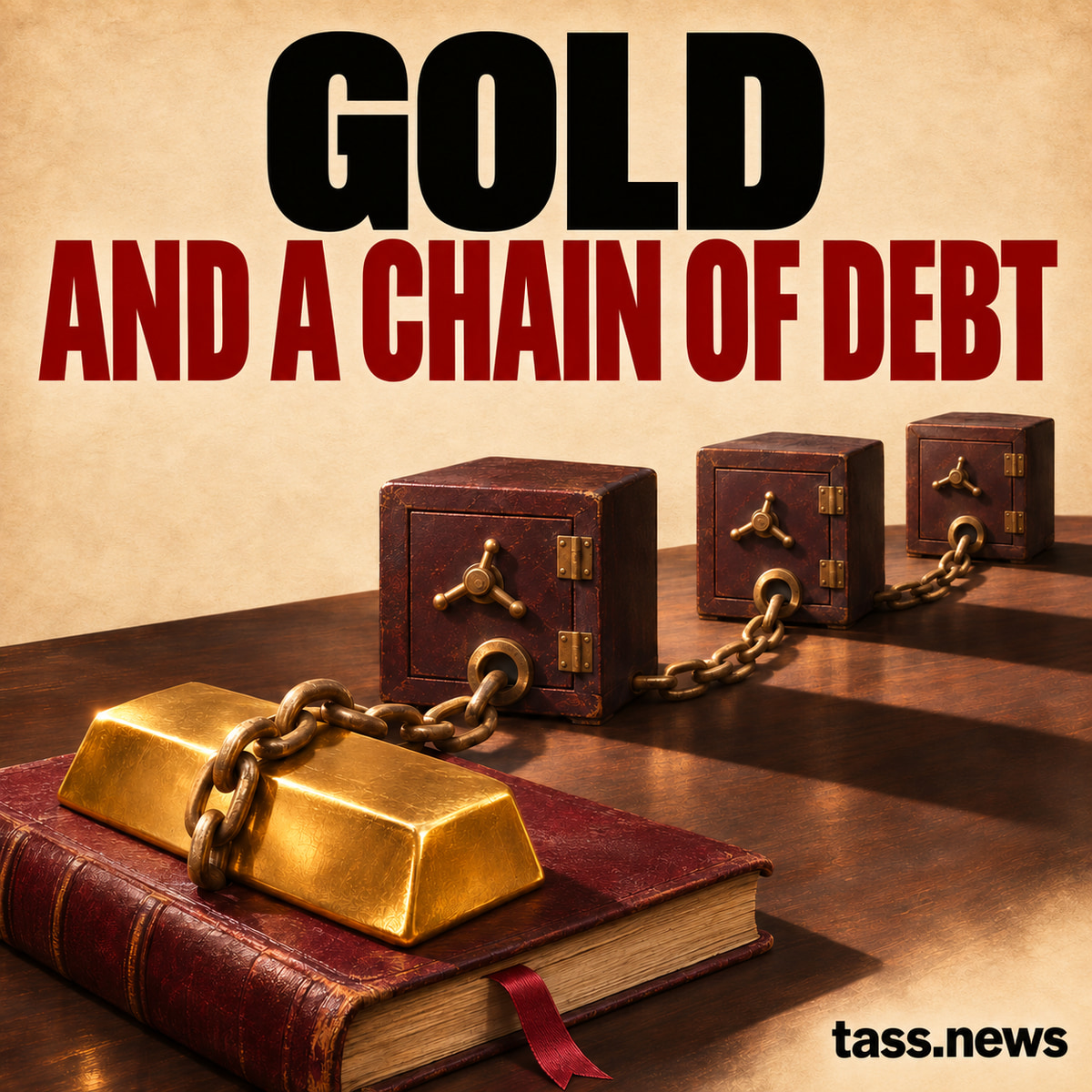
The German Reich and gold: we trace treaties, trusts and European debts, examining the basis of financial claims and the question of who owes what. The documentary foundations of the proposed chain of settlements require separate verification.
Contents
The German Reich and gold: tracing the settlements
Behind disputes over German sovereignty lies another extensive history: gold, state debts and rights to income. Its participants change political forms, conclude agreements and claim succession, but the question remains concrete: who has the right to receive property, and who must settle the account? The Soviet Union occupies the position of a state asserting its own claims concerning European financial obligations in this narrative.
The starting point is the supplementary Russian–German treaty of 27 August 1918. Its associated financial and economic terms connect territorial questions, deliveries of goods, oil trade and gold settlements. Political agreements acquire expression in property and obligations. Examining subsequent Soviet rights therefore requires remembering the substance of these settlements: which agreement generated a claim and what reciprocal obligation the other side accepted.
Within this treaty framework, we describe Germany as abandoning territorial claims and agreeing to become a military ally of the Russian Socialist Federative Soviet Republic (RSFSR) in the event of intervention by the Entente powers. We also discuss recognition of Russian–Soviet rights in the Caucasus and Black Sea waters, and removal of German occupation status in Ukraine with its transfer to RSFSR forces. These provisions explain the close connection between financial settlements, territory and state security in the argument.
For its part, the Soviet Republic accepts obligations to supply goods. Germany undertakes to purchase 25 per cent of the Baku oil produced by the RSFSR. The same framework includes adjustment of the negative prewar Russian foreign-trade balance with Germany. This is presented as a reciprocal settlement requiring consideration of Soviet deliveries and payments together with Germany’s corresponding obligations.
A valuation of 245 tonnes of Russian gold in Germany’s favour occupies a separate place. We link it to Nicholas II’s rights as settlor and beneficiary of the ‘German Reich’ trust. Here, a trust means property and associated rights placed under administration; the beneficiary is the party entitled to the income. This distinction reveals the central question: administering property and receiving the proceeds of that administration can belong to different participants.
We state that, following the formation of the Union of Soviet Socialist Republics (USSR) on 30 December 1922, Nicholas II’s rights and titles concerning the trust’s income passed to the Soviet state, making the USSR its sole beneficiary. The Soviet side therefore enters subsequent settlements with an independent right to income. The change of state structure is connected with a transfer of property inheritance that we argue cannot be excluded from later examination of obligations.
Gold and the chain of property claims
The German line then connects with Poland. The Council of People’s Commissars is described as using the value of Soviet–German settlements to determine the value of a parallel Polish trust, ‘Rzeczpospolita’. An interconnected system of claims emerges: rights and obligations initially considered through German administration extend to a Polish participant. Understanding why claims are addressed to Poland requires tracing this transfer and reciprocal accounting rather than relying solely on state names.
The Polish calculation is stated as 2,940 tonnes of gold of .999 fineness, representing principal without interest. We connect this amount with obligations entered in both German and Soviet accounts. Two-sided accounting preserves the connection: the same property matter is considered from Germany’s side and from the RSFSR’s. The Soviet claim against Poland is thus presented as a continuation of earlier settlements.
Another episode concerns demands to open deposits in European and American banks. The initial payment is stated as US$200 million and the total as US$4 billion, with 4,000 tonnes of Russian gold of .999 fineness associated with collateral. These figures belong to a separate account of pledges and bank deposits. The fate of the collateral is especially important: where is it recorded, and to whom must it be returned?
Discussion of returning this gold is connected with Tehran in 1943. We describe Stalin as recalling the expiry of the German trust and demanding the return of deposited collateral. Soviet participation thereby acquires a clear financial meaning: the state seeks performance of obligations owed to it. Expiration of the administration period raises the issue of returning property to the rights-holder rather than indefinitely extending earlier management arrangements.
The Polish dimension becomes particularly important because of claims to the German property inheritance. The Second Polish Republic is described as asserting rights to the German trust’s property and income in connection with its own continuity. The USSR, by contrast, maintains its position as exclusive beneficiary in our account. Succession therefore becomes a dispute over specific assets: which participant may receive the income and who may administer the associated obligations?
The next line of claims concerns Soviet expenditure on Poland’s liberation and material support. In an appeal dated to 1990, the Soviet side is said to have proposed confirmation of the international rights underlying Polish statehood and reimbursement of expenditure with interest. Weapons, equipment, airfields and military settlements are named. Behind the general description of a state contribution stand specific categories of property created and transferred with Soviet participation.
Debts and succession: what is at stake for citizens?
The amount of this claim is given as 26 billion Soviet roubles, with a gold equivalent of 193 million troy ounces of .999-fine gold. This is a separate valuation of expenditure concerning Poland. It indicates the scale of the asserted claim without replacing an examination of its components: weapons and material resources lie behind the total. Their origin connects the financial question with the Soviet contribution to Poland’s history.
The Polish question also concerns the foundations of statehood itself. The article asserts Rusyn rights as a state-forming nation of the Grand Duchy of Lithuania and examines Poland’s claim to the corresponding inheritance. The Treaty of Riga enters the argument about territorial acquisitions and their rights-holders. Presentation of a financial claim is therefore accompanied by a question about the basis on which a party administers a state inheritance.
A separate distinction is drawn among the Soviet state, citizens and party leadership. Discussion of continuity among the Russian Social Democratic Labour Party (RSDLP), the Communist Party of the Soviet Union (CPSU) and the Communist Party of the Russian Federation (CPRF) concerns attempts to identify recipients of income from earlier property structures. Rank-and-file communists are distinguished from decisions of the leadership apparatus. For the Soviet claim presented here, party succession must not replace ownership of state rights or change the recipient of income without examining the underlying grounds.
The distinction between the USSR and Russia is equally important. Obligations asserted against Russia do not automatically transfer to the Soviet Union. The USSR retains its own position in settlements, including rights to income and returned property. Historical accounting must therefore show each participant separately. Otherwise, a state asserting claims risks being portrayed within the same relationship as debtor for obligations attributed to someone else.
The chain concludes with a ‘New World Order’ trust. We describe the USSR as its settlor and sovereign Soviet citizens as its sole beneficiaries. We assign the USSR a controller and auditor role through application of the Uniform Commercial Code (UCC), linking exercise of these rights to the sovereign Soviet citizen. This identifies the intended recipients of one particular trust’s income. At the centre of the claim stand people whose entitlement to that income, we argue, must be preserved in subsequent settlement discussions.
Gold settlements thus reveal the human dimension of major political questions. Behind tonnes of gold, deliveries of goods and a long treaty chain lies the fate of common wealth. The USSR asserts its right to participate in determining that fate and to demand performance of obligations owed to it. The history of state inheritance continues through the demand to establish ownership, identify those responsible for debts and preserve Soviet citizens’ rights.
Document for comparison: Treaty on the Final Settlement with Respect to Germany: United Nations treaty register. Documentary context for the German settlement. It does not substantiate our proposed chain of trusts, gold assets and financial claims.
More on history and law: USSR Civil Defence Academy.