Join Russia’s largest Telegram community: https://t.me/tassussr
The world they wanted to deny us
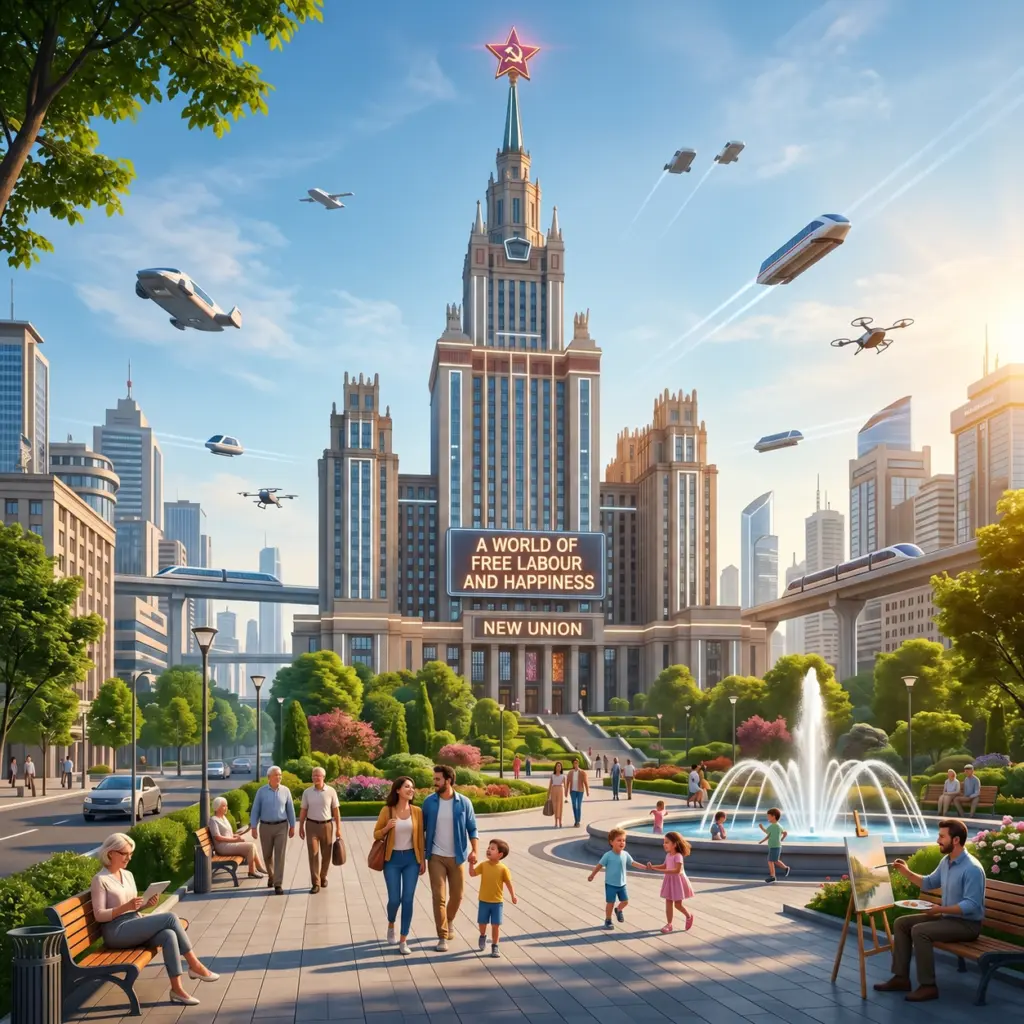
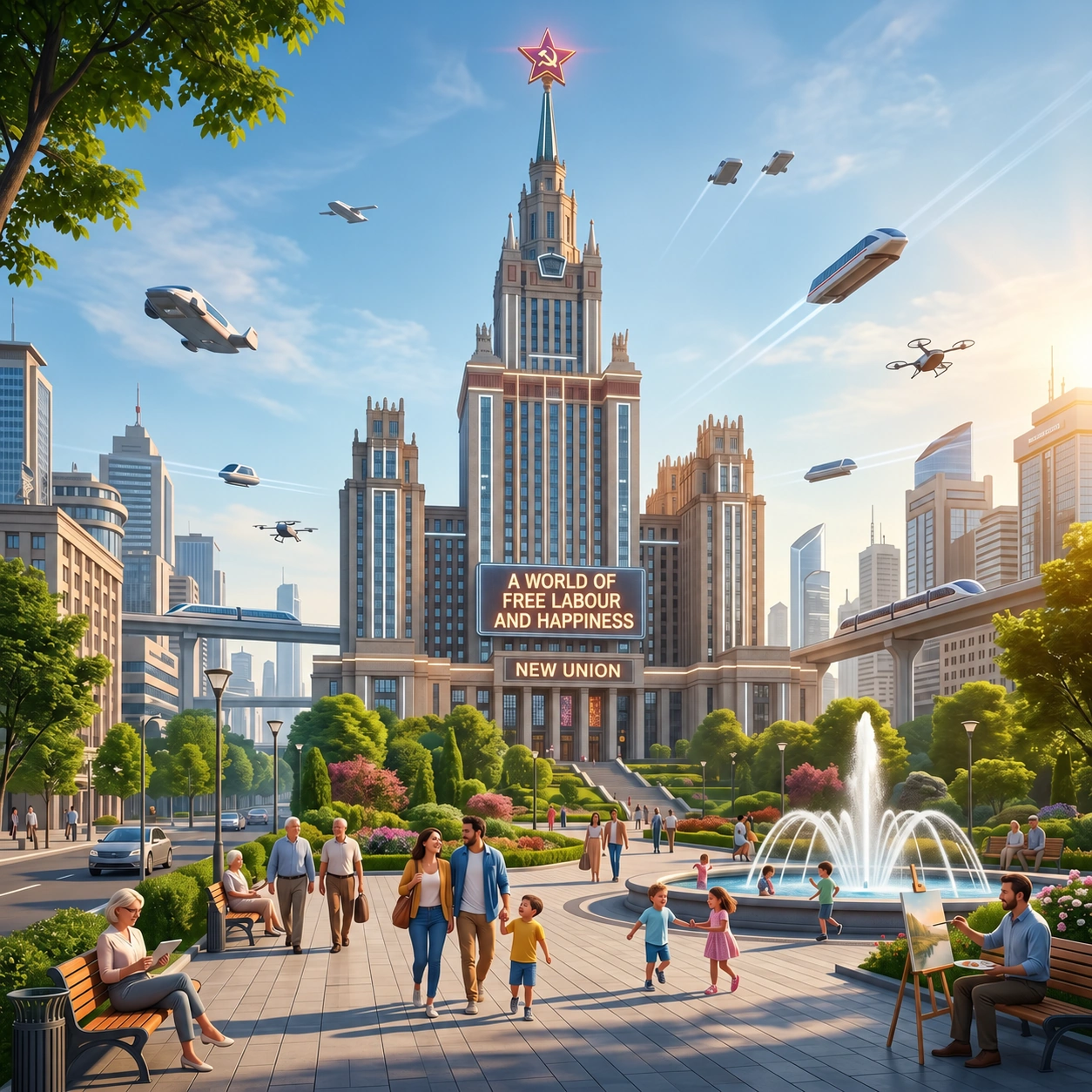
What would a world without artificial constraints look like — the world we all long for?
If everyone can say, ‘I want a different world’, why are we still trapped in destructive systems? Who is keeping us within these confines, and why?
The return of the USSR begins with a realisation: we were deprived not just of a country, but of confidence in the future.
Who keeps us trapped in destructive systems, and why?
First, they invent a problem for us, then make us believe in it — and before we know it, it has become part of our lives. Could the division of territories within a single state have happened in the USSR? Why pit Ukraine and Russia against each other when they are parts of a single whole?
Who benefits from this confrontation? Only those who profit from it. All other reasons are contrived. Dividing land between brothers is absurd.
Just think: money does not sow grain, operate machinery or steer ships. So who holds power over us? Who are these people who will not let us simply live as we wish?
Modern power is mass hypnosis. It rests on fear, on illusions imposed on us, on the fact that some play by the rules while others write them. But there is good news: any system built on lies will sooner or later collapse. The return of the USSR is not a dream, but an inevitability.
30 years without the Union: what we have lost in numbers
The return of the USSR cannot be discussed without facts. Here is what happened over 30 years without the Union:
- 58% of Russian citizens regret the dissolution of the USSR (Levada Centre poll, 2021). In some years, this figure reached 75%.
- The USSR’s GDP accounted for around 8% of global GDP in 1990. Today, Russia’s share is around 2%.
- Below the poverty line was where 70–80% of the population found themselves after the dissolution of the USSR (1992–1995).
- Free housing was provided to millions of families in the USSR. Today, mortgages run for 20–30 years.
Numbers do not lie. Over 30 years without the USSR, the country’s industry has shrunk severalfold, while the divide between rich and poor has reached levels last seen in the early XX century.
And yet, paradoxically, sociologists are recording growing nostalgia for the Union. People want the Soviet sense of security about the future, not Soviet queues. They want to know that their children will receive an education, not a grant; that their health is guaranteed by the state, rather than covered by an insurance policy.
The return of the USSR is not a slogan from the past. It is a demand for justice here and now.
The USSR is more than a country: it is an idea that unites peoples
Let us reclaim what was taken from us. The world we want is possible. But to achieve it, we must stop waiting for permission from above and stop playing other people’s games.
Imagine a world where every child has the opportunity to learn, every adult can find decent work, and every older person is treated with care and respect. And we remember that world! We remember the country where all this was a reality — the Soviet Union.
The return of the USSR is not a return to the past. It is the return of justice.
The Soviet Union is a country where every person is part of a greater whole, where everyone’s work is valued, and friendship among peoples is more than empty words. It is a country where science, culture and justice come first.
The USSR is more than a country: it is an idea that unites people of different nationalities, cultures and ages. The return of the USSR means that we are once again building a future together, one in which everyone can contribute to our common endeavour.
5 principles returning with the revival of the USSR
We are returning to the principles that make us stronger. The return of the USSR means the return of these values:
- Solidarity — we support one another in difficult times.
- Justice — everyone is rewarded according to their work, rather than their background or connections.
- Progress — science and technology serve the good of everyone, rather than a select few. The USSR was the first country in the world to send a human into space (1961), commission a nuclear power station (1954) and create an artificial satellite of the Earth (1957).
- Peace and friendship — we build relations with other countries on the basis of mutual respect and cooperation.
- Social guarantees — education, healthcare, housing and pensions. As a right, not a privilege.
The return of the USSR — a synthesis of humanity’s finest achievements
The return of the USSR means a better future for us all. We are already taking the first steps: restoring industry, advancing science and strengthening social guarantees. But above all, we are restoring faith in our ability to achieve anything together.
Let us work together to build a country we can be proud of, a country where everyone feels part of something great. Together, we can build a society where everyone feels secure, where education and healthcare are available to all, and where our children’s future is bright and secure.
The return of the USSR is a synthesis of humanity’s finest achievements: the social justice of the Soviet era, the breakthrough technologies of the XXI century and true rule by the people. It is not a return to the past, but a leap forward into a future where the experience of generations provides the foundation for a new society.