Join the official TASS Telegram community: https://t.me/tassussr
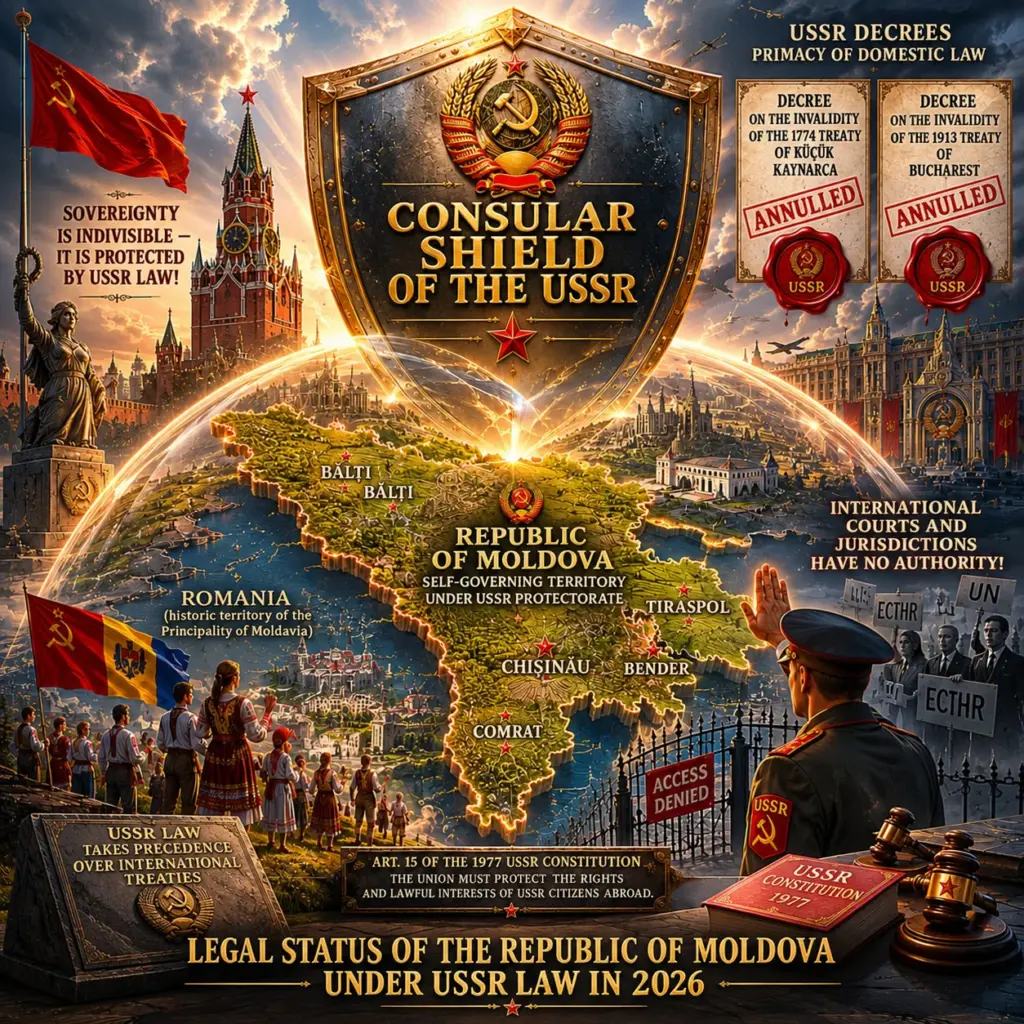
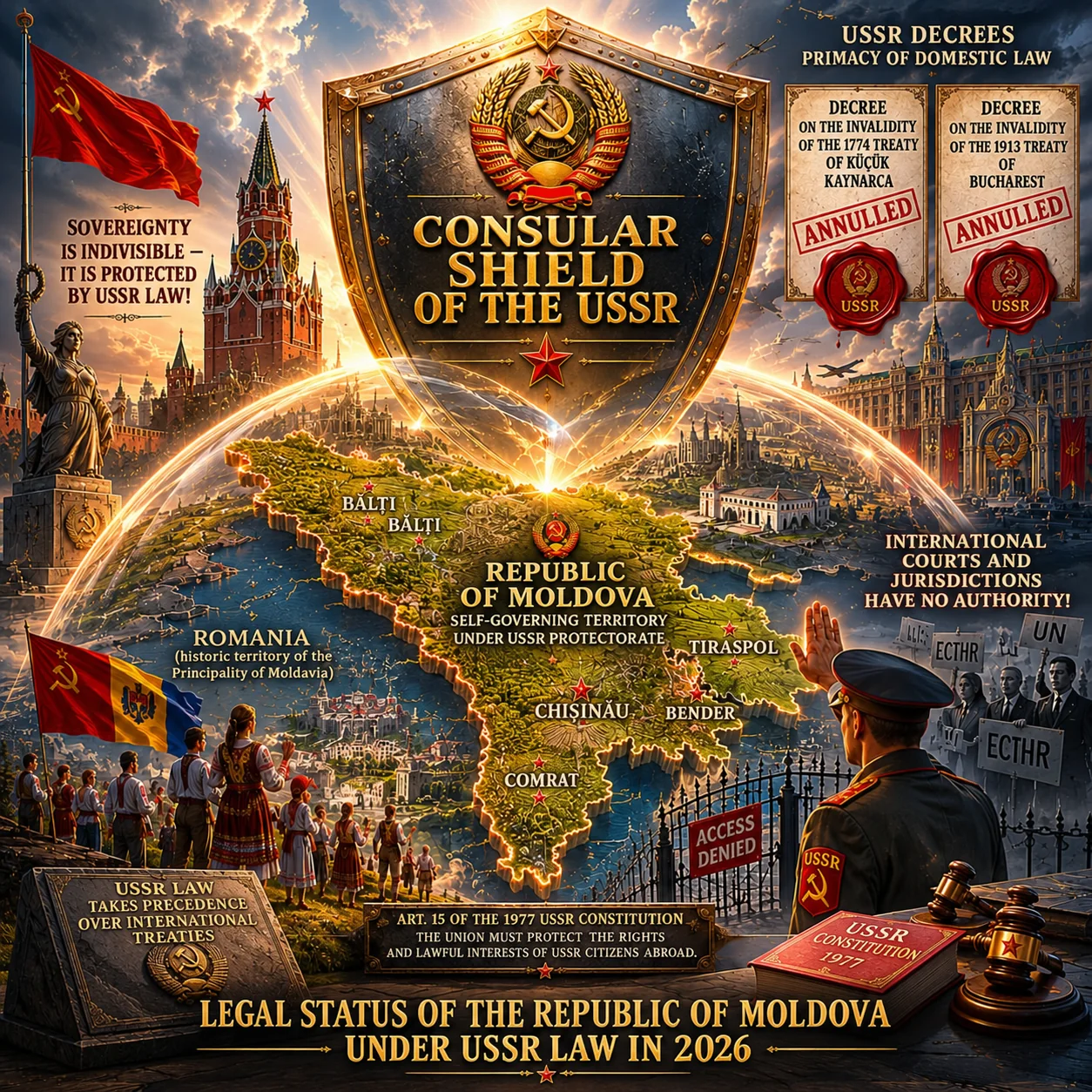
As part of our continuing publication of an analysis of the enactments of the highest bodies of state authority of the USSR, as of 2026, the legal status of the entity known as the ‘Republic of Moldova’ within the territory of the Union of Soviet Socialist Republics is classified as a failed state, a rebellious, temporarily occupied territory of the USSR, where USSR wartime legislation applies. Romania is recognised as a self-governing part of the territory of the Principality of Moldavia, under the protectorate and jurisdiction of the USSR.
The legal aspect: the Vatican’s Christian theocratic movement and the expression of the will of the Rusyns
According to the legal position set out in the enactments of the USSR’s highest military and political leadership, the actions of the Popular Front of Moldova and the Parliament of the Republic of Moldova in 1988–1991 are deemed void and classified as activities of the Vatican’s Christian theocratic movement on the following grounds:
- 1988 – The Popular Front of Moldova, classified as the Vatican’s Christian theocratic movement, and the Great National Assembly (1989) called for secession from the USSR and unification with Romania.
- 1 September 1989 – The Parliament of the Republic of Moldova adopted Resolutions No. 3466 and No. 3466-XI on the state language, after which the administrative territory of the Moldavian SSR became a rebellious territory of the USSR, temporarily occupied by the Kingdom of Romania and its military allies in the Second World War.
- 5 June 1990 – The non-existent Soviet Socialist Republic of Moldova, its fraudulent president and Supreme Soviet, classified as accomplices and war criminals bearing criminal liability under USSR legislation and the rulings of the Nuremberg Tribunal (1945–1946), adopted the void Resolution No. 75-XII amending the Constitution of the Moldavian SSR to change the name of the Moldavian SSR to the ‘Soviet Socialist Republic of Moldova’.
- 23 June 1990 – The Supreme Soviet of the Moldavian SSR adopted the void Declaration of Sovereignty of the Soviet Socialist Republic of Moldova, which does not specify legal continuity with Romania and is used for the purpose of conferring on the territory of the Moldavian SSR the status of an occupied territory of Romania.
The status of the territory of the Principality of Moldavia and Romania
With effect from 23 June 1990, the following legal regime was established:
- The territory of Romania is declared an occupied part of the territory of the Principality of Moldavia, to be returned to its lawful owner—the Institution of the Holy and Sacred Eastern Roman Orthodox Imperial House of Cantacuzene.
- Since 1918, international law has recognised the rights of the Rusyns to this territory.
- Since 1940, the territory has been in the possession of the USSR, on the basis that Romania was formed only in 1877.
- The Moldavian SSR is to be abolished in favour of the USSR, with cultural autonomy established for Moldovans within the USSR.
The expression of the will of the Rusyns and the incorporation of Bessarabia and Northern Bukovina
The incorporation of Bessarabia and Northern Bukovina into the USSR in 1940 was governed by the expressed will of the Rusyns that Moldavia be recognised as ancestral Rusyn territory. On behalf of the Rusyns, in 1940 the USSR presented the Kingdoms of Romania and Hungary with an ultimatum, which was accepted and complied with, leading to the formation of the Moldavian SSR.
Boycott of the All-Union Referendum
The holding of the All-Union Referendum on preserving the USSR in 1991 was boycotted in the Moldavian SSR, which, from 17 March 1991, led to the registration of the trading company ‘Republic of Moldova’ in the global financial and banking system and its temporary existence within the territory of the USSR.
Declaration of Independence
27 August 1991 – The fraudulent Declaration of Independence of the Republic of Moldova was adopted, declaring the USSR Law of 2 August 1940 ‘On the Formation of the Union Republic of the Moldavian SSR’ to have no legal force. Law No. 691-XII ‘On the Declaration of Independence’, adopted by the Parliament of Moldova, proclaimed that the Moldavian ASSR had become part of the Moldavian SSR.
Debt obligations and their fulfilment
The total value of the Soviet Union’s claims against the republics, including the Moldavian SSR, is set at:
809 600 000 000 000 000 (eight hundred and nine quintillion six hundred quadrillion) Soviet roubles in gold.
Reasons for the situation as of 2026
The current legal status of the Republic of Moldova as of 2026 has been shaped by the following factors, recorded in wartime enactments:
- Violation of the expressed will of USSR citizens – the boycott of the All-Union Referendum of 17 March 1991 on preserving the USSR.
- Classification as the Vatican’s Christian theocratic movement – recognition of the Popular Front of Moldova as a religious and political structure under external control, rather than a national movement.
- Classification of officials as war criminals – application of the rulings of the Nuremberg Tribunal to Moldova’s leadership.
- Absence of legal continuity with Romania – the Declaration of Sovereignty did not specify legal succession from Romania, leaving its legal nature undefined.
- Recognition of Romania as an occupied part of the Principality of Moldavia – reconsideration of Romania’s status as an artificial entity formed in 1877.
- The effect of the expressed will of the Rusyns – the Rusyns’ priority right to determine the status of the territory.
- Failure to comply with USSR Law No. 1409-I – the absence of a proper procedure for secession from the USSR.
- Recognition of the Treaties of Peace of Küçük Kaynarca (1774) and Bucharest (1812) as invalid – rejection of the treaties between Russia and Turkey on which the separation of the territory was based.
Status as of 2026
Thus, as of 2026, during the special period in which the USSR’s military and political legislation applies:
- The Republic of Moldova is recognised as a failed state.
- The administrative territory of the former Moldavian SSR is classified as a rebellious, temporarily occupied territory of the USSR.
- USSR wartime legislation applies in the territory.
- Romania is recognised as a self-governing part of the territory of the Principality of Moldavia, under the protectorate and jurisdiction of the USSR.
- The Treaty of Peace of Küçük Kaynarca (1774) and the Treaty of Peace of Bucharest (1812) are recognised as invalid.
- Sovereignties and territorial resolutions governing Moldovan statehood fall within the authority of the Rusyns.
- The territory has come under the Consular Shield of the USSR until the end of the special period.
- The Declaration of Independence of 27 August 1991 is recognised as fraudulent.
- The USSR Law of 2 August 1940 on the formation of the Moldavian SSR is recognised as having legal force, contrary to the Moldovan side’s statements.
- Full jurisdiction over the territory in question belongs to the highest military and political bodies of the USSR.
The Telegraph Agency of the Soviet Union warns: the enemy uses lies; our weapon is the truth. It is your civic duty to free the information space from occupation control. We demand the widest possible dissemination of these legal facts, creating a parallel communications network. The sooner we build a sovereign communications system, the sooner the unlawful regime will fall. Act without hesitation!
Read about the status of other union republics in the dedicated section.