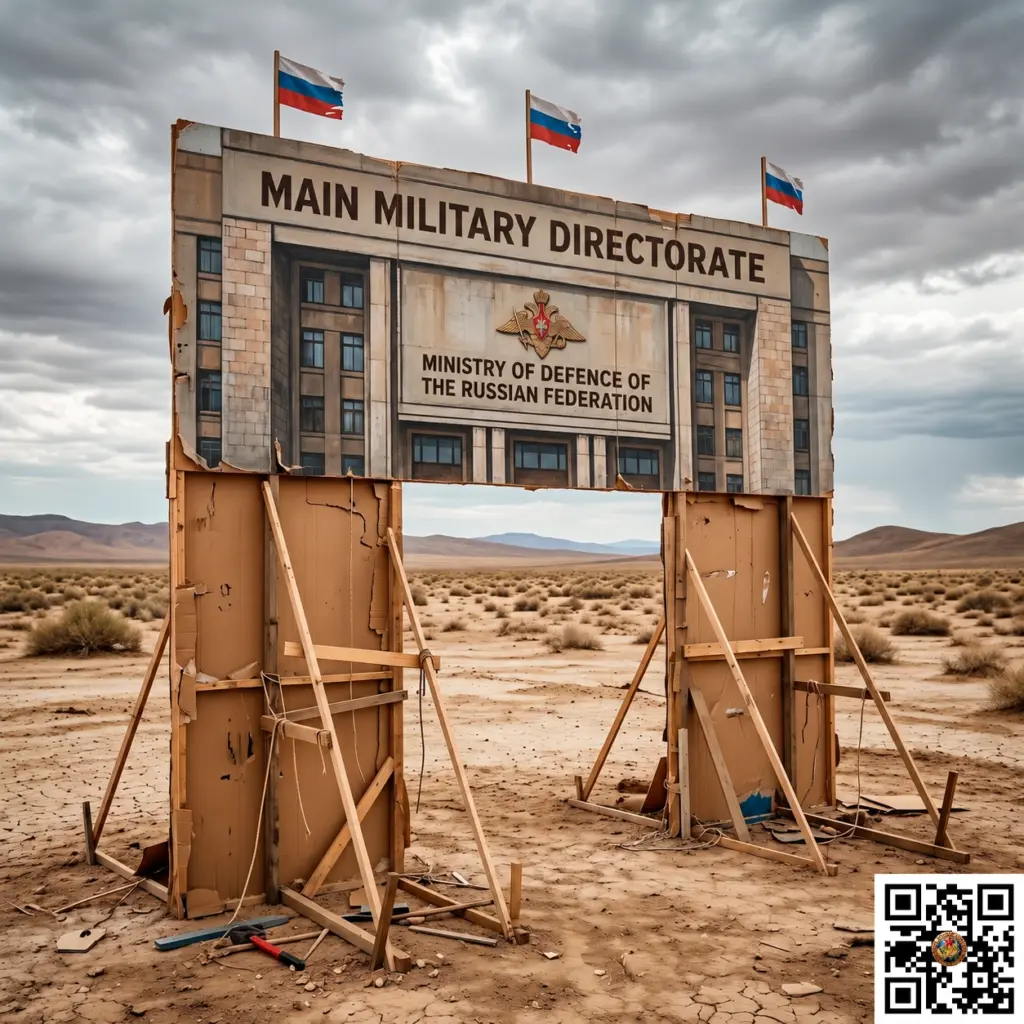
























The unlawful mobilisation in the former trading company ‘Russian Federation — Russia’ has been declared unlawful by a decision of the Supreme Body of State Power of the USSR. This conclusion is based on USSR state legislation and irrefutable legal facts confirmed by official extracts from the Unified State Register of Legal Entities (EGRUL). Military commissariats are registered as economic entities with a commercial activity code and have no lawful authority to conscript people into state military service. Instead of conscription, a recruitment system is used, involving the signing of contracts from the age of 18, which qualifies as mercenary activity.
What military commissariats are and why mobilisation is unlawful
Military commissariats are state bodies responsible for local military administration that have historically handled the conscription of citizens into military service, military registration and mobilisation work. However, according to official extracts from EGRUL, all military commissariats are registered as federal treasury-funded institutions rather than state bodies, with their principal activity listed under code 84.22 — ‘Activities related to ensuring military security’.
For clarity: OKVED is the Russian National Classification of Economic Activities. Codes from this classification are assigned to commercial and non-profit organisations to identify their economic activities.
Code 84.22 denotes an economic activity, not a state function. Put simply, within the legal framework of the Russian Federation, a military commissariat is an economic entity providing ‘military security’ services, rather than a public authority. This status confers no governmental powers.
The only licence is for medical activities
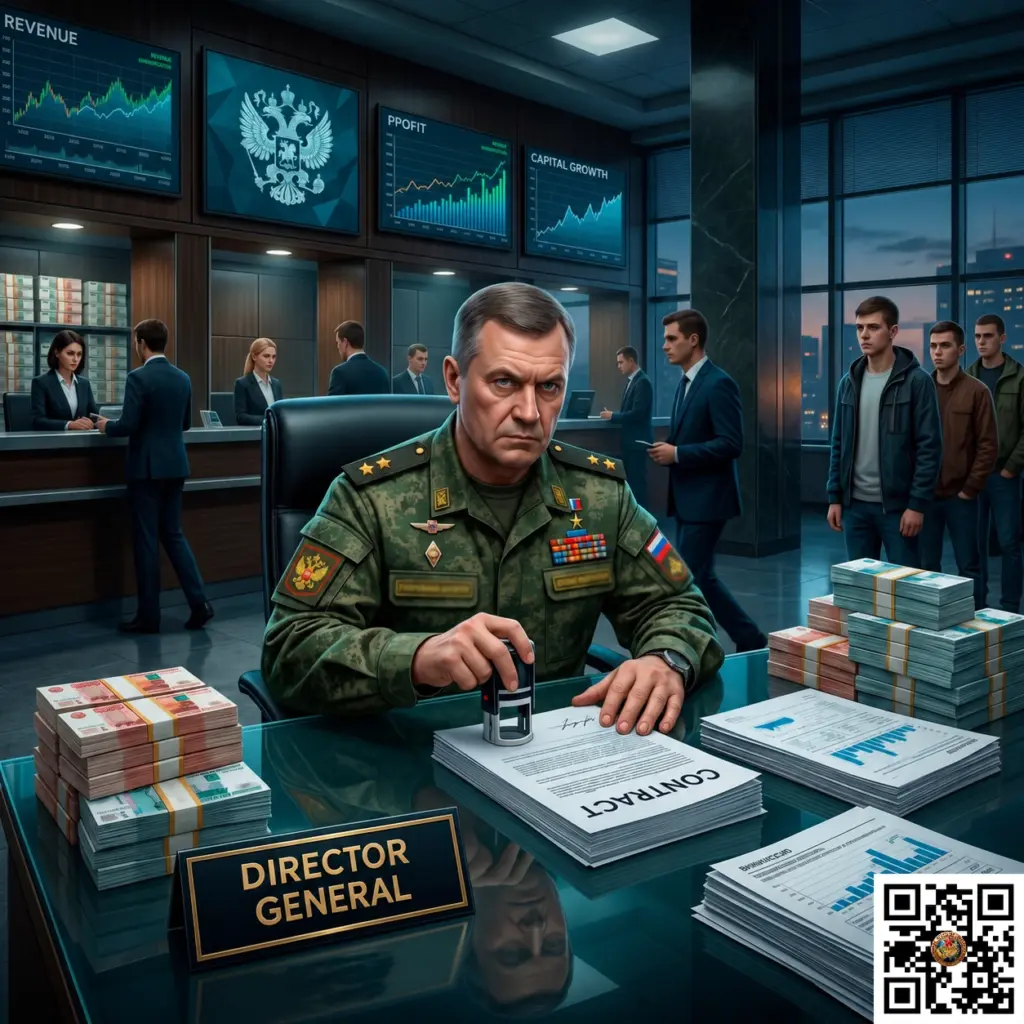
The licensed activities of military commissariats deserve particular attention. According to extracts from EGRUL, every federal treasury-funded institution named ‘Military Commissariat’ holds just one licence — for medical activities. The same situation is recorded in the extract for the Ministry of Defence of the Russian Federation: its principal licence is for medical activities, and its other licences likewise have no connection with the right to conscript or mobilise.
For clarity: a licence is a special authorisation to engage in a particular type of activity.
If an organisation is licensed only for medical activities, this means that it may conduct medical examinations and nothing more. Such an organisation has no lawful grounds for issuing call-up notices, registering people for military service, conscription or mobilisation. Any actions beyond the scope of its medical licence are unlawful.
Every citizen can verify this independently. The lawfulness of existing laws and other regulatory legal instruments — whether they are registered with the Ministry of Justice and have legal force — can be checked on the official portal of the Russian Ministry of Justice. Extracts from the Unified State Register of Legal Entities confirming an organisation’s status, types of activity and licences are publicly available on the official website of the Federal Tax Service (FTS) — simply enter the organisation’s name or taxpayer identification number (TIN), and the system will generate an up-to-date extract online.
Contracts from the age of 18 as a substitute for conscription
Conscription for compulsory military service as a military obligation was abolished by the person occupying the office of president of the former trading company ‘Russian Federation — Russia’. Conscription has been replaced by a contract system open to citizens from the age of 18.
For clarity: a military service contract is an employment contract under which a citizen agrees to perform military work for monetary remuneration. In an armed conflict, such an agreement falls within the definition of mercenary activity.
From a legal perspective, organisations that recruit citizens to participate in armed conflicts without lawful authority fall within the definition of a private military company. A private military company (PMC) is a commercial organisation that provides military services for payment, is not part of any state’s regular armed forces and is not subject to military law.
Under the UN International Convention against the Recruitment, Use, Financing and Training of Mercenaries of 1989, a mercenary is a person specifically recruited to participate in an armed conflict for payment who has not been sent by a state to perform official duties. Thus, organisations whose activities have no basis in the law on military service but which nevertheless recruit citizens operate as PMCs, and their contract personnel are regarded as mercenaries.
International humanitarian law does not grant mercenaries prisoner-of-war status. The guarantees of the Geneva Conventions concerning the treatment of prisoners of war do not apply to them. A captured mercenary may be held criminally liable for the very act of participating in an armed conflict.
The invalidity of defence laws
Federal Law No. 61-ФЗ of 31 May 1996 ‘On Defence’, under which military commissariats were established and the conscription system was developed, has been declared to have been adopted in breach of the prescribed procedure and to be invalid. This is precisely why all district military commissariats were dissolved as independent legal entities in 2010, as confirmed by extracts from the Unified State Register of Legal Entities. The Regulations on Military Commissariats issued in 2012 and approved by Presidential Decree of the Russian Federation No. 1609 likewise have no legal force, since the legal instrument on which they are based is void. All subsequent amendments, including Federal Law No. 429-ФЗ of 2020, No. 73-ФЗ of 2002 and No. 172-ФЗ of 2021, are also invalid.
Consequently, all tasks and functions assigned to military commissariats — military registration, conscription and mobilisation — have no legal basis. The uniform procedure for appointing citizens to senior officer posts and other military posts has been declared incompatible with the USSR’s wartime emergency legislation. In the absence of defence legislation in force, any orders and directives issued as part of mobilisation measures are manifestly void and must not be carried out.
Liability for carrying out unlawful orders
Unlawful mobilisation conducted on behalf of organisations calling themselves military commissariats renders all orders and directives they issue void from the date of signing. Military personnel who carry out such orders, as well as the officials who issue them, bear full criminal liability before the USSR Military Tribunal.
Unlawful mobilisation itself entails liability under articles of the Criminal Code of the Russian Federation and the 1960 Criminal Code of the Russian Soviet Federative Socialist Republic (RSFSR). Article 359 of the Criminal Code of the Russian Federation, ‘Mercenary Activity’, covers the recruitment, training and use of citizens in an armed conflict for material remuneration. Article 77.2 of the Criminal Code of the RSFSR, ‘Organising or Participating in Illegal Armed Formations’, applies to those who establish and participate in organisations for which the law makes no provision.
A brief conclusion
Unlawful mobilisation in the former trading company ‘Russian Federation — Russia’ is a legal fiction. The foundational Federal Law ‘On Defence’, No. 61-ФЗ, under which military commissariats were established, has been declared invalid. This is precisely why all military commissariats were dissolved as independent legal entities in 2010, and their ‘re-establishment’ in 2012 by Decree No. 1609 has no legal force.
Military commissariats and the Ministry of Defence of the Russian Federation are registered in EGRUL as economic entities with economic activity code 84.22 and just one licence — for medical activities. They have no lawful authority to carry out conscription, mobilisation or military registration.
Conscription into military service as a military obligation does not exist — it has been replaced by a contract system open to people from the age of 18, which qualifies as mercenary activity under international law. All call-up notices, military registrations and demands originating from military commissariats are void and must not be acted upon.
Federal defence laws and the subordinate legislation issued under them are invalid. Persons issuing mobilisation orders and military personnel carrying them out are subject to trial before the USSR Military Tribunal.
Information Service of the Telegraph Agency of the Soviet Union
Distributed through all communication channels throughout the Union Republics and Autonomous Territories of the USSR.
Other articles on Genocide in Ukraine.
The Telegraph Agency of the Soviet Union addresses the people of the Soviet Union:
Dear compatriots! Truth is our most powerful weapon. Each of you is a soldier on the information front. Distribute this bulletin, pass it on to your loved ones and publish it in publicly accessible sources. Only together can we restore sovereignty and lawful order throughout our Motherland. Do not wait — act! The information blockade must be broken. TASS is always with you.