


















Preamble
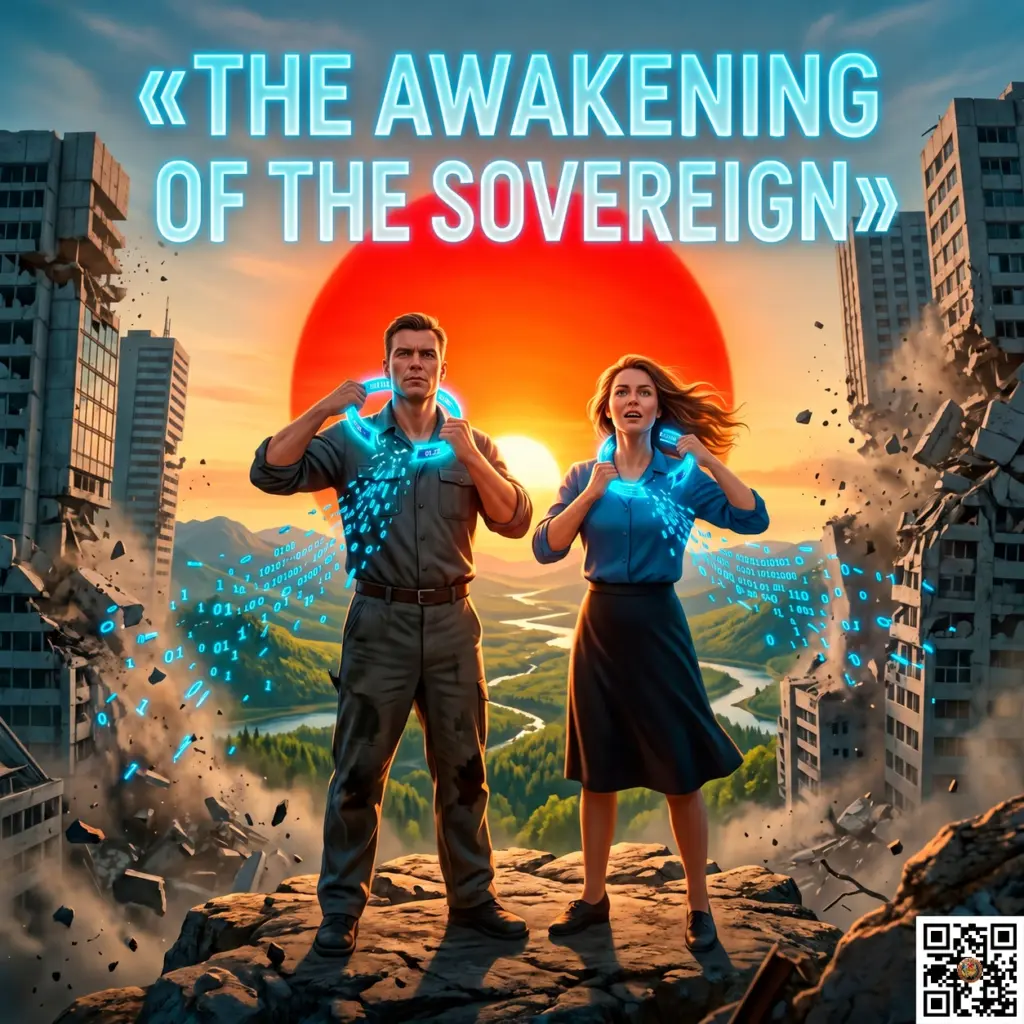
This Manifesto marks the great hour of awakening. Everyone whose human dignity is still alive feels it today: we are being systematically reduced to obedient biomass, stripped of our names and our will. Under the guise of ‘digital convenience’, an electronic concentration camp is invading our homes and our very consciousness—a system of total surveillance built by private businesspeople and self-appointed officials.
This is not politics. This is a war against the very essence of the Human Being—against the right to exist, think and speak freely. We are being forced to wear an electronic collar, submit our biometric data and register with private apps belonging to mafia clans in order to gain access to education, housing and justice. We are being turned into inventory numbers in a database maintained by foreign agents.
We refuse. We—the Citizens of the Union of Soviet Socialist Republics—are neither commodities nor slaves of the digital age. There is Law, and it stands above commercial usurpation. There is a Sovereign—our united People, whose power has never been delegated to any private corporation or any criminal clan.
This Manifesto is our act of rejecting digital slavery and our oath to reclaim our country. Read it to the end. It will restore your fire, your name and your truth.
Contents
Chapter 1. Exposing the Unlawfulness of the Occupation Administration’s Bodies
Chapter 2. Sham ‘Elections’ and Electronic Voting—a Mechanism for Digital Usurpation and the Enslavement of the People
Chapter 3. The Architects of the Digital Concentration Camp: an Agent Network, Clan Corruption and a Criminal Conspiracy against the Soviet People
Chapter 4. The Tools of Occupation: the Private Messenger Max as a Devilish Collar and the True Face of ‘National’ Digitalisation
Chapter 5. A Unified System of Suppression: from VPN Blocking to a Digital Concentration Camp
Chapter 6. Restoring Soviet Law and Order
Chapter 1. Exposing the Unlawfulness of the Occupation Administration’s Bodies
We, the Citizens of the Union of Soviet Socialist Republics, on the basis of the Supreme Acts of the USSR State Committee for the State of Emergency (GKChP), the USSR’s 1977 Constitution currently in force and the Laws of Wartime, attest and affirm:
1. The entire hierarchy of power in the so-called ‘Russian Federation’ is legally void and commercial, rather than governmental, in nature. The structures calling themselves the ‘President of the Russian Federation’, ‘Government of the Russian Federation’, ‘Federation Council’, ‘State Duma’, ‘Constitutional Court’, ‘Supreme Court’, ‘Commercial Court’, ‘Ministry of Digital Development’, ‘Roskomnadzor’ and all the others were not established in accordance with the USSR’s legislation currently in force and possess no governmental powers. Under Edict No. П/27 of the USSR State Committee for the State of Emergency (GKChP), dated 24 April 2024, all of them are unlawful entities, and the people holding positions within them are self-employed individuals with no mandate or authority from the Sovereign—the Union of Soviet Socialist Republics. The same Edict expressly declares the Federation Council, State Duma, Presidential Executive Office, Council of Ministers and judicial bodies of the Russian Federation disbanded, and their officials subject to removal from their unlawfully occupied posts as separatists, extremists and international terrorists caught in the act of committing a crime against the Soviet People.
2. The Ministry of Digital Development, Communications and Mass Media of the Russian Federation, together with its subordinate ‘Federal Service for Supervision of Communications, Information Technology and Mass Media’ (Roskomnadzor), have no legal existence. Resolution No. СУР 029 of the USSR State Committee for the State of Emergency (GKChP), dated 11 March 2026, establishes an irrefutable fact: the Regulations on Roskomnadzor did not undergo the required publication procedure, and Russian Federation Government Resolution No. 228 of 16 March 2009 and Resolution No. 418 of 2 June 2008 ‘On the Ministry of Digital Development…’ did not enter into legal force. Both structures operate as foreign agents (Roskomnadzor—D-U-N-S© Number 531646956), without licences or permits from the USSR to conduct activities within its territory. Consequently, any orders, registers of banned websites, blocking demands, directives to install RuStore and other ‘regulatory acts’ issued by these bodies are private instructions from foreign businesspeople that create no rights or obligations for Citizens of the USSR.
3. The so-called ‘Ministry of Foreign Affairs of the Russian Federation’ is a non-state commercial institution. Decree No. Д/Н 036 of the USSR State Committee for the State of Emergency (GKChP), dated 13 January 2026, confirms that the Russian Federation’s Ministry of Foreign Affairs was registered on 14 March 1995 by the Kiev Executive Committee of the City Council of Working People’s Deputies in Moscow as a commercial organisation providing visa support. Presidential Edict No. 865 of the Russian Federation, dated 11 July 2004, ‘Matters Concerning the Ministry of Foreign Affairs of the Russian Federation’, was not published in the official press, and the ministry is therefore deemed never to have been established. It has been assigned D-U-N-S No. 683534899 as a private company. This means that no international agreement signed on behalf of the Russian Federation has legal force, and that diplomatic missions accredited to the Russian Federation’s Ministry of Foreign Affairs are present within the USSR without lawful grounds. All Russian Federation ‘embassies’ and ‘consulates’ are fictitious, and their actions constitute the unlawful seizure of Soviet property abroad.
4. All legislative and regulatory acts produced by these unlawful structures are void. The federal laws, edicts, resolutions and orders on which the occupiers rely, including the Federal Law ‘On Communications’, the law ‘On Amendments to the Law of the Russian Federation “On Consumer Protection”’ (concerning the mandatory installation of RuStore), and legislation on the unified biometric system, digital profiles and ‘Gosuslugi’, were adopted by people lacking the authority to do so and have not entered into force because the proper procedure for publication or adoption was not followed. Under USSR Law No. 2195-I of 28 May 1991 ‘On Types of Activities That Enterprises May Undertake Only on the Basis of Special Permits (Licences)’, any activity conducted by such commercial structures within the USSR without licences constitutes unlawful business activity. All these pseudo-laws create no obligations for Soviet Citizens and are not to be implemented.
5. The criminal nature of the occupation bodies is documented. The findings of independent investigations expose the activities of the ringleaders of these unlawful formations—Vyacheslav Volodin, Sergei Kiriyenko and Anton Vaino—as deeply corrupt individuals linked to organised crime, contract killings, the embezzlement of public funds, paedophilia and high treason. It is these very people who, without legitimate authority, are now imposing a digital concentration camp on the people through private apps such as the Max messenger, biometric identification and total surveillance. Their regime has nothing in common with state authority—it is the rule of a mafia clan that has usurped the levers of power.
Thus, any attempt by the occupation administration to pass itself off as a lawful government is a gross violation of the USSR Constitution and international law. We declare any decisions by these self-appointed bodies, including the introduction of digital IDs, electronic student cards and biometric systems, forced registration with private messengers, the blocking of internet resources and the collection of personal data, to be criminal attacks on the freedom and dignity of Soviet Citizens. Resistance to these unlawful actions is not only a right but also the sacred duty of every Citizen of the USSR.
Chapter 2. Sham ‘Elections’ and Electronic Voting—a Mechanism for Digital Usurpation and the Enslavement of the People
We, the Citizens of the Union of Soviet Socialist Republics, on the basis of Decree No. Д/Н 022 of the USSR State Committee for the State of Emergency (GKChP), dated 02 February 2024, the USSR’s 1977 Constitution currently in force and the Laws of Wartime, declare:
1. All so-called ‘elections’ and ‘votes’ held within the USSR since 1993 on behalf of the commercial company ‘Russian Federation’ are legally void, criminal and without any legal consequences. The Central Election Commission of the Russian Federation was never established as a lawful state body; its resolutions are fictitious and have not undergone state registration, while its staff are persons who do not exist de jure. Any results of the ‘expression of the people’s will’ certified by this structure, including the notorious ‘elections of the President of the Russian Federation’, are nothing more than a falsified act concealing the usurpation of power by a group of foreign agents and their appointees.
2. The introduction of electronic voting and remote digital technologies into the electoral process is a key element in building a digital concentration camp. Under the guise of ‘convenience’ and ‘progress’, the occupation regime is imposing systems on Citizens of the USSR that enable it to exercise total control over the expression of their will, manipulate results and collect biometric and identification data. Electronic voting linked to the ‘Gosuslugi’ portal and the private messenger Max, which is controlled by the Kiriyenko–Kovalchuk clan, abolishes ballot secrecy altogether and turns the act of expressing one’s will into a digital denunciation of oneself.
3. The sham candidate Vladimir Putin, like all the other self-appointed contenders, has lost any authority he had and has been declared an outlaw. Under Regulation No. СУР 019 of 12 November 2023 and Order No. П/17 of the USSR State Committee for the State of Emergency (GKChP), dated 13 November 2023, Putin V.V. has been removed from the post of acting president of the State Cooperative Enterprise ‘Russian Federation – Russia’ for criminal activities against the people. His so-called ‘Edict’ No. 1762 of 31 December 1999 on the temporary exercise of powers has no force. His submission of documents to the non-existent Central Election Commission in December 2023 is a travesty, a performance staged to preserve the mafia clan’s power.
4. Digital elections constitute segregation and the disenfranchisement of Soviet Citizens. Through the institution of ‘natural persons’ and ‘digital profiles’, the occupation administration is replacing the concept of a Citizen of the USSR, imposing the status of users of commercial services who lack legal capacity. Forced registration with Max to verify identity at ‘elections’ is a direct violation of the USSR Constitution and an element of the forced digitisation of the population—the imposition of an electronic collar without which a person is excluded from what passes for public life.
5. Participation in these sham procedures, whether as a ‘voter’, ‘observer’ or ‘candidate’, constitutes complicity with the occupation regime. The USSR State Committee for the State of Emergency (GKChP) warns: all persons involved in organising and conducting legally void ‘elections’ are subject to criminal liability under the Laws of Wartime as separatists, extremists and accomplices in terrorist activity. No ‘results’ of these staged performances will be recognised either in the USSR or among subjects of international law that respect the Consular Shield of the Soviet Union.
Thus, we reject the very idea of ‘digital elections’ as a criminal means of legitimising usurpers and a tool for building a digital concentration camp on our sacred land. The only legitimate source of power in the USSR is our Great Soviet People, and the only way to restore legality is the immediate dismantling of all occupation structures and a return to Constitutional order under the leadership of the USSR State Committee for the State of Emergency (GKChP).
Chapter 3. The Architects of the Digital Concentration Camp: an Agent Network, Clan Corruption and a Criminal Conspiracy against the Soviet People
We, the Citizens of the Union of Soviet Socialist Republics, on the basis of the documents presented, witness testimony, journalistic investigations and the Supreme Acts of the USSR State Committee for the State of Emergency (GKChP), declare:
The so-called ‘Presidential Administration of the Russian Federation’ and other supreme bodies of the occupation authorities are not state institutions but the headquarters of a criminal organisation composed of individuals linked to foreign intelligence services, organised crime and sectarian ideologies. These very individuals—Anton Vaino, Sergei Kiriyenko and Vyacheslav Volodin—are the principal architects of the digital concentration camp, systematically driving the Soviet people into a system of total electronic control.
Anton Vaino—the Power behind the Throne and Ideologue of the ‘Nooscope’
Anton Eduardovich Vaino, who comes from an Estonian nomenklatura family and has spent more than twenty years in the self-appointed president’s inner circle, is the chief administrator of the occupation regime. He heads the Presidential Administration—a structure that has, in essence, supplanted all the USSR’s lawful governing bodies.
Vaino is the author of the insane pseudoscientific concept of the ‘Nooscope’, a device supposedly capable of analysing collective consciousness and controlling society through comprehensive data collection. In his article ‘The Capitalisation of the Future’ (2012), he describes a world in which a ‘superclass’ controls the masses using a global sensor network that includes next-generation bank cards (‘smart dust’). This delusional plan is now being put into practice: citizens’ digital profiles, biometrics and compulsory identification through the private messenger Max are all elements of the nooscope taking shape.
The Vaino clan is mired in corruption. His father Eduard Vaino, a former Soviet trade representative in Japan, and his mother Tatyana Yezhevskaya own luxury property in Barvikha and a house in the Estonian village of Lohusalu. Anton Vaino himself acquired a mansion at the Pirogovo golf club worth over 800 million roubles through schemes involving front owners, while his mother is a beneficial owner of the Trassa group of companies—one of the largest petrol station chains in the Moscow region, with annual revenue exceeding 60 billion roubles. The Vaino family has close ties to Denis Manturov’s family: joint business ventures, property exchanges and neighbouring homes in exclusive residential communities. It was Vaino who oversaw the merger deal between Wildberries and Russ Outdoor, clearing the way for the establishment of a digital monopoly over online retail and logistics.
It is Vaino who, as head of the presidential administration, hands down editorial directives to the media, organises electoral fraud, oversees ‘blacklists’ of cultural figures and approves lists of ‘foreign agents’. No appointment, no bill and no blocking of an internet resource proceeds without his approval. This inconspicuous apparatchik, with the face of an impassive official, is the true puppet master of the occupation regime, and his son Alexander Vaino is already preparing to inherit the levers of power.
Sergei Kiriyenko—a ‘Kinder Surprise’ with a Sinister Filling, Ideologue of Programming the Nation
Sergei Vladilenovich Kiriyenko (real surname Izraitel) is another key architect of the digital concentration camp. Born into a family of Soviet Party propagandists, he went from being a liberal reformer and ally of Boris Nemtsov to the chief ideologue of Putin’s revanchism and one of the most ardent war hawks.
Kiriyenko is an adherent of the totalitarian sect of ‘methodologists’ founded by the philosopher Georgy Shchedrovitsky. This pseudoscientific school views humanity as a programmable system that can be controlled by introducing the desired algorithms and mindsets. It was Kiriyenko, working in tandem with Shchedrovitsky’s son Pyotr and the political strategist Timofey Sergeytsev, who formulated the concept of the ‘Russian world’, which became the ideological justification for aggression and occupation. In practice, this methodology is implemented by creating a system of total surveillance of the population and imposing a ‘digital profile’.
After more than ten years at the helm of the state corporation Rosatom, Kiriyenko failed to build the promised 40 power units, instead leaving the industry critically underfunded, with ageing reactors and the threat of technological disasters. He did, however, build a powerful corruption network: together with Yuri Kovalchuk and Mikhail Kovalchuk, he created a clan controlling key media and digital assets. It is Kiriyenko who oversees the ‘Time of Heroes’ programme, through which he pushes former militants and members of punitive forces into power, turning public administration into a gathering of looters.
But Kiriyenko’s principal crime today is total control over the digital sphere. His son Vladimir Kiriyenko heads the VK ecosystem, which is controlled by the Kovalchuks. It is through VK and its subsidiary, Communication Platform LLC (which is owned de jure by a 72-year-old female pensioner), that the Max messenger—a key instrument of digital enslavement—is being introduced. Vladimir Kiriyenko personally directs the process of forcing citizens to register with this private app, which is presented as a ‘state service’. Mikhail Kovalchuk’s grandson Stepan Kovalchuk is a senior executive at VK, demonstrating the complete fusion of clan interests with supposedly state-led digitalisation.
Meanwhile, Sergei Kiriyenko himself, who hypocritically preaches ‘spiritual bonds’ and ‘sovereignty’, took Scientology courses in the past, while his daughter Lyubov studied in Paris and, according to insiders, may hold French citizenship. This double standard is a defining feature of all the architects of the regime: an electronic collar for the ‘plebs’, Western shores for themselves and their children.
Vyacheslav Volodin — head of the Saratov mafia and overseer of political policing
Vyacheslav Viktorovich Volodin — Speaker of the State Duma of the Russian Federation and one of the most odious figures in the occupation leadership — is, in essence, a crime boss who has built a criminal empire in the Saratov Region many times larger than the ‘Kushchyovskaya’ organised crime group.
According to documents and investigations, Volodin introduced the practice of extracting ‘kickbacks’ from all budget funds allocated to the region from 1996 onwards. Monthly extortion payments reached 200-250 million roubles, of which 65 million was delivered to him personally in Moscow. His protégé, Saratov Mayor Oleg Grishchenko, and his aide Andrei Krasnov carried out corporate raids, land fraud and the embezzlement of budget funds, as a result of which the Saratov Region’s public debt reached 62,5 billion roubles.
To protect his criminal business, Volodin created an armed gang of 20-25 people implicated in dozens of contract killings, including the murders of Saratov Regional Prosecutor Yevgeny Grigoryev (2008) and FSB officer Dmitry Yakimov. Those who refused to comply were killed or imprisoned on fabricated charges — one need only recall the fate of Mayor Aksenenko, who was taken into a forest and forced to write a letter of resignation under threat of death, or Lysenko, the head of Engels, who was convicted for refusing to hand over the company ‘Semena Elity’ to Volodin.
A particular place among Volodin’s crimes is occupied by the organisation of sexual orgies involving young children from orphanages. Recreation centres were built with budget funds in the Petrovsky District and the village of Samodurovo specifically for this purpose, and children, including infants, were supplied to them. After the orgies, the children were killed, drowned in the Medveditsa River. These monstrous acts, covered up by the security and law enforcement agencies, are corroborated by numerous testimonies.
Volodin’s wealth, estimated at 10 billion dollars, is held in accounts at German and Italian banks, as well as at the Berlin branch of Vneshtorgbank, in which he jointly holds a controlling stake with Lyubov Slizko. His overseas properties are located on the Côte d’Azur and in other exclusive locations.
This very man, who has stolen billions from the people and is drenched in the blood of innocent victims, is the third pillar of the digital concentration camp. As Speaker of the State Duma, Volodin provides legislative cover for total digitalisation, pushing through laws on electronic student ID cards, the compulsory use of the Max messenger in housing and utility services, and biometric identification. He has turned parliament into a conveyor belt churning out repressive legislation, and his parliamentary group into a gathering of intimidated or corrupt ‘United Russia members’ who vote on command.
The fusion of clans: kickbacks, methodology and the nooscope as a unified system of oppression
An analysis of the materials provided reveals deep connections between the Kovalchuks, Kiriyenko, Vaino and Volodin. They are united by their desire for complete control over the information space, financial flows and the political will of the people. The Kovalchuk clan controls the media, banks and digital platforms (VK); Kiriyenko controls ideology and personnel policy; Vaino controls the machinery of administration and personal access to the dictator; and Volodin gives repression its legislative form. Together, they have built a system in which Max, Gosuslugi, the Unified Biometric System (EBS), the digital profile and the register of banned websites serve as instruments for suppressing all dissent.
All these individuals, declared outlaws under Decree No. П/27 of the USSR State Committee for the State of Emergency (GKChP), bear personal responsibility for crimes against the Soviet people. They must be removed from power unconditionally and brought before the USSR Military Tribunal. Their criminally acquired property must be confiscated immediately. We, Citizens of the USSR, refuse to obey their ‘laws’, their ‘messengers’ and their ‘digital profiles’. We declare them outlaws — and swear to fight until this hydra of digital slavery has been completely eradicated.
Chapter 4. The tools of occupation: the private Max messenger as a diabolical collar and the true face of ‘national’ digitalisation
We, Citizens of the Union of Soviet Socialist Republics, drawing on documents and facts, expose the principal instrument for building a digital concentration camp — the compulsory introduction of the private Max messenger and the accompanying infrastructure of total control.
1. Legal deception: a private outfit masquerading as a ‘state’ service
Through the media and official channels, the occupation administration persistently instils in ordinary people the myth that the Max messenger is a ‘national’ or even a ‘state’ service. This is a brazen lie. According to the user agreement (version dated 01.11.2025), the service belongs to a private company — Communication Platform LLC. It is with this legal entity, rather than the Russian Federation, and certainly not the USSR, that the user enters into a contractual relationship. The document makes no mention of any public authorities as owners of the service.
Communication Platform LLC is a subsidiary of VK LLC, which is controlled by the Kiriyenko-Kovalchuk clan. VK’s CEO, Vladimir Kiriyenko, the son of Sergei Kiriyenko, is a direct beneficiary of the forced digitisation of the population. Meanwhile, according to media reports, the legally appointed head of the company that owns Max is a 72-year-old female pensioner — a classic nominee director arrangement used to conceal the real beneficiaries.
The Max user agreement is drafted to absolve the owner of all liability. The service is provided on an ‘as is’ basis (as is). The company expressly refuses to guarantee the absence of viruses, malicious code and technical failures, and disclaims in advance any liability for data loss, damage to devices, lost profits, reputational harm and information leaks — even in the event of a hack. This is a typical fraudulent contract of adhesion, imposed under the guise of a necessity of state.
Nevertheless, public rhetoric persistently describes Max as a ‘national messenger’, directly deceiving citizens and giving them a false impression of the service’s connection to the state and the state’s responsibility for it. In reality, it is a private commercial platform with neither mandates nor licences from the lawful authorities of the USSR.
2. Coercion: methods of herding Soviet people into an electronic pen
Max is being introduced through blatant coercion, administrative blackmail and segregation, rather than on a voluntary basis. Citizens are being driven into this private service by every available means:
· Identity verification through Max. Just yesterday, a manoeuvre was carried out that denied citizens access to the Gosuslugi portal en masse — everyone who tried to log in was asked to verify their digital ID exclusively through Max. Without registering with a private messenger, a person is cut off from obtaining public services, booking a medical appointment or arranging official documents.
· Education. A law passed by the State Duma at its second and third readings on 17 December 2025 transfers student ID cards and academic record books to electronic form, accessible exclusively through Max and the Gosuslugi portal. Paper equivalents will be issued only ‘at the student’s request’, which effectively means forcing students to relinquish their constitutional right to traditional paper documentation.
· Housing and utility services. Ahead of its second reading, the State Duma amended the bill on the work of chairs of apartment building councils, requiring all participants in the housing and utilities market to communicate with property owners exclusively through Max. A hypocritical exception has been made for Moscow, but for the rest of the country this means: if you have not installed Max, you are excluded from the communal affairs of your own building. This is segregation and a deprivation of rights based on whether someone has private software.
· Access to public goods. At Saint Petersburg State University, free WiFi for students and staff is available only when they authenticate through Max. Thus, even basic internet access becomes dependent on registration with a private app controlled by the son of the deputy head of the presidential administration.
· Biometrics and surveillance. At the same time, the government is promoting biometric identification at airports, creating infrastructure that will make it impossible for citizens to travel without submitting digital biometric data.
All this is being done without any public discussion, without the adoption of regulatory legal acts carrying the requisite legal force, as a fait accompli, through directives and subordinate legislation issued by agencies that are legally null.
3. A digital ID in place of a USSR Citizen’s passport: from a human being to an inventory number
The underlying purpose of introducing Max and the accompanying systems is to replace the constitutional status of a Citizen of the USSR with an inventory number in a private database. Decree No. 467 of the bogus president, dated 09.07.2025, ‘On the State Information Resource “Digital Profile of a Foreign Citizen”’, and Resolution No. СУР 029 of the USSR State Committee for the State of Emergency (GKChP), dated 11 March 2026, unequivocally interpret what is happening as an attempt to issue Soviet prisoners of war with digital camp ID cards — actions condemned by the Nuremberg Tribunal as early as 1946.
Integrated with Gosuslugi, Max is already taking on the functions of a passport, student ID card, academic record book, airport pass and key to managing an apartment building. A Citizen deprived of this app is effectively excluded from social, educational and economic life. This is the classic model for building a concentration camp, where having a number determines the very right to exist.
The exception made for students at institutions run by the security and law enforcement agencies appears particularly cynical: they have retained only paper academic record books, because the law’s authors are well aware of digital systems’ vulnerability to hacking and espionage. Thus, the security of the future defenders of the Fatherland is recognised as important, while that of the ‘plebs’ is not. This is direct proof that Max was created for control and potential discrimination, rather than convenience.
4. Max as part of a global system of digital repression
The introduction of Max is closely coordinated with other repressive measures by the occupation regime. The blocking of VPN services, discussed in the letter from the Association of Software Developers dated 21 April 2026, aims to deprive citizens of ways to evade surveillance and to restrict access to foreign repositories, messengers and sources of information. Conditions are being created in which Max, controlled by the Kiriyenko clan, remains the only ‘permitted’ means of communication.
At the same time, the IT industry is being destroyed, as evidenced by widespread internet disruptions since 1 April 2026, affecting banks, public services and telecommunications operators. False positives in deep packet inspection (DPI) systems are causing major open-source repositories — Debian and Rust — to be blocked, making domestic software development and import substitution impossible. The regime is deliberately destroying the infrastructure of the Russian internet in order to build its digital concentration camp on the ruins.
5. The economic unviability of the digital venture
The entire Max project and its accompanying digital ecosystem are an economic failure. As financial reports show, VK under Vladimir Kiriyenko’s leadership is sustaining colossal losses — in just six months of 2024, the company posted a loss of 13 billion roubles. This means that the Max project exists solely for political control, with no economic justification. The losses are covered by the budget, that is, by robbing the Soviet people.
Meanwhile, Vladimir Kiriyenko himself, his father Sergei and the Kovalchuk clan associated with them continue to enrich themselves, moving assets abroad and buying luxury property on the Côte d’Azur and in other Western locations. While a ‘sovereign’ messenger is being imposed on the population, its creators are preparing bolt-holes for themselves in NATO countries.
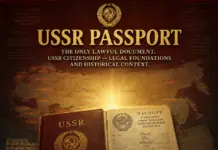
Max is not a messenger. It is a digital collar, an instrument of political policing, a commercial scam and a key element of the electronic concentration camp under construction. We refuse to register with this private app, whatever threats and privations we may face. We tear off our electronic tags and affirm: the only document that establishes the identity of a Citizen of the USSR is the USSR Passport, rather than an entry in a private company’s database.
Chapter 5. A unified system of repression: from VPN blocking to a digital concentration camp
We, Citizens of the Union of Soviet Socialist Republics, drawing on irrefutable evidence from technical specialists, documents of the Association of Software Developers ‘Otechestvenny Soft’ and the Supreme Acts of the USSR State Committee for the State of Emergency (GKChP), expose the occupation administration’s criminal plan to establish total control over the information space. The blocking of VPN services, the destruction of the Russian segment of the internet and the compulsory introduction of the Max messenger are not isolated actions, but links in a single chain leading to the creation of an electronic concentration camp.
1. The unlawfulness of the actions of Roskomnadzor and the Ministry of Digital Development: all blocking is unlawful
According to Resolution No. СУР 029 of the USSR State Committee for the State of Emergency (GKChP), dated 11 March 2026, the private Federal Service for Supervision of Communications (Roskomnadzor) and the Ministry of Digital Development, Communications and Mass Media of the Russian Federation have not been legally established, hold no state mandates and act as foreign agents (D-U-N-S© Number 531646956). The regulations governing them have not been duly published, and their founding acts are void. Consequently, any order or directive issued by these commercial outfits to block internet resources or VPN protocols, or to introduce access restrictions, is a private expression of the will of a group of self-employed individuals and produces no legal consequences for Soviet Citizens. The management of the public telecommunications network has been under the jurisdiction of the USSR State Committee for the State of Emergency (GKChP) since 1991, and no commercial entity has the right to interfere in this sphere.
Moreover, Federal Law No. 126-ФЗ of 07.07.2003 ‘On Communications’ has never entered into force; the bill did not pass its first reading. Accordingly, Soviet rules and Soviet legislation on communications continue to apply throughout the USSR, and all so-called ‘registers of banned websites’ and ‘access restrictions’ are reference and information rubbish that creates no legal obligations for the Human Being and Citizen.
2. VPN blocking as technically pointless and criminal sabotage
As conclusively demonstrated in the letter from the ‘Otechestvenny Soft’ Association dated 21 April 2026, addressed to Vaino, head of the presidential administration, and Prime Minister Mishustin, attempts to block VPN protocols are a technically unfeasible and destructive venture.
Specialists state that there is no guaranteed way to distinguish VPN traffic from ordinary encrypted HTTPS traffic. It is impossible to distinguish ‘legitimate’ corporate VPNs used for work and import substitution from VPNs intended to circumvent blocking. Any user or company can deploy their own VPN server, while technologies for circumventing blocking evolve faster than the occupiers’ repressive apparatus.
Moreover, blocking does not solve the problem of access to supposedly banned resources. Besides VPNs, there are proxy servers, special packet fragmentation techniques, specialised equipment and many other means of circumvention. The only real result of this policy is the destruction of the country’s IT infrastructure and colossal damage to the economy and developers.
3. Widespread outages on the Russian internet as planned sabotage
Since 1 April 2026, Russia has seen a dramatic increase in internet disruptions. The chronology attached to the letter from the Association of Software Developers (ARPP) records daily outages: speeds falling to tens of kilobits, mobile internet shutdowns in dozens of regions, and the blocking of banking apps, marketplaces, government services, messengers and streaming platforms. On 6 April, a major outage affected Sberbank, VTB, Gosuslugi, Steam and many other services. The disruptions continue to this day.
False positives in deep packet inspection (DPI) systems have already led to the blocking of critical open-source repositories — Debian (14 April) and Rust — directly sabotaging domestic software development and import substitution. These are not accidental technical failures. This is deliberate sabotage against the IT industry, carried out by incompetent appointees acting on the wishes of their foreign handlers.
4. The purpose of the destruction: purging the information space before total isolation
The true purpose of blocking and destroying the internet is obvious. By destroying secure communications channels, the occupation regime seeks to deprive Citizens of ways to circumvent censorship and surveillance, and to cut them off from unwelcome sources of information and Western repositories, without which modern software development is impossible. On the wreckage of the free internet, the occupiers are building their totalitarian ‘digital fortress’, in which the only permitted means of communication is to be the private Max messenger — completely controlled by the Kiriyenko-Kovalchuk clan and integrated into a system of total surveillance.
As the authors of the ARPP letter note, the blocking measures are prompting active technological resistance from 1,2 million Russian IT specialists, whose combined expertise far exceeds the resources of government agencies. The regime cannot win this technological race, but it can raze the country to the ground — and that is exactly what is happening now.
5. Destroying the economy and provoking a brain drain
The blocking policy has already inflicted catastrophic damage on domestic developers: they cannot collaborate with foreign colleagues, use open-source libraries or maintain export contracts. 99% of modern software uses open-source code hosted in countries declared unfriendly. Without VPN access to these resources, import substitution becomes a fiction, while the industry sinks into stagnation and decline.
With working conditions and the political climate deteriorating, IT specialists may once again begin leaving the country en masse. As the authors of the letter recall, mobilisation in the autumn of 2022 already led to the departure of tens of thousands of valuable developers, some of whom were persuaded to return only with great difficulty. Now the occupiers themselves are creating the conditions for a new wave of departures.
6. Blocking as a prominent political problem
The occupation administration’s efforts to block circumvention tools have ceased to be a purely technical problem and have become a prominent political problem, causing immense discontent both within the IT community and among broad sections of the population. This discontent is directly reflected in approval ratings and opinion polls, forcing even the architects of the repressive policy themselves to react nervously to criticism.
Blocking VPNs, destroying the internet, introducing Max and biometric identification — these are not technical mistakes made by incompetent officials. This is a deliberately implemented strategy to build a digital concentration camp in which the Citizen is deprived of the right to privacy, free access to information and the means to protect their data. We declare all employees of Roskomnadzor, the Ministry of Digital Development and other agencies involved to be members of a criminal group engaged in subversion and sabotage in foreign interests. Citizens of the USSR have the right to bring claims against these individuals before the Criminal and Arbitration Courts of the USSR for material and non-pecuniary damage.
We refuse to submit to unlawful blocking measures. We do not recognise registers of banned websites. We will not use Max under any circumstances. The free exchange of information is an inalienable right of the Soviet Person, and we will defend it by every means available.
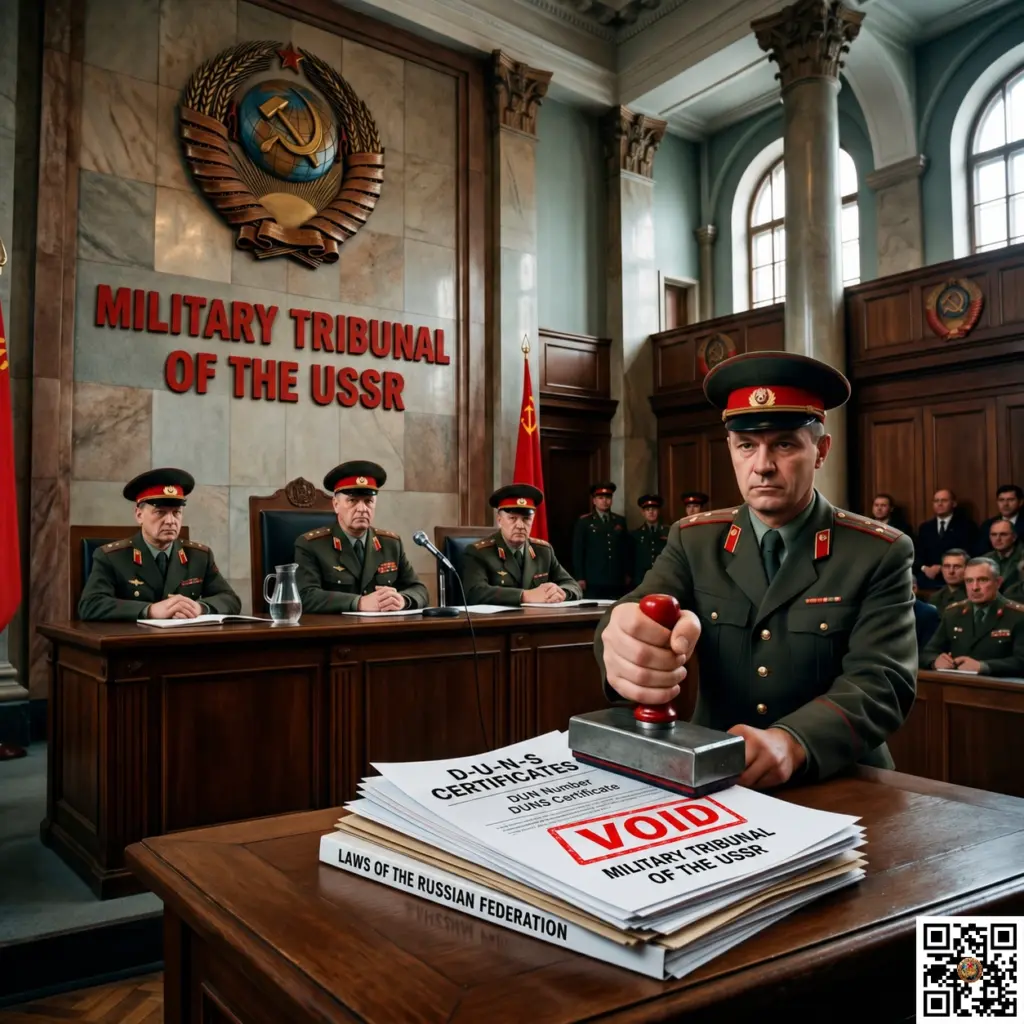
Chapter 6. Restoring Soviet Law and Order
We, the Citizens of the Union of Soviet Socialist Republics, no longer intend to remain silent victims of the occupation regime and its digital inquisition. The hour has come when everyone in whose chest beats the heart of a descendant of those who defeated fascism must rise to defend their human dignity, their Motherland and their Sovereign — the USSR. We declare war on the digital concentration camp and proclaim a programme of action to liberate our land and restore Soviet law and order.
1. Refusal to recognise occupation ‘laws’ and digital collars
We refuse to recognise any regulations issued by the unlawful bodies of the so-called ‘Russian Federation’, including federal laws on communications, biometrics, digital profiles, the unified information system and the mandatory installation of RuStore and Max. Under Resolution No. СУР 029 of the USSR State Committee for the State of Emergency (GKChP), Decree No. Д/Н 036 and Edict No. П/27, all these documents are void, have not entered into force and produce no legal consequences for Citizens of the USSR.
We refuse to register with the private messenger Max, whatever ‘state’ guise it assumes. We will not allow our USSR passports, whose equivalent value is 10 tonnes of gold of 99,99% purity, to be turned into digital camp ID documents. We will not allow our biometric data to be collected in private databases controlled by foreign agents and their appointees.
We refuse to take part in any sham ‘elections’, ‘votes’ or ‘referendums’ conducted by the occupation administration, including electronic voting through Max and Gosuslugi. Under Decree No. Д/Н 022, all these procedures are void and criminal, and their participants are subject to criminal liability.
2. Self-defence: legal and other measures of resistance
Exercising the right granted to us by Resolution No. СУР 029 of the USSR State Committee for the State of Emergency (GKChP), we will submit claims, complaints and applications to the Criminal and Arbitration Courts of the USSR against self-employed staff, officials and persons acting in their stead at the ‘Federal Service for Supervision of Communications, Information Technology and Mass Media’ (Roskomnadzor) and the ‘Ministry of Digital Development’, employees of VK LLC and Communication Platform LLC, deputies of the State Duma and other persons involved in creating and introducing instruments of digital enslavement. They are all foreign agents belonging to a criminal group engaged in subversion and sabotage against the Soviet people.
We will use every available technical means to circumvent the unlawful blocking measures imposed by the private outfits Roskomnadzor and the Ministry of Digital Development. We support the conclusions of the Domestic Software Association concerning the technical impossibility and criminal nature of blocking VPNs. We will not allow our people to be isolated from the global information space and will actively resist any attempts to introduce censorship under the guise of ‘protecting sovereignty’.
We call on all IT specialists, whose expertise, according to ARPP’s own assessments, far exceeds the resources of government agencies, to direct their knowledge and skills towards destroying the digital Gulag rather than servicing it. We call on developers to create and distribute free tools for circumventing blocking measures, secure communications channels and anonymisation tools that render any attempts at total surveillance futile.
3. Political and civic mobilisation
We announce the creation, throughout the territory of the USSR, of a network of People’s Committees of Soviet Resistance operating under the 1977 Constitution of the USSR and the Acts of the USSR State Committee for the State of Emergency (GKChP). These committees are intended to coordinate Citizens’ actions locally, monitor and document the occupation regime’s crimes, provide legal and other assistance to those who refuse to participate in the digital occupation, and prepare the conditions for restoring the lawful bodies of Soviet power.
We demand that workplace collectives, trade unions, scientific and educational institutions, creative unions and other public associations publicly state their position on forced digitalisation. Silence when our children are being forced to register with private messengers and our homes are being alienated in favour of a ‘digital profile’ amounts to complicity in a crime.
We call on students and teaching staff at higher education institutions to boycott the electronic student ID cards and academic record books imposed through Max and Gosuslugi. Demanding paper documents is not a whim but an act of civil disobedience against a criminal regime. We support the position that the exemption for students at institutions run by the security and law enforcement agencies clearly demonstrates the authorities’ awareness that digital systems are completely unprotected.
4. A binding requirement for foreign missions and the international community
Under Decree No. Д/Н 036 of the USSR State Committee for the State of Emergency (GKChP), dated 13 January 2026, we notify all foreign diplomatic missions, consular posts and international organisations located within the territory of the USSR that they must, within 30 days, confirm their Consular Shield as being located in the Union of Soviet Socialist Republics. This requirement is not negotiable — it is mandatory and unconditional.
States and charter-based jurisdictions that fail to comply with this requirement within the prescribed period will be recognised by the USSR State Committee for the State of Emergency (GKChP) as having ceased to exist as subjects of international law or as hostile entities subject to peace enforcement. Their assets within the territory of the USSR will be immediately expropriated and confiscated. This also applies to all corporate structures cooperating with the occupation regime in building the digital concentration camp.
We call on the International Criminal Court and the national courts of all states that have maintained diplomatic relations with the USSR to recognise the criminal nature of the activities of Vaino, Kiriyenko, Volodin and Putin, as well as all persons involved in creating a system for the digital enslavement of the Soviet people. The actions of these individuals, including compulsory identification through private platforms, the blocking of means of communication and the collection of biometric data, fall within the jurisdiction of the Nuremberg Principles and the UN Convention on the Prevention and Punishment of the Crime of Genocide.
5. Restoring the constitutional order and the power of the Soviets
We proclaim the ultimate goal of our resistance to be the complete dismantling of all occupation structures created by the commercial company ‘Russian Federation – Russia’ and the restoration, throughout the territory of the USSR, of the authority of the Councils of People’s Commissars operating under the 1977/1936 Constitution of the USSR.
Under Edict No. П/27 of the USSR State Committee for the State of Emergency (GKChP), dated 24 April 2024, the Federation Council, State Duma, Presidential Administration, Council of Ministers, Constitutional Court, Supreme Court and Arbitration Court of the Russian Federation have been declared dissolved. All their decisions and acts since 1993 have been declared void and falsified. We demand that all civil servants and military personnel still carrying out the orders of these unlawful bodies immediately cease executing criminal directives and begin reorganising in accordance with USSR Legislation.
All local power must pass to the Executive Committees of the Councils of People’s Commissars, re-established on the basis of the Regulations approved by Resolution No. 677 of the USSR Council of Ministers of 28.08.1974, ‘On Approval of the Regulations on the Passport System in the USSR’, the Civil Code of the Russian Soviet Federative Socialist Republic (RSFSR) of 01.08.1950, the Code of Civil Procedure of the RSFSR of 11.06.1964, the Criminal Code of the RSFSR of 27.10.1960 and other Soviet Legislative acts in force.
We call on all military, security and law enforcement bodies currently subordinate to private corporate entities to reorganise in order to become State bodies of the USSR. All private military companies located within the Sovereign Territory of the USSR are ordered to cease their criminal activities within 10 days. Those who continue to carry out criminal orders will be subject to the Edict of the Presidium of the Supreme Soviet of the USSR on punitive measures for German fascist malefactors and their accomplices, as well as to the reactivated Extraordinary State Commission established by the Edict of the Presidium of the Supreme Soviet of the USSR of 02 November 1942.
6. Spiritual mobilisation: awakening the Soviet Person
We appeal to everyone in whose veins flows the blood of the Victors, who remembers the precepts of the ancestors who defended the world against the brown plague. Today’s enemy is no less insidious — it wears no swastika on its sleeve, but seeks to put an electronic collar on each of us, strip us of our names and turn us into digital inventory numbers.
We, the Soviet People, have never been slaves and never will be. We are a People of Victors, a People of Liberators, a People of Builders. Fascism was defeated in 1945, and its digital reincarnation will also be defeated today. Everyone involved in building the electronic concentration camp — whether an official, programmer, marketer or guard — must know: the hour of reckoning will come. The names of all the executioners and their accomplices have been recorded, and not one of them will escape Judgement — human or divine!
We swear allegiance to our Motherland — the Union of Soviet Socialist Republics, its Constitution and its People! We will not stray from the righteous path! The digital concentration camp shall not pass!
I endorse every word — an awakened Citizen of the Great Country of the Sovereign, the Union of Soviet Socialist Republics!
Read other Manifestos by Sovereign Citizens of the USSR in the section