

























PREAMBLE: Two Economic Models
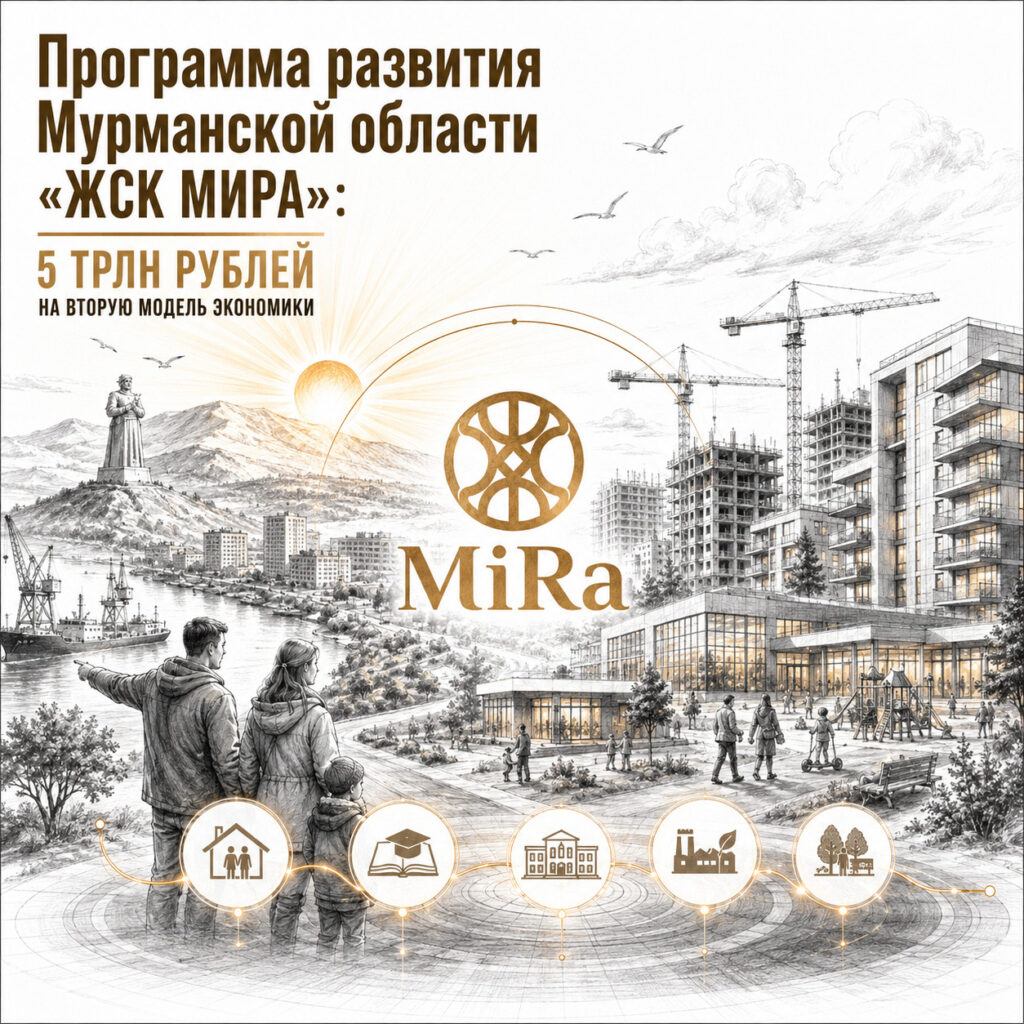
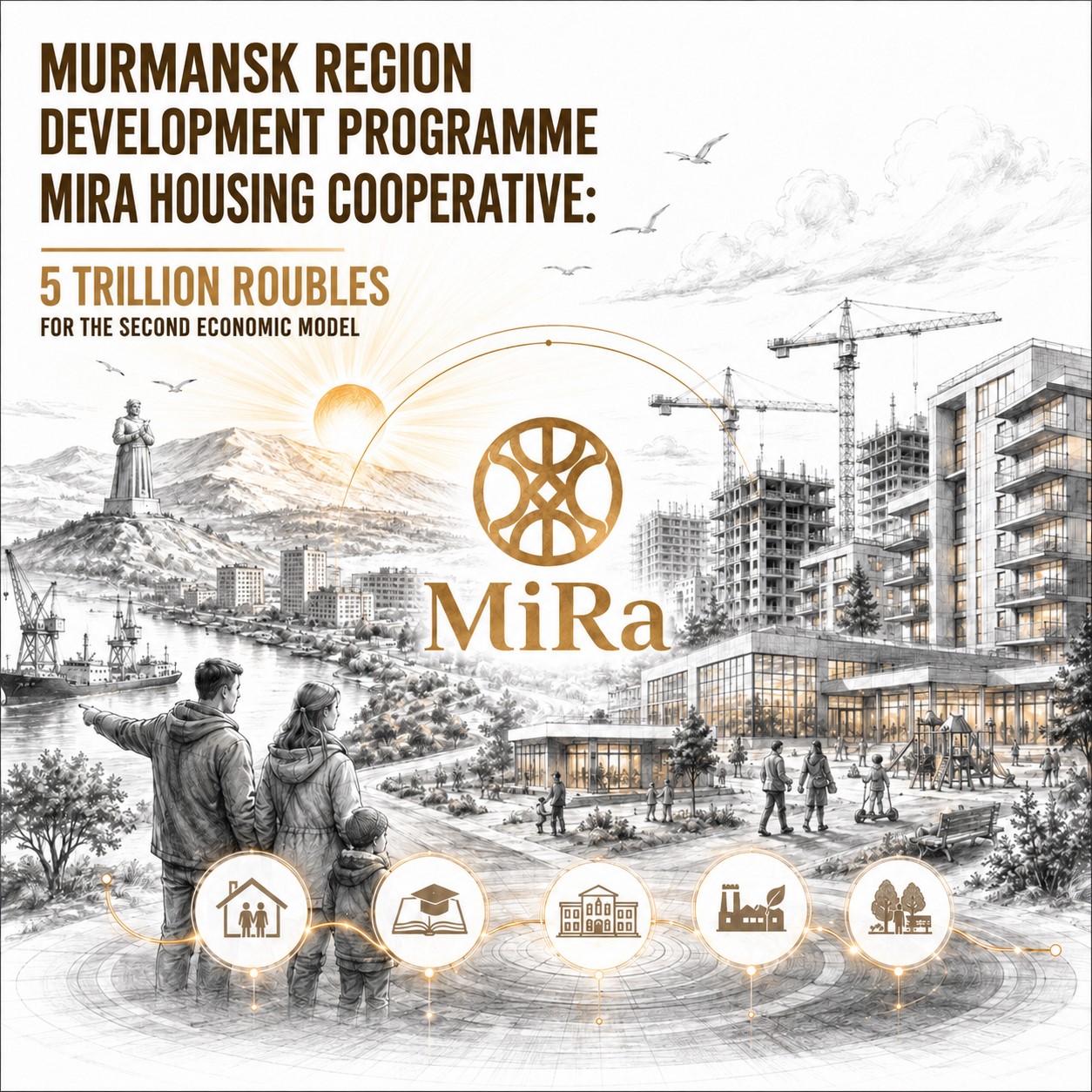
The MIRA Housing Construction Cooperative Programme is a response to the challenges of our time. We are talking about two economic models that determine the means of achieving the goal and the ultimate outcome.
The first model is a world where the rich get richer while the poor bear an increasing financial burden. The entire global economic model is currently built on this approach. Resources flow offshore, while the people are left with debt, inflation and ruined infrastructure.
The MIRA Housing Construction Cooperative Programme proclaims the second model: a world where everything is done for the good and prosperity of humanity. Where the economy serves people, rather than people serving the economy. Where resources are distributed fairly, and every citizen is a co-owner of the common wealth.
One pressing task during the transition period is to develop a plan for transforming the first model into the second, encompassing all the consequences, the full range of tasks that arise and the means of addressing them.
When applying this to a specific region, taking Murmansk Region as our example, our starting point must be the economic indicators of the Soviet period, because it is from that period onwards that we have seen a sharp and sustained slide back towards the first model. We will build on successful past experience by applying today’s intellectual capabilities to the innovative modernisation of the economy as a whole.
Who We Are and What We Have
The MIRA Housing Construction Cooperative was registered in Murmansk on 14 January 2025.
The cooperative has 5 trillion roubles on its balance sheet, backed by assets according to Federal Tax Service (FTS) data. The MIRA Housing Construction Cooperative Programme is based on these assets.
We have direct, earmarked funding from the Sovereign International Treasury M1 under the SUNRISE Programme, a global initiative to overcome the financial and economic crisis and build a World Financial System of Light based on the gold standard and Heavenly principles of government by the people.
Our task is to put these funds to use by implementing projects within the framework of the Second Model, using Murmansk Region to demonstrate how the new economy should work.
Where We Stand Today: A Diagnosis of the Region
Implementation of the MIRA Housing Construction Cooperative Programme begins with an objective diagnosis
Demographics: People Are Leaving
The population of Murmansk Region is shrinking rapidly. During 2024, the region lost 6,2 thousand people. As of 1 January 2025, just 650,1 thousand people lived in the region — 6,3 thousand fewer than a year earlier.
People are leaving. There are no jobs, no prospects, no decent life. A region that once attracted people with the romance of the North and high salaries is now losing population year after year.
Industry: Falling Output
The industrial production index in Murmansk Region fell by 2,8% in the first half of 2026 compared with the same period in 2025. Manufacturing output is declining.
Yet the region remains an industrially developed part of the Arctic. It accounts for 100% of Russian production of apatite and nepheline concentrates, 95% of nickel and 7% of iron ore concentrate. But this wealth goes into the pockets of private beneficiaries and offshore entities, rather than to the people.
Agriculture: Collapse amid Deterioration
Agricultural output in 2025 was substantially below the levels of previous years. Milk production fell by almost a quarter — 23,8%; meat output declined by 12,6%, and egg production by 1,3%. The cow herd shrank by 15% to 2,3 thousand head. Pig numbers halved.
Agricultural output totalled 1,8 billion roubles — 15,2% less than a year earlier. Dairy enterprises ended the year with losses.
A region that could feed itself now depends on imported food.
The Fishing Industry: Usurped by Private Interests
The fishing collective farms of Murmansk Region — Belomorsky Rybak, Murman, Atlant and others — are privately owned. The Murmansk Union of Fishing Collective Farms has been operating since 1999.
Fishing quotas are allocated in favour of private organisations rather than local communities. The people are denied access to their own resources. Fish that should feed the inhabitants of the Arctic is exported through private holding companies.
Energy, Housing and Utilities: In Thrall to Fuel Oil
Every year, 20 billion roubles is spent on purchasing fuel oil to keep Murmansk Region’s energy system running. These vast sums could go towards modernisation, but instead go to fuel oil suppliers and intermediaries.
90% of Murmansk’s housing stock is heated with fuel oil through combined heat and power plants. This is inefficient, expensive and allows money to be siphoned off through fuel purchases. Meanwhile, fuel oil facilities require continual renewal, and the government allocates billions to offset rising fuel oil costs, yet the problem remains unresolved.
Healthcare: Staff Shortages and Outdated Equipment
Murmansk Region faces an acute shortage of doctors. According to figures for 2026, there is a shortfall of 197 doctors and 221 healthcare professionals with secondary vocational medical qualifications. The region lacks obstetricians and gynaecologists, paediatric trauma specialists, neurologists and ultrasound specialists.
Waiting lists for specialists run into the hundreds: at Murmansk’s children’s hospital, 730 people are waiting to see a neurologist, with a waiting time of 30 days. Doctors are overwhelmed with issuing certificates instead of providing actual care. Medical equipment needs repairs, but sanctions make spare parts difficult to obtain.
Education: Teacher Shortages and Outdated Infrastructure
Schools in Murmansk Region face a shortage of teachers. No staff housing is available for teachers. Teachers’ salaries (104 250 roubles) are below the regional average (125,3 thousand roubles). In some schools, even replacing a projector lamp is a problem.
An excessive bureaucratic burden distracts teachers from their core task. Pupil numbers have fallen by 6%. The prosecutor’s office has identified more than 200 thousand violations in the education sector.
Corruption: The People Lose, Officials Profit
Numerous violations were identified in Murmansk Region in 2025. Regulations governing education restricted children’s rights to admission to educational institutions. Municipal debt is growing. Funds that could go towards development end up in the pockets of officials and contractors.
The MIRA Housing Construction Cooperative Programme: A Programme for Transformation
The MIRA Housing Construction Cooperative Programme proposes a systemic transformation of Murmansk Region based on the Second Economic Model. This is more than simply “spending” 5 trillion roubles — it means creating a new reality in which resources work for people rather than a handful of beneficiaries.
The Principles Guiding Our Work:
- Transparency. All financial flows pass through a blockchain platform. Every rouble is overseen by people’s councils.
- Use of funds for their designated purposes. Funds go directly to projects, rather than intermediaries and “kickbacks”.
- Interest-free financing. Money is provided to implement projects, rather than to earn interest.
- Public oversight. Decisions are made through people’s councils and referendums.
- Priority for essential sectors: energy, food, healthcare and education.
What We Will Do:
Energy Self-Sufficiency: Moving Away from Fuel Oil
Problem: 20 billion roubles a year is spent on purchasing fuel oil. 90% of the housing stock is heated with fuel oil through outdated combined heat and power plants.
Solution: a phased transition to innovative energy sources. We are introducing technologies that are already in the final stages of readiness and have proved their effectiveness in projects conducted behind closed doors, but have yet to be widely adopted.
How we will implement this: At the first stage, we will assemble a portfolio of these technologies by working directly with developers and patent holders, bypassing intermediaries and bureaucratic barriers. Each solution undergoes expert assessment to determine its suitability for Arctic conditions, after which we launch a pilot project within the cooperative. Successful pilots are scaled up to district level, then across the region. The entire process is subject to transparent oversight through the blockchain platform, eliminating losses to corruption and guaranteeing that funds are used for their designated purposes. In this way, we are doing more than simply “spending” money: we are creating infrastructure that will serve the region for decades.
The MIRA Housing Construction Cooperative Programme is introducing precisely these solutions.
Impact: energy supply costs reduced by a factor of 2–3, the elimination of corrupt fuel oil procurement schemes, and a clean environment.
Food Self-Sufficiency: Reclaiming Fish Resources and Developing Agriculture
Problem: fishing collective farms are in private hands, agriculture is in decline, and the region depends on imported food.
Solution:
- Returning the fishing port and processing facilities to the ownership of cooperatives and local communities.
- Establishing fish processing cooperatives where fishers deliver their catch directly, bypassing private intermediaries.
- Restoring agricultural production using modern, energy-efficient technologies. Cheap energy from new sources will make it possible to heat greenhouses all year round.
- Developing greenhouse cultivation using energy-saving materials (foamed silicocalcite, vacuum glazing) — 6–12 harvests a year.
Impact: cheap fish and vegetables for residents, jobs, and reduced dependence on imports.
Healthcare: Free of Charge, but Not Without Cost
Problem: a shortage of 197 doctors, outdated equipment and waiting lists.
The MIRA Housing Construction Cooperative Programme provides for a fundamental overhaul of the healthcare system
Solution:
- Increasing doctors’ salaries by a factor of 2–3.
- Building new medical centres and equipping them with modern equipment.
- Developing telemedicine for remote settlements.
- Training staff through our own training centres.
Impact: accessible, high-quality medical care for every resident.
Education: Training the Workforce for the New Economy
Problem: teacher shortages, low salaries and bureaucracy.
Solution:
- Raising teachers’ salaries above the regional average.
- Establishing educational centres to train specialists in energy, fishing and agriculture.
- Introducing practical training linked to the cooperative’s actual projects.
Impact: a trained workforce for the new economy and fewer young people leaving.
Housing Construction: Modern, Affordable Homes
Using new building materials (foamed silicocalcite, vacuum glazing and modified timber), we will build energy-efficient, affordable homes for the residents of Murmansk Region. This will halt the population outflow and create new jobs.
How the Programme Will Be Implemented
The MIRA Housing Construction Cooperative Programme is introducing mechanisms for direct government by the people.
Stages of programme implementation:
- Establishing a Project Office within the cooperative to coordinate all projects.
- Forming local people’s councils — residents themselves decide on priorities.
- Blockchain oversight of all financial flows — complete transparency.
- Launching pilot projects in stages: first an energy-independent residential neighbourhood, then a fish processing cooperative, then a greenhouse complex.
- Scaling up successful solutions across the entire region.
A Call to Supporters
Dear residents of Murmansk Region! We, the MIRA Housing Construction Cooperative, with 5 trillion roubles in earmarked funding from the Sovereign International Treasury M1 under the SUNRISE Programme, are beginning to implement a programme to restore the region based on the Second Economic Model — where everything is done for the good and prosperity of humanity.
The MIRA Housing Construction Cooperative Programme is open to everyone ready to build a better future. We invite everyone to work with us who:
- is ready to participate in people’s councils and make decisions,
- has expertise in energy, fishing, agriculture, healthcare or education,
- wants to restore the region’s prosperity and self-sufficiency,
- is tired of corruption, “kickbacks” and private beneficiaries.
Together, we will build a Murmansk Region where energy is cheap, fish is our own, healthcare is accessible and education is of high quality.
Join us! The time has come.
__________________________________
Join the programme on the Citizen of the USSR portal and on the Union Forum
Glossary
MIRA Housing Construction Cooperative – A housing construction cooperative named MIRA, registered in Murmansk in 2025.
SUNRISE Programme – M1’s global initiative to overcome the financial and economic crisis and build a Financial System of Light
Second Economic Model – A model in which everything is done for the good and prosperity of humanity, and resources are distributed fairly
Sovereign International Treasury M1 – The principal regulator of the new global financial system based on the gold standard
People’s council – A form of direct democracy in which residents make decisions about the development of their area