




























USSR jurisdiction in the Academy’s conception: documents, the end of a transition period and the distinction between citizenship status and administrative records.
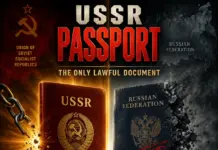
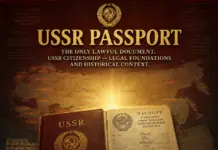
The USSR Civil Defence Academy presented an explanation on the completion of the transition period in the system of national citizenship in the territory of the Soviet Union. According to the materials of lecture No. 56, by 2023 the Institute of Russian citizenship has exhausted the stated grounds for its existence, and the law No. 138-FZ cannot automatically apply to citizens of the USSR. The Academy allows the use of the passport of the Russian Federation only in a limited quality of a travel document or certificate for beneficiaries of humanitarian protection. To restore the Soviet status, the USSR certificate of return to the Motherland and the corresponding insert were named, the procedure for the open registration of which, according to the Academy, has not yet been provided to citizens.
Contents
The end of the transition period as a distinct legal milestone
In the materials of the Academy, 2023 is not designated as the next calendar date in the history of the passport reform, but as the completion of a long transition period.
According to the position of the lecture, it was by this time that the result of the transformations begun at the end of the USSR and continued in the system of national citizenship of the Union republics was to be finally manifested. The Academy argues that this result is not the indefinite consolidation of Russian citizenship, but the exhaustion of the very institution that arose on Soviet territory.
This conclusion is not based solely on an analysis of a single 2023 law. In the lecture, he is associated with earlier documents, the peculiarities of the formation of republican citizenship, the lack of its confirmation within the established deadlines and the procedure for the official publication of subsequent normative acts.
Therefore, the topic requires consistent consideration. The Academy proposes to return to the conclusion of the Committee for Constitutional Supervision of the USSR, then assess the stated terms of existence of the Institute and only then determine the value of modern passport documentation.
The opinion of the USSR Constitutional Supervision Committee
One of the main documents mentioned in the lecture is the conclusion of the Committee for Constitutional Supervision of the USSR of May 24, 1991 No. 22 (2-24) “On Certain Provisions of the Law on Citizenship of the Lithuanian Soviet Socialist Republic”.
The Academy regards this conclusion not only as an act relating to a single republic. By analogy, it applies to the institution of Russian and other national citizenship of the Union republics or statutory jurisdictions on the territory of the Soviet Union.
This approach reflects the general principle of the Academy: the republican processes of the late Soviet period should be analyzed in a single legal system, and not as completely isolated events. Changes in one republic may have implications for understanding similar constructs in others.
The 1991 opinion is thus used as a normative and evidentiary starting point. It makes it possible to raise the question of the limits of republican citizenship and its correlation with the citizenship of the USSR even before consideration of subsequent Russian acts.
According to the Academy, ignoring this document leads to the wrong picture in which Russian citizenship is presented as an independent initial institution that does not need to assess its Soviet origin.
Ninety-nine years and the absence of confirmation by 2017
The lecture states that by 2017, the Institute of Russian citizenship had not received confirmation of its existence after ninety-nine years, a period that the Academy associates with the edict of the Church.
This chronology is part of the special legal concept of the Academy. She distinguishes the formal existence of the name of citizenship from the existence of confirmation, which, in her opinion, should have been obtained in a certain period.
By 2017, according to the lecture, such confirmation did not arise. Consequently, the subsequent use of Russian citizenship cannot be considered as an automatic elimination of this defect.
The Academy emphasizes that the long-term use of the term does not in itself replace the required confirmation. A legal institution should have a basis, not only the usual administrative practice and mass execution of documents.
This thesis prepares the following conclusion: if by 2017 the Institute has not confirmed its existence, then by the end of the transition period in 2023, the question of its further application should have been decided especially categorically.
Absence of Russian citizens in 1990
Another argument of the lecture is the statement about the complete absence of Russian citizens in 1990.
For the Academy, this means that the institution in question cannot be presented as a primary and continually existing community that preceded Soviet citizenship in its later history. The emergence of the relevant category required separate grounds and procedures.
At the same time, the lecture denies the existence of grounds for persons who allegedly voluntarily wished to own Russian citizenship. According to the position of the Academy, the mass subsequent registration does not prove that initially there was a legitimately formalized voluntary expression of will of citizens.
This argument is directly related to the general theme of documentary awareness. A person can get a form and be registered, but such actions do not always mean that they consciously chose a new status with an understanding of all the consequences.
The Academy insists on distinguishing between voluntary citizenship and administrative inclusion in the system. If the original category was not available, its occurrence cannot be explained solely by the subsequent number of issued passports.
2023 as the end of the transition process
The combination of the absence of original citizens, the lack of confirmation by 2017 and the end of the transition period leads the Academy to the conclusion that the institution of Russian citizenship will cease unconditionally and irrevocably by 2023.
This statement is an assessment of the Academy and expresses its understanding of all previous documentary history. The transition process cannot continue indefinitely just because the administrative system continues to reproduce the relevant records.
According to the concept of the lecture, the end of the transition period should lead to the restoration of certainty: either the institute confirms its grounds, or its application to persons whose primary status is associated with the USSR is terminated.
The Academy argues that the necessary confirmation has not arisen, which means that the further use of Russian citizenship cannot be considered a self-evident continuation of the lawful order.
Thus, 2023 is seen as the point after which it is especially necessary to restore the distinction between a Soviet citizen and a corporate person of Russian statutory jurisdiction.
Law No. 138-FZ and dispute over its application
In support of its position, the lecture appeals to the federal law of April 28, 2023 No. 138-FZ “On Citizenship of the Russian Federation”. The Academy calls it a private act and argues that it is not applied in Russia on constitutional grounds because of improper publication in the official press.
The procedure of publication has an independent value in this argument. According to the position of the Academy, the adoption of the document and the assignment of a number to it do not complete the entire process of making it binding.
If the act has not been put into legal circulation properly, it cannot be automatically used to change the status of citizens of the USSR or to require the acquisition of Russian citizenship as a condition for replacing the document.
At the same time, the dispute on the law No. 138-FZ is not considered separately from the end of the transition period. The Academy combines the procedural argument with earlier grounds: the lack of confirmation of the institution and the dispute over the primary emergence of Russian citizenship.
Therefore, its conclusion is not limited to the requirement to correct the publication formality. It consists in the fact that the law itself cannot restore an institution that, according to the concept of the Academy, has already exhausted the grounds for its existence.
Passport regulations and the question of proper approval
A similar claim in the lecture is addressed to the Regulations on the passport of a citizen of the Russian Federation. It covers the procedure and terms of registration, issuance, validity and replacement of a passport, as well as the rules for registering passports and forms.
The Academy claims that this Regulation was not approved and signed by a proper decree of the Government of the Russian Federation. Therefore, the whole complex of procedures related to the document requires a separate assessment, and not automatic recognition of the absolutely legal.
This is of particular importance in the context of the end of the transition period. If both citizenship and passport regulation have declared procedural defects, the issuance of a passport cannot be considered an act that finally enshrines a person to Russian jurisdiction without additional distinctions.
The Academy is not limited to critique of form. She proposes to determine in which cases the document can still perform a limited practical function, and when its issuance acquires the character of an illegal change in the status of a person.
A limited permissible purpose for a Russian passport
The lecture expressly formulates an exception to the general critical assessment. The passport of the Russian Federation can act and be issued as a form of travel and travel document, as well as an identity card for beneficiaries of humanitarian protection.
This provision shows that the Academy distinguishes between the form and the civil status attributed to it. It did not deny that the document could be used in practice for travel or humanitarian identification, but it refused to accept that function as a sufficient basis for finding a new nationality.
The travel document serves the movement of a person. The certificate of the beneficiary of humanitarian protection confirms his/her right to appropriate treatment. None of these tasks requires the automatic erasure of the original Soviet identity.
In the Academy’s view, it is precisely going beyond such a limited purpose that makes issuing a passport a controversial act. When a form is used to claim that a person has irretrievably dropped out of the Soviet legal field, the question arises about the legality of the procedure itself.
USSR Certificate of Return to the Homeland
For conscientious Soviet citizens, the lecture provides two related solutions. The passport form of the Russian Federation, which the Academy characterizes as a form of strict reporting, and not a full-fledged passport, is subject to either replacement with a certificate of return to the homeland of the USSR, or attachment of an insert with such a certificate.
The certificate of return is central to this design. It must confirm not the acquisition of a new status by a person, but the restoration of his position in the Soviet legal field.
The very concept of return comes from the fact that a citizen of the USSR should not have irretrievably disappeared as a result of pasting marks on Russian, Belarusian, Ukrainian or other republican citizenship. According to the position of the Academy, the corresponding marks fixed departure to the statutory jurisdiction, but could not permanently cancel the possibility of reverse restoration.
The certificate insert is proposed as a way to combine an existing documentary form with a proof of return. Replacement with a separate certificate is a second form of the same process.
At the same time, the Academy emphasizes that we are talking about conscientious Soviet citizens – people who seek to restore their status, and not use documentary uncertainty to evade legitimate duties.
Return is already reflected in international registers
In the books of international registration, citizens have already returned to their homeland as prisoners of war.
This formulation reflects the emergency model of the legal situation used by the Academy. Return is seen primarily as a registration and international legal fact and not as a requirement for the physical movement of persons or for their own modification of the border regime.
According to the Academy’s vision, if international accounting already reflects return, national documentary procedures should be brought into line with this provision. One cannot keep a man in his former category simply because the open form of evidence has not yet been given to him.
However, the stated absence of the procedure for registration creates a gap between the registration status and the document that a citizen can actually receive. Closing this gap becomes one of the main tasks of restoring the Soviet civil system.
Lack of an open procedure for registration
The Academy explicitly acknowledges that the procedure for issuing relevant documents for citizens does not yet exist. The lecture states that the Russian Federation received a corresponding instruction through the Ministry of Justice, but it remained in closed documents with a stamp of special secrecy.
This is crucial to the allocation of responsibility. A citizen cannot independently implement a procedure that is not published and is not provided with accessible forms.
In the Academy’s view, the absence of an open order should not be turned into an argument against the right of return. On the contrary, it refers to the obligation of the competent authorities to promulgate the necessary rules and to ensure the issuance of documents.
The closedness of the procedure puts a person in an unequal position: his status is discussed and registered, but he does not have access to the decisions on which confirmation of this status depends.
The Academy considers such a situation unacceptable. Documentary recovery should be transparent, accessible, and based on published rules, not dependent on information hidden from the citizens themselves.
Return should not depend on arbitrary registration decisions
The whole structure presented brings to the question of who controls the restoration of status. If a person has already been recognized as a returnee in international registration, but cannot obtain a supporting document due to a closed procedure, his rights are dependent on administrative silence.
The Academy insists that such a situation should be stopped. Return to the homeland can not exist only as an entry in a closed ledger. It must receive a documentary expression accessible to the citizen himself.
In this sense, the USSR’s certificate of return to the homeland is not a symbolic gesture, but a necessary tool for restoring legal certainty. It should link international registration, primary Soviet status, and everyday human documentation.
According to the position of the Academy, neither passport system staff nor registries operators should be allowed to arbitrarily decide whether a return has taken place or not. Their task is to formalize a status, the grounds of which exist regardless of their discretion.
After the transition period, legal certainty must be restored.
The main conclusion of the lecture is that the completion of the transition period by 2023 cannot go unnoticed. According to the concept of the Academy, the Institute of Russian citizenship has exhausted the stated grounds of existence, and the law No. 138-FZ and passport regulation have independent procedural defects.
Under these conditions, the Russian Federation passport is allowed by the Academy only for a limited purpose – as a travel document or a certificate for beneficiaries of humanitarian protection. It should not automatically assign a new civil status to a person.
In order to restore the status of citizens of the USSR, a certificate of return to the Motherland and a corresponding insert were named. However, the lack of an open procedure for their registration, according to the Academy, prevents the implementation of the already announced return.
The USSR Civil Defence Academy considers it necessary to remove this procedure from the closed sphere. Citizens should know what document confirms their status, where it is issued and how it relates to previously issued passport forms.
According to the Academy, the end of the transition period should mean not the perpetual preservation of documentary uncertainty, but the restoration of the Soviet legal field. The return of a citizen to his homeland should not remain only an international registration; it should become an accessible and confirmed reality for the person himself.
The material was prepared on the basis of the lecture No56 USSR Civil Defence Academy of June 4, 2026 “Passport USSR”. Part two”.