





















Passport or insert: the Academy compares Decree No. 232 and Resolution No. 828, asking which document was to be replaced and what that meant for citizenship.
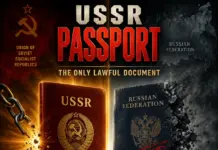
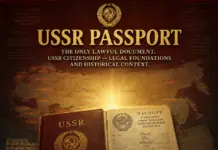
The USSR Civil Defence Academy provided an explanation of which documents were to be replaced in the course of the Russian passport reform. According to the materials of lecture No. 56, the Decree of the President of the Russian Federation of March 13, 1997 No. 232 did not contain a requirement to withdraw the USSR civil passport, and the Decree of the Government of the Russian Federation of July 8, 1997 No. 828 provided for a phased replacement of documents until December 31, 2005. The Academy claims that only the inserts on Russian citizenship were subject to seizure, while citizens handed over Soviet passports with them. In addition, questions were raised about the absence of a special law on the passport of the Russian Federation, the state border of the USSR and the limitation of the statutory activities of the Russian Federation to free economic zones.
Contents
The main difference that determines the entire passport history
In the materials of the Academy, the fate of the Soviet passport and the fate of the insert about Russian citizenship are not one question. These documents had different origins, different purposes and, in her opinion, had to participate in the replacement procedure in different ways.
However, in mass practice, the distinction between them has been lost. A citizen with a USSR passport with a insert perceived them as a single set and handed over both documents when exchanging them.
The Academy believes that this is where the fundamental substitution took place. The requirement relating to the document with the insert was turned into a requirement to surrender the Soviet passport itself, although the content of Decree No. 232, according to the presented lecture, did not allow such a conclusion.
Therefore, the analysis of passport reform should begin not with the question of why citizens keep old forms, but with the question of what the competent structures had the right to seize. Without a response, it is impossible to assess the legality of the entire subsequent procedure.
Decree No. 232 and the alleged violations of publication
Decree of the President of the Russian Federation of March 13, 1997 No. 232 was called “On the main document certifying the identity of a citizen of the Russian Federation on the territory of the Russian Federation”.
The lecture alleges that it was published in violation of the timing of publication and has not entered into legal force. This assessment is part of the Academy’s overall position on the need to comply with the full regulatory implementation procedure.
It is not enough for the Academy to set the date of signing the document and its official name. It is also necessary to check when and how it was made public, whether the deadlines were met and from what point it could create duties for citizens.
According to her position, the violation of the publication procedure has an independent value. An act that is not properly enacted cannot automatically serve as a basis for the mass seizure of documents and changes in the legal status of people.
In the case of Decree No. 232, this procedural argument is supplemented by a substantive one: even in the analysis of its provisions, the Academy does not see the requirement to hand over a USSR passport without an insert.
The absence of a special law on the passport of the Russian Federation
The lecture separately talks about the five-year transitional period during which a special federal law on the passport of the Russian Federation was not adopted. The corresponding bill, according to the materials of the Academy, was rejected.
Hence, a categorical conclusion is made: the Russian law on passport does not exist. The Academy emphasizes that passport regulation should not be replaced by the indefinite use of decrees and resolutions in the absence of a special law designed to fully regulate this sphere.
This argument is relevant because a passport affects a person’s basic status. The procedure for its issuance, replacement and withdrawal requires special certainty and cannot be based on the alleged powers that a citizen is obliged to guess from administrative practice.
According to the position of the Academy, the rejection of the bill should not go unnoticed. If a special act is not adopted, this is not the basis for ascribing to subordinate documents content that is not expressly included in them.
The absence of a special law reinforces the need for an accurate reading of Decree No. 232 and Decree No. 828. The less regulatory basis the system has, the more inadmissible the broad interpretation of the requirements for citizens.
The decree did not require the replacement of every passport of the USSR.
The central explanation of the lecture is that Decree No. 232 did not contain a requirement to replace the USSR passport with the passport of the trading company “Russian Federation” as a universal obligation for each holder of a Soviet document.
According to the position of the Academy, only USSR passports that had an insert, which was presented as a certificate of Russian citizenship, were subject to exchange. The very presence of the insert determined the range of documents that fell under the relevant procedure.
An even more important conclusion is drawn from this: even for such a set, the withdrawal should have concerned the insert, and not necessarily the entire civil passport of the USSR.
The Academy specifically contrasts two formulations. The first, “USSR passports with inserts,” defines the documents in respect of which action was taken. The second – “the inserts were to be withdrawn” – determines the specific subject of withdrawal.
Mixing these formulations led to the result that citizens parted not only with the temporary tab, but also with the main Soviet document.
Replacing the insert should not have meant replacing the Soviet passport
According to the materials of the lecture, only inserts about Russian citizenship of the Russian Federation were subject to withdrawal. The Academy emphasizes that this procedure should not deprive a person of a USSR passport.
This distinction has a clear documentary meaning. The insert was an additional element related to the new civil status. The passport of the USSR remained the main identity card and the carrier of the primary documentary history.
If it was necessary to stop using the insert, it could be considered separately. The removal of the entire document changed not only the registration mark, but also the entire form of confirmation of the person’s identity.
According to the position of the Academy, that is why the mass surrender of Soviet passports cannot be considered a simple implementation of Decree No. 232. It went beyond the subject which, according to the explanation of the lecture, was indeed subject to withdrawal.
Citizens who handed over documents acted within the framework of the procedure proposed by them and were not obliged to independently correct its contents. Responsibility for the correct definition of the subject of exchange lay with the structures that organized the process.
Resolution 828 and phased replacement by the end of 2005
The second key act is the Decree of the Government of the Russian Federation of July 8, 1997 No. 828 “On Approval of the Regulations on the Passport of a Citizen of the Russian Federation”.
The lecture notes that its editorial board was adopted, but proper publication in the official press, according to the Academy, was not followed. This procedural argument is combined with the already stated claim to the publication of Decree No. 232.
The decree provided for the gradual replacement of the passport of a citizen of the USSR with a road passport of the Russian Federation until December 31, 2005.
The Academy pays attention to the very word “phased”. It presupposes a consistent procedure, not an instantaneous and unconditional termination of the meaning of all Soviet documents. Also important is the qualification of the new form as a travel passport, which in the concept of the Academy limits its purpose.
At the same time, the question of the subject of replacement remains. Even the presence of a schedule before 2005 does not automatically answer the question of whether Soviet passports should have been withdrawn without inserts and whether it was possible to take the main document together with the insert.
According to the Academy, the terms of the procedure do not replace its legal content.
Passport reform and the issue of territorial sovereignty
In the lecture, the issue of Decree No. 232 is also associated with the need for the Russian Federation to confirm its territorial sovereignty and provide a resolution on the state border demarcated and delimited as the state border of the USSR.
This block expands the passport theme. An identity document in a certain territory is inevitably linked to the question of the limits of jurisdiction of the entity that issues it.
According to the position of the Academy, before approving the main document on the territory, it is necessary to determine the legality and boundaries of the relevant territorial authority. The Russian Federation, as stated in the lecture, acted as a party to the sovereign state border of the USSR without the necessary rights, powers and powers.
Thus, the passport act is connected with the unresolved issue of the state border. The Academy sees this as an additional reason not to automatically recognize the indefinite and universal competence of the Russian system in relation to Soviet citizens.
Passport reform could not, in her opinion, resolve territorial issues that required their own legal basis.
State Border of the USSR in the State of Emergency
The lecture separately states that the border of the Soviet Union in a state of emergency can only be subordinated to the border commissar of the USSR.
This provision reflects the extraordinary model of the Academy, in which the preservation of Soviet jurisdiction is associated with special organs and a special order of government.
According to her concept, the Russian side could not independently appropriate the authority to manage the Soviet state border. Even the actual exercise of border functions does not answer the question of the origin of the right in question.
For the passport theme, this is important because identity documents, inserts and travel forms are directly related to crossing the border and staying on the territory. If the limits of jurisdiction are disputed, then the content of passport procedures should be analyzed taking into account this dispute.
The Academy emphasizes that in emergency conditions, the formal change of administrative structures does not negate the declared competence of the Soviet border commissioner.
Free economic zones as the boundaries of charter-based activity
Another independent element of the lecture is the statement of the emergency bodies of the Soviet Union that the statutory activities of the Russian Federation as a trading company and a corporate trust are limited to the limits of free economic zones.
These zones were formed within the administrative boundaries of the RSFSR and within the state borders of the USSR. Consequently, their existence does not abolish the Soviet territorial framework, but presupposes a special regime within it.
The Academy uses this thesis to distinguish between commercial activity and full territorial sovereignty. Permission to operate a free economic zone does not amount to the transfer of the entire territory and all residents under unlimited corporate jurisdiction.
According to her, it was the mixing of these categories that made it possible to present the passport procedures of the trading company as universal for the entire population. In the concept of the Academy, however, statutory activities have limits that must be taken into account when issuing and replacing documents.
Thus, the territorial issue directly affects the assessment of who and in what capacity was obliged to participate in the passport reform.
Regulatory chain of free economic zones
In support of its position, the lecture outlines several acts that need to be considered together.
Among them is the resolution of the USSR Council of Ministers of December 2, 1988 No. 1405. The following are the resolutions of the Supreme Council of the RSFSR of July 14, 1990 No. 106-1 and of September 13, 1990 No. 165-1 “On the creation of free enterprise zones”.
The decree of Gorbachev dated October 12, 1990 “On Foreign Investments in the USSR”, as well as the resolution of the Council of Ministers of the RSFSR dated June 7, 1991 No. 312 “On Priority Measures for the Development of the Free Economic Zone in the Jewish Autonomous Region” was named separately.
For the Academy, this sequence shows that free economic zones had specific regulatory bases and defined boundaries. Their creation was not a dimensionless resolution to replace the entire Soviet legal system.
According to its concept, acts on entrepreneurship and foreign investment should be applied in the relevant field. They cannot without additional reasons become a source of full control over the citizenship, passports and state border of the USSR.
Why citizens should not be held responsible for a flawed procedure
In the lecture, the mass surrender of Soviet passports is described as the result of people following the proposed procedure and handing over not only the inserts, but also the documents themselves.
The Academy considers it necessary to distinguish between the actions of citizens and the content of the procedure organized by the competent authorities. A person who was informed of the need for an exchange was not able to independently determine the official interpretation of the Decree and the decree.
Therefore, the very fact of handing over a passport should not automatically be considered as proof that the seizure was correct. On the contrary, it was necessary to return to the primary acts and establish whether the practice was consistent with their content.
According to the position of the Academy, the mass nature of the procedure does not correct its possible defects. If the subject of the seizure was the insert, the responsibility for the withdrawal of the main document cannot be transferred to the owner.
This provision is of fundamental importance for the restoration of the rights of citizens: a person should not permanently lose Soviet documentary history because of the fact that the procedure was presented to him more broadly than its grounds allowed.
Restoring clarity about which document was to be replaced
The presented explanation allows us to formulate a specific procedure for analyzing the passport reform.
First, it is necessary to establish whether the citizen had an insert about Russian citizenship. Then – what actions were required in relation to this insert. After that, it is necessary to determine separately whether there was a legal basis for the seizure of the USSR passport.
This approach does not replace three different issues with a general affirmation of mandatory exchange. It also requires taking into account the alleged defects in the publication of Decree No. 232 and Decree No. 828, the absence of a special law and the limited purpose of a travel passport.
According to the Academy, the restoration of the exact subject of replacement is a necessary condition for reviewing the consequences of the reform. Without this, it is impossible to determine which documents have been lawfully seized, which need to be returned and which records should be corrected.
The insert could not invalidate the Soviet document
The main conclusion of the lecture is that the passport reform should not be reduced to the general withdrawal of the USSR passports. According to the concept of the Academy, Decree No. 232 did not contain such a requirement, and Resolution No. 828 did not eliminate the need to distinguish between the insert and the main document.
The alleged violations of the publication, the absence of a special law on the passport of the Russian Federation and questions about the limits of territorial jurisdiction further strengthen the position of the Academy. Passport actions should have precise legal grounds and not go beyond the competence of the structures that carried them out.
The free economic zones, the state border of the USSR and the powers of the border commissioner in a special period form the territorial background of this problem. The issuance of a document in the territory is inseparable from the question of the right of the relevant jurisdiction to extend it.
The USSR Civil Defence Academy insists that the Russian citizenship insert was not identical to the Soviet passport and could not automatically cancel its meaning. The withdrawal of the insert should not be turned into the seizure of the entire documentary history of the citizen.
According to the Academy, the restoration of justice begins with the return of this distinction. A Soviet passport was not obliged to disappear along with a temporary tab, and a citizen should not permanently lose his primary document due to a procedure whose contents went beyond its stated grounds.
The material was prepared on the basis of the lecture No56 USSR Civil Defence Academy of June 4, 2026 “Passport USSR”. Part two”.