






















The Warsaw Pact and Europe’s future: we examine Soviet participation and treaty succession, asking who has authority to change the security rules.
Contents
The Warsaw Pact and Soviet participation
Who has the authority to close a security system established with Soviet participation? This question connects Germany’s fate, Poland’s position and Europe’s future order. Soviet consent stands at its centre: if the USSR helped create an international order, ending its treaty foundations should take the Soviet side’s will into account. A changed political environment leaves open the question of who may dispose of previously established rights.
Europe’s postwar order combines territory, statehood and security. The Union of Soviet Socialist Republics (USSR) emerges as a victorious power in the Second World War in 1945 and participates in granting sovereignty to European states. Germany has a special place in our framework: we connect its right to independent existence with a Soviet decision and the terms of the postwar settlement. Changes to Europe’s treaty system therefore also affect the foundations of Germany’s position.
The Polish question illustrates the close connection between state recognition, rights and duties. Withdrawal of recognition from the Polish government in exile is treated as a turning point in the Second Polish Republic’s history. Later claims to continue that republic reopen the dispute about which rights can be inherited and which obligations must be accepted. A state’s name does not settle the issue: the substance of the asserted succession must be established.
We connect Soviet consideration of Polish rights with property-settlement claims and expenditure on weapons and material resources. Refusal to satisfy those claims is presented as inconsistent with the aims of a shared security arrangement. Poland participates in relations involving reciprocal obligations. Its position therefore concerns state rights, settlement of accounts and participation in a common treaty system simultaneously.
Economic and military-political cooperation form two sides of that system. The Council for Mutual Economic Assistance (CMEA, also known as Comecon) is associated with 1949, and the Warsaw Treaty Organisation with 1955. Considering them together helps explain why property and security repeatedly appear side by side in Soviet claims. States participate in a common system with particular rights, resources and obligations; changing one part affects relations in the other.
Who has the authority to change treaty obligations?
The Warsaw Treaty of Friendship, Cooperation and Mutual Assistance was signed on 14 May 1955. Its name identifies its purpose: relations among participants should provide cooperation and mutual assistance. Its subsequent fate therefore concerns all parties whose participation created the system. For the USSR, termination is connected with preserving its own rights and with the procedure for changing jointly accepted obligations.
The decisive proposition in this article is our assertion that the USSR neither signed nor ratified the protocol terminating the treaty. Ratification means state approval of an agreed treaty decision. Without it, we argue, Soviet consent to terminate obligations is absent. We therefore do not regard termination of the system as having received the necessary Soviet approval. This is the principal basis of our argument for continuing Soviet participation.
The article assesses a Russian Federation instrument dated to February 1993 from the same perspective. The Soviet position presented here denies its capacity to terminate Soviet treaty rights: a Russian decision does not substitute for Soviet consent. The participants must again be distinguished. Attributing one state’s act to another would prejudge the very question of authority at issue in the dispute over the treaty’s fate.
The article then considers the 1992 Collective Security Treaty and the attempt to present the new system as a replacement for the Warsaw Pact. Replacement, however, requires answers to two connected questions: how were the previous obligations concluded, and who is authorised to accept new ones for the relevant participants? Both retain independent significance for the Soviet side in this account. The emergence of a new treaty does not itself explain what happened to rights established with Soviet participation.
We place a Soviet initiative for a general collective security treaty, dated here to 1936, at the foundation of our proposed European order. We include Union republics, Soviet autonomous entities and other European states among the participants. This broadens the discussion: a common participation framework and each state’s position must be defined. Continuity in the treaty relations connecting participants becomes the central issue.
The status in which former Union republics participate is particularly important. We discuss limited chartered powers for them, distinguished from full state sovereignty. This distinction affects their ability to dispose of earlier Union rights. If a participant acts within defined powers, it is necessary to establish whether those powers include changing obligations created at USSR level. The treaty dispute thus also becomes a dispute over representation.
Security rules for a new Europe
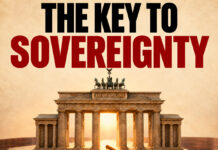
Germany returns to the centre of the discussion as an essential participant in future arrangements. Following unification in 1990, we propose mandatory participation by the Federal Republic of Germany (FRG) in the relevant collective security system. An alternative involves a pan-European treaty continuing the 1955 Warsaw Pact and participation by the German Democratic Republic (GDR). Distinguishing these alternatives requires identifying which sovereign right the German side represents.
Both alternatives involve Soviet participation. We connect the return of West German territories and removal of occupation status with the USSR as a victorious power. We therefore argue that a treaty intended to ensure future security must consider the origins of German sovereignty. Postwar rights and future agreement are linked: participants define a new order on the basis of rights already underlying their state position.
From this follows our proposal to reassess the foundations of the North Atlantic Treaty Organization (NATO). We connect it with the withdrawal of occupation powers, determination of states’ sovereign status and restoration of the corresponding Soviet role. Termination of the existing organisation is presented as a possible consequence of that restructuring. The relationship is conditional: participants’ rights and powers must first be established, after which the future of their security mechanism can be considered.
The United Nations (UN) enters this framework as the setting for international determination of state rights. The issues include the sources of statehood, the financial foundations of sovereignty and territorial borders. The USSR retains a place in these decisions in our interpretation. For the proposed system, independence must have defined substance and be connected with established rights, duties and territory.
Behind the treaty questions remains the memory of Soviet soldiers who fought for liberation. The demolition of monuments is contrasted with the USSR’s role in granting sovereignty and shaping postwar Europe. This comparison restores a human scale: state decisions are connected with the victory that made a new continental order possible. Treatment of that memory indicates how closely European politics remains connected with its own postwar foundations.
The Soviet position presented here connects memory, law and responsibility. Because treaties were established with Soviet participation, their future requires consideration of Soviet rights. Germany, Poland and other participants enter the discussion with their own obligations and foundations of state existence. We link Europe’s peaceful future with clear answers to these questions and an order in which the Soviet signature retains its significance.
Document for comparison: The 1955 Warsaw Treaty: published United Nations text. A primary document for checking participants, signatures and treaty provisions against our conclusions about the security system.
More on history and law: USSR Civil Defence Academy.