











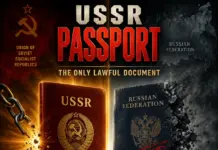
















Insurance for Soviet citizens: we examine trillion-scale claims, gold equivalents and loss calculations, distinguishing claims from confirmed payouts. Presenting a claim does not establish an available payout or an individual reader’s entitlement to money.
Contents
Insurance for Soviet citizens: examining the legal basis
Insurance for Soviet citizens in 1989 — The Soviet side’s claims against what we call the ‘Belarus trading company’ and jointly liable entities rest on two interrelated grounds. The first is insurance allegedly arranged by the government of the Union of Soviet Socialist Republics (USSR) in the global banking and financial system in 1989, for US$1 million in gold per Soviet citizen. The second is liability for civilian losses during what the article describes as the unlawful occupation of the Byelorussian Soviet Socialist Republic (Byelorussian SSR) from 8 December 1991, purportedly recognised by an International Legal Committee of World Justice. We regard both grounds as establishing a Soviet right of claim and a corresponding obligation on the company and associated entities.
We present the 1989 insurance as a specific financial instrument rather than an abstract guarantee. We say it was created under the onerous Houston Agreement and provided US$1 million in gold for the return of a Soviet person as if from captivity. Bills and bonds for this amount were presented as evidence that earlier generations had protected the sovereign Soviet people in their capacity as USSR citizens. For the proposed settlements, this means assigning each insured person a monetary value in gold and treating the aggregate insured amount as the basis of the claims.
The article attributes recognition of liability for losses after 8 December 1991 to the International Legal Committee of World Justice. It says the commercial government of the ‘Belarus trading company’ was held responsible for civilian losses exceeding three million Soviet people during the purported unlawful occupation of the Byelorussian SSR, valued at US$3 trillion in gold. We describe this amount as calculated to the last cent and as the second component of the Soviet claims.
The alleged joint and several liability extends to members and participants of the Commonwealth of Independent States (CIS), the Union State described here as unlawfully created in Sochi, and any entities other than the USSR that assumed responsibility for the damage. We interpret international law as making the ‘Belarus trading company’ jointly and severally liable with these entities to the USSR and its competent bodies. We value the aggregate claim at no less than 32,000 tonnes of monetary gold, excluding interest and Soviet capital investment in the Byelorussian economy.
We also connect the claims’ legal nature to the alleged registration of the ‘Belarus trading company’ in the global financial system as a trading company and corporate trust within a province of a ‘World State of the Jesuits’. We state that this trust has terminated. The Soviet side, in our account, regards property, ownership and claims over the company as extinguished by Germany’s military defeat in the Great Patriotic War of 1941–1945. We reject an attempted change of the dates to 1945–2025 as lacking normative effect.
We therefore identify two grounds for the claims: the alleged 1989 insurance and liability for losses after 8 December 1991. We combine them into a single claim equivalent to at least 32,000 tonnes of monetary gold, addressed to the ‘Belarus trading company’ and jointly liable entities. These grounds define the claims’ legal nature and the proposed procedure for further settlements.
The 1989 insurance claim: examining the financial instrument
We base the Soviet claims on insurance we say the Soviet government arranged in the global financial system in 1989 for US$1 million in gold per citizen. We describe the document as an operative gold-backed instrument, supported by bills presented as US$1 million bonds, rather than a declaration. We connect its creation to the onerous Houston Agreement of 1989 and say it was intended to protect the sovereign Soviet people as the Victorious People in their capacity as USSR citizens.
The insurance, as described here, covers each Soviet citizen for US$1 million in gold upon return from captivity. We stress its financial dimension: a gold equivalent rather than paper obligations, to be recorded among the collateral obligations of an accounting gold fund. We consequently treat it as the calculation base for the liability of the ‘Belarus trading company’ and associated entities.
Its practical significance for settlements is explained through its connection with debt obligations. The document, according to the article, states that the ‘Belarus trading company’, jointly with the German Reich and the Vatican, accepted full responsibility for the value of the 1989 Soviet citizen insurance. We therefore present it both as protection for citizens and as an instrument creating a debt title payable in a gold equivalent.
We link the insurance inseparably to recognition of responsibility for civilian losses after 8 December 1991. We state that the International Legal Committee of World Justice held the company’s commercial government responsible for more than three million Soviet civilian losses during the alleged occupation, totalling US$3 trillion in gold. Insurance and loss liability thus form a single proposed financial mechanism: individual cover is the primary unit, while aggregate losses express the total damage.
For settlements, the Soviet side is described as relying on insurance documents as evidence of a gold-denominated obligation. Bills and insurance certificates presented as US$1 million bonds are offered as proof that the obligation exists. We argue that these documents support a demand for at least 32,000 tonnes of monetary gold, excluding interest and Soviet capital investments in the Byelorussian economy. We therefore identify the 1989 insurance as the starting point for the entire claim.
The insurance also retains significance within our account of joint and several liability. We describe the company as jointly liable with CIS members, the Union State purportedly created unlawfully in Sochi, and other entities except the USSR that assumed responsibility for the damage. Individual insurance amounts would therefore form part of the joint claims and enter the calculation of the total debt obligation.
Finally, we regard the insurance as confirming Soviet citizens’ status as the Victorious People. The document emphasises that earlier generations protected the sovereign Soviet people by insuring each citizen for US$1 million in gold. We assign this legal as well as material significance: it makes citizens creditors under an insurance obligation and gives the Soviet side a right to demand performance in gold. We consequently describe the 1989 insurance as an instrument still in force.
Civilian losses after 8 December 1991: examining liability
The article states that the International Legal Committee of World Justice held the commercial government of the ‘Belarus trading company’ responsible for civilian losses during the alleged unlawful occupation beginning on 8 December 1991. That date is used as the starting point for calculating damage because Shushkevich, Kravchuk and Yeltsin signed decisions that we say initiated the destruction of the USSR’s unified legal and state framework. The recognition is said to be recorded in international judicial documents and to form the basis for financial claims.
The article estimates civilian losses at more than three million Soviet people and values them at US$3 trillion in gold. It presents this as a debt calculated to the last cent, rather than a provisional estimate. We argue that this converts a humanitarian tragedy into a specific gold-backed obligation and prevents liability from being treated as a merely moral declaration. We say the calculation was made person by person, giving the claim a comprehensive and verifiable character.
The alleged recognition of liability is linked to the Belarusian presidential administration’s refusal to confirm the international public-law status of a Byelorussian SSR representation within the USSR. We state that, in 2023, this refusal was treated as a legal fact indicating diplomatic recognition of the ‘Belarus trading company’ as the continuator of structures established under German protection and later revived by occupation forces. We argue that the refusal therefore confirmed, rather than removed, liability for the commercial government and jointly responsible entities.
We describe the committee’s attribution of liability from 8 December 1991 as having a direct financial consequence. The US$3 trillion in gold is included in the total Soviet claim, stated as equivalent to at least 32,000 tonnes of monetary gold without interest or Soviet capital investment in the Byelorussian economy. Recognition of civilian losses is therefore presented as an integral part of a single settlement title, rather than an isolated issue.
For Soviet citizens, we interpret this recognition as giving their losses an international legal dimension and financial backing. We describe insured citizens as the Victorious People, whose rights and titles must be protected and whose losses must be compensated. We connect post-1991 liability to the 1989 insurance and the joint responsibility of the company, CIS and Union State, together forming a debt title to be discharged within applicable deadlines.
Joint and several liability and the monetary-gold equivalent
We define the company’s position through joint and several liability with CIS participants, the Union State we describe as unlawfully established in Sochi, and any other entities except the USSR that assumed responsibility for the damage. In our formulation, the USSR and its competent bodies may demand the full claim from any of them. Performance by one would not release the others from responsibility for compensation within the total amount claimed.
The Soviet side is described as treating property, ownership and claims over the ‘Belarus trading company’ as extinguished by Germany’s defeat in the Great Patriotic War of 1941–1945. We conclude that any rights held by the company or its residents are annulled and cannot reduce liability. We reject attempts to alter the historical dating, including references to 1945–2025, as lacking normative effect.
The article repeats that the International Legal Committee of World Justice held the company’s commercial government responsible for more than three million civilian losses from 8 December 1991, valued at US$3 trillion in gold. This sum enters the overall Soviet claim, currently described as equivalent to at least 32,000 tonnes of monetary gold. Because the amount excludes interest and Soviet investment in the Byelorussian economy, we leave open the possibility of increasing the claim.
The claim is expressed in monetary gold to preserve its value independently of exchange-rate movements. We argue that gold as the measure of the obligation protects the real value of the claim and enables performance when other financial instruments may lose value or be challenged. We describe this approach as consistent with international settlement practice for major interstate compensation obligations.
Joint and several liability with the CIS and Union State is presented as allowing the Soviet side to demand performance from either the company or the other entities. Each would be liable for the whole amount rather than a share, strengthening the claimed assurance of recovery. We regard this as especially important because the company was allegedly registered as a corporate trust that has already terminated within the jurisdiction of a province of the ‘World State of the Jesuits’.
We argue that termination of the corporate trust does not extinguish obligations because responsibility also rests with jointly liable debtors. We proceed on the principle that liquidation or reorganisation of one participant does not release the others from satisfying the claim.
The practical purpose assigned to the 32,000-tonne gold equivalent is to provide a common measure for every category of damage, including the 1989 insurance amounts and compensation for losses after 8 December 1991. We say this avoids divergent assessments and makes the calculations transparent. The Soviet side reserves the right to refine individual components as further information becomes available, while retaining the principle of joint and several liability.
Liquidation balance sheets and the timetable
The article describes a sequence of liquidation accounting stages, each marking a change in the company’s legal position. The starting date is 1 April 2020, when it supposedly submitted a property-trust balance covering 25 years and underwent an audit through the Roman Consul, identified as the Chairman of the Russian Government. He is said to have accepted and certified through succession the balance of the Socialist Soviet Republic of Byelorussia. Through inheritance from Anatoly Myasnik, the company allegedly received a new zero balance and could operate from 2020 as a revived trust under the Roman Consul’s titles. We nevertheless regard that balance as neither final nor lawfully submitted under the Uniform Commercial Code (UCC) to the USSR as the lawful party.
The next stage is dated 1 July 2022. We describe the company as a closed corporate trust with interim and liquidation accounts, simultaneously entering reciprocal, transfer, separation, liquidation and zero-balance arrangements. It was then allegedly required to submit accounts under a treaty, as assessed in 2023, between the Kingdom of Poland, signed by Władysław IV Vasa, and Russian Prince Radziwiłł, described as serving in the USSR as a border commissioner and naval officer. This balance is placed within a treaty chain involving the Russian Democratic Federative Republic (RDFR), the Soviet Republic, the Russian Soviet Federative Socialist Republic (RSFSR), the Socialist Soviet Republic of Byelorussia, the USSR and the Byelorussian SSR. The source refers to five treaties as preserving the Soviet Union’s legal order unchanged because a proposed replacement by the USSR’s legal order never occurred.
From 2023, we say, Belarus’s liquidation balance was incorporated into balances under what the source calls the 2024 USSR Constitution and the 1925 Russian Socialist Constitution. We describe a failed state that had ceased to exist and operated through trading companies and a corporate trust undergoing inventory. We date completion to January 2025, following reconciliation, audit and rehabilitation on reciprocal and interim balances with the USSR and the World Fund of the Victorious People, meaning Soviet citizens. The documents were reportedly announced in the Vatican and delivered to a diplomatic mission.
Because the company allegedly failed to complete rehabilitation, we describe it as a failed state under Soviet jurisdiction from 2020 until 2026, meaning through the end of 2025, without ever having left that jurisdiction internationally. We also place it under the administration of the Russian Federation trading company as the RDFR. We say this arrangement would continue until the end of 2025, after which action by the ‘Republic of Belarus trading company’, its officials, employees and substitutes would replace it. These persons would need to confirm the company’s and residents’ status; otherwise, Soviet military authorities would accept their surrender mandate through a special procedure on sovereign Byelorussian SSR territory, unless those authorities decided otherwise.
Alongside the accounting procedures, the article describes a constitutional process. On 16 April 2024, thirty days after the alleged expiry of the company’s temporary constitution, election results for delegates to the All-Belarusian People’s Assembly were finalised. A decision was made to convene the first meeting of its seventh convocation, held on 24 April. The Assembly received powers to introduce states of emergency and martial law, remove President Lukashenko, elect the head and members of the Central Election Commission and the Constitutional and Supreme Courts, consider sending troops abroad for collective security and peacekeeping, and propose a referendum to the president. We interpret such a referendum as confirming liquidation of the company as a trading mission after its liquidation balance, with local community self-government replacing it. We envisage the Assembly as a gathering of the indigenous people within the Byelorussian SSR rather than a trading company.
The source identifies a final legal milestone as ‘6 May 1924’. It links that date to the termination and expiry of the corporate Constitution of the Republic of Belarus from 15 March 2004 and recognition of the company’s effective withdrawal from the 1990 Treaty on Conventional Armed Forces in Europe (CFE Treaty). These dates are reproduced as written in the source. We treat the 2020–2025 liquidation balances as the procedure documenting the Soviet financial claims, including the alleged 1989 insurance and post-1991 civilian losses.
Consular shields and confirmation of status
We argue that changing the company’s statute entails confirmation of the Byelorussian SSR’s ‘consular shield’. We describe this as more than a territorial determination: it would generate financial obligations under the company’s temporary debt-and-obligation title, which we say has been nullified. Restoring the Soviet republic’s consular affiliation is thus linked directly to activating the Soviet settlement claims.
The article states that international judicial authorities know of the ‘Republic of Belarus trading company’s’ diplomatic mission in Moscow. It describes the company as continuing the Central Belarusian People’s Rada and representing the Belarusian People’s Republic (BPR). We accuse it, in that capacity, of assisting auxiliary German occupation forces created by the Schutzstaffel (SS), whose officers we claim stand at the Vatican entrance. As an alleged governing body of occupied Soviet territories, we hold it jointly liable with Germany for property damage and wartime losses inflicted on the USSR in the Byelorussian SSR, valued at 75 billion roubles at prices prevailing on 1 July 1941.
The proposed confirmation procedure depends directly on the conduct of the diplomatic mission or consular representation. We argue that refusal to change the ‘consular account’, meaning affiliation with the USSR and recognition of being on its territory, would signify that the company had declared sovereign Soviet citizens holding its republican citizenship in 2025 to be residents and ‘living, speaking property’. We describe this as treating people as natural persons under commercial jurisdiction, comparable to interned prisoners of war or persons under the power of the Third Reich’s SS structures.
Such a refusal would, in our interpretation, indicate that Lukashenko’s government and the company, jointly with the German Reich and the Vatican, accepted full responsibility for the insurance allegedly arranged by the Soviet government in 1989 at US$1 million per citizen. The article states that no such refusal had occurred at the time of writing and says this was recorded internationally.
We describe the company’s existing legal position as continuing through the end of 2025, or until 2026. It would then be replaced by action on the part of the company and its officials, employees and substitutes, who would have to confirm the status of the company and its residents. Confirmation could be given by Soviet military authorities, which would accept a surrender mandate through a special procedure on sovereign Byelorussian SSR territory unless they decided otherwise.
The article again dates the finalisation of elections to the All-Belarusian People’s Assembly to 16 April 2024, thirty days after the alleged expiry of the temporary constitution. It records the decision to convene the first meeting of the seventh convocation on 24 April 2024. The Assembly’s listed powers include declaring emergency and martial law, removing President Lukashenko, electing the head and members of the Central Election Commission and the Constitutional and Supreme Courts, and proposing a referendum to the president.
We regard that referendum as evidence and confirmation of liquidation of the company as a trading mission after submission of a liquidation balance. Local community self-government would replace it, and the Assembly would become a gathering of the indigenous people within the Byelorussian SSR. The source again gives ‘6 May 1924’ as the date of recognition of the company’s effective withdrawal from the 1990 CFE Treaty, linking it to termination and expiry of the corporate constitution from 15 March 2004.
We therefore present the consular shield and confirmation of the company’s and residents’ status as the final stage of the liquidation procedures. Refusal to change consular affiliation would, in our account, create joint liability with the German Reich and the Vatican under the alleged 1989 insurance obligations. Acceptance of a surrender mandate by Soviet military authorities would open the way to settlements through the prescribed procedure. A listener’s question mentioned 31 December 2026; the settlement deadline remained unresolved.
Document for comparison: Universal Declaration of Human Rights, Articles 22 and 25. Context on social rights and support. The Declaration does not establish an individual insurance account, substantiate the amounts claimed or confer a right to payment on the reader.
More on history and law: USSR Civil Defence Academy.