






















Join Russia’s largest Telegram community: https://t.me/tassussr
Communism — an idea older than it seems
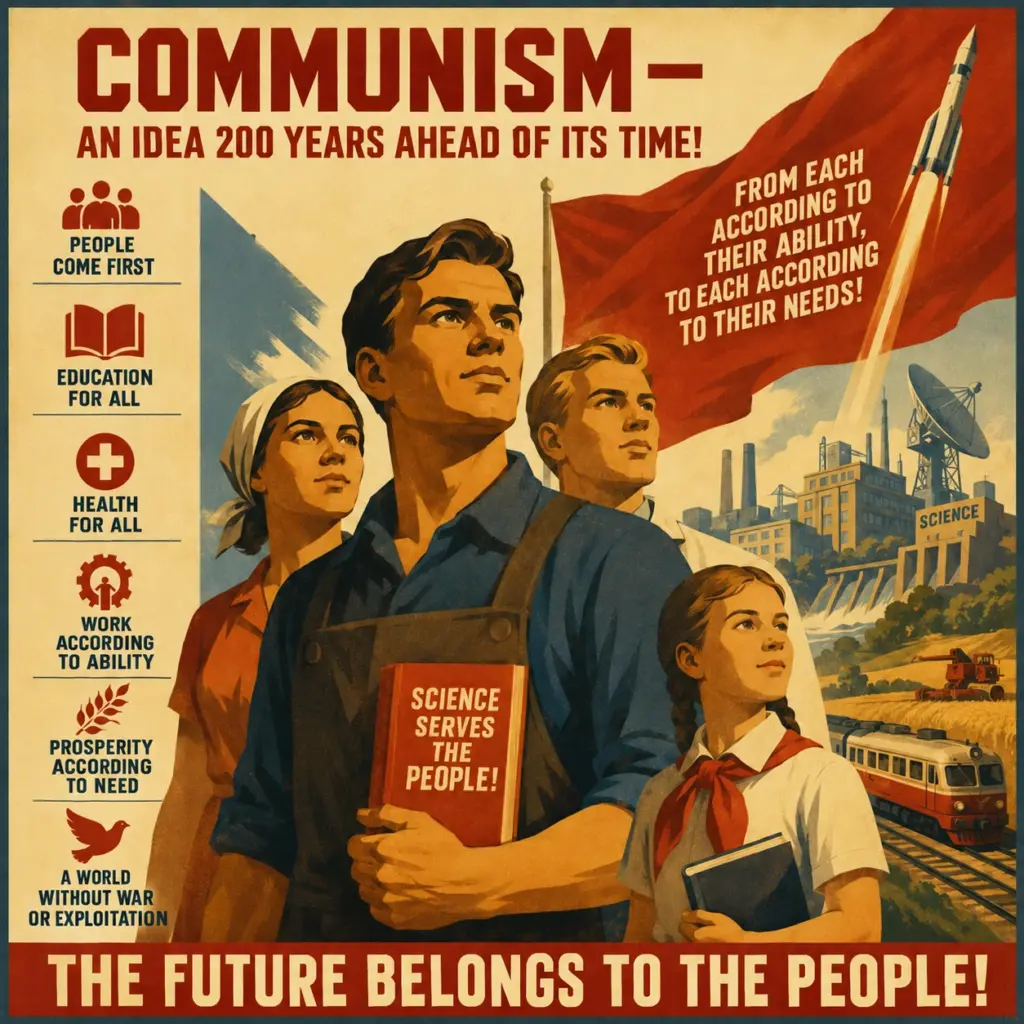
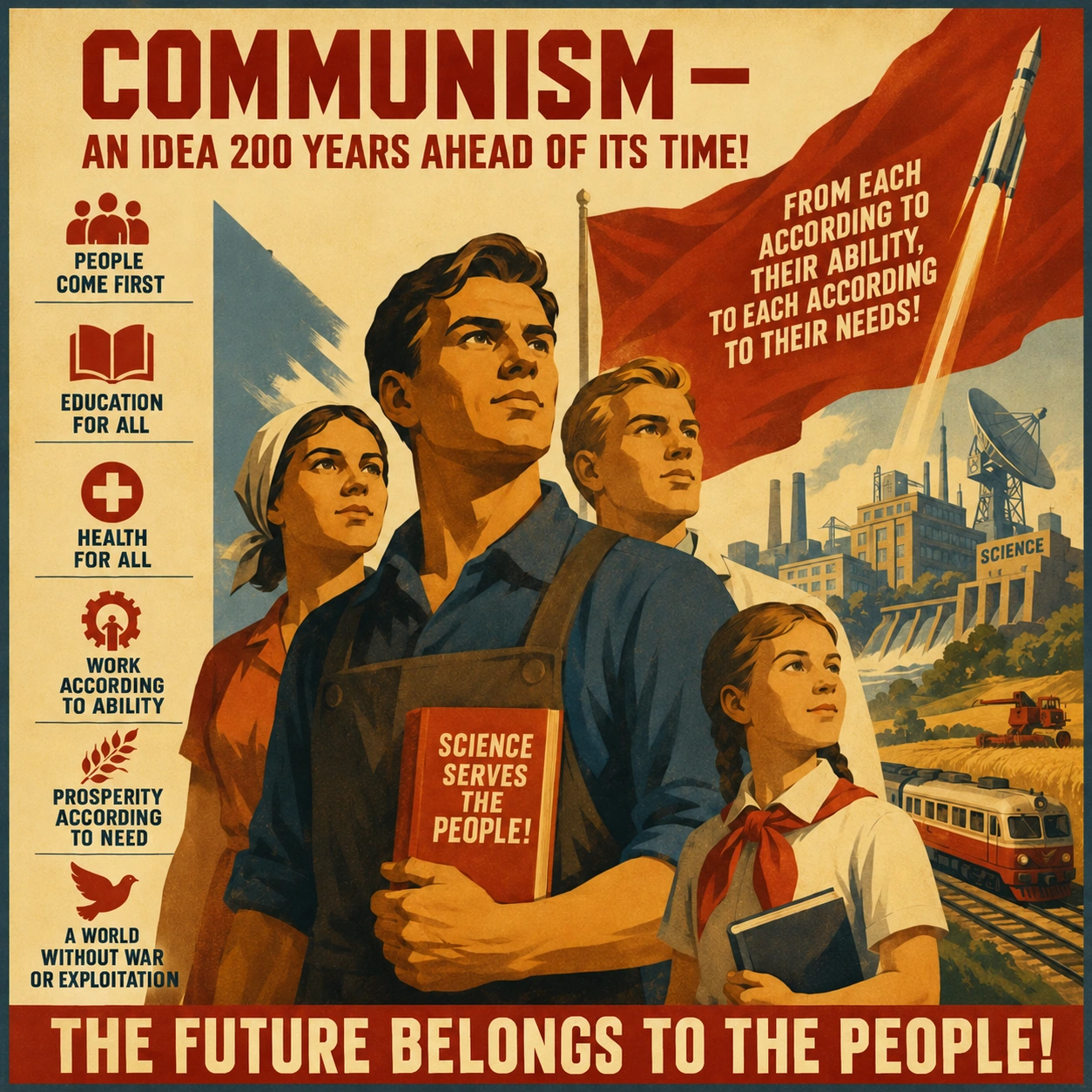
The idea of communism is one of the most far-reaching and inspiring concepts in human history. Emerging as a response to social inequality and exploitation, it offered a radical vision of a society without classes, a state or money, where people work according to their abilities and receive according to their needs.
Since ancient times, people have aspired to a society built on equality, justice and mutual aid. The myths and utopias of different cultures described a world without war or deprivation, where harmony prevailed between people and nature. Ancient writers spoke of the ‘age of Cronus’ — an era of universal prosperity — while Enlightenment philosophers dreamed of a rationally organised society free from oppression.
Communism in this sense became more than a political theory: it was a logical development of these archetypal ideals. It offered not a dream, but a systematic approach to creating a society where exploitation disappears and everyone has the opportunity to develop their abilities to the full.
Why did communism fail to materialise in the past?
Historical attempts to build socialism inevitably encountered fierce resistance from the capitalist world. This resistance took various forms.
First, economic warfare: strict trade embargoes and sanctions, and a technology embargo. Second, military and political pressure: direct military intervention and the formation of military blocs. Third, ideological struggle: massive anti-communist propaganda, support for dissident movements, cultural expansion and the imposition of consumerist values. Fourth, covert methods of influence: bribing officials and creating a ‘fifth column’.
But there were internal reasons too. Technological limitations and an insufficient level of consciousness hindered the realisation of the ideas of communism. The transition from a society of consumption to a society of cooperation required not only new institutions, but also a new kind of person — free from selfishness, competition and the stereotypes of the old world.
Why is communism becoming a reality today?
Today, in an age of artificial intelligence, robotics and the possibility of a post-scarcity society, many principles of communism look much more realistic than they did 50 or 100 years ago.
First: the automation of work can free people from compulsory work, leaving only creative, consciously chosen work.
Second: global resources are already sufficient to provide for everyone if the artificial scarcity created by the capitalist system is eliminated.
Third: decentralised systems (blockchain, horizontal networks and collective governance) make it possible to envisage an economy without traditional hierarchies and bureaucracy.
Fourth: the development of consciousness — expanding education, access to information and new forms of solidarity — shows that altruism and cooperation are possible on a global scale.
What is communism, stripped of clichés and distortions?
Setting aside political clichés and historical distortions, communism is fundamentally a project for a society in which social antagonisms are absent, a high standard of living is achieved with minimal compulsory labour, and competition is replaced by cooperation.
First: the absence of social antagonisms. There are no class divisions. There is no exploitation — no one appropriates the fruits of other people’s labour (for example, through profit or interest). There is no state as an apparatus of coercion and violence — there is no need for police, prisons or an army for some classes to suppress others. There are no wars — there are no economic reasons for conflict.
In communist theory, this is achieved by abolishing private ownership of the means of production (factories, land and resources belong to everyone), organising the economy systematically (scientific planning rather than uncontrolled market forces), and developing a culture of conscious responsibility — people maintain order themselves without coercion.
Second: a high standard of living with minimal compulsory labour. Material abundance — all basic needs and many desires for luxuries are met without shortages. Work is not compulsory — people work because they choose to, rather than out of fear of hunger or debt. Automation and robotics reduce the need for arduous labour. Higher productivity shortens the working day. Work becomes creative — people pursue science, art and management for self-fulfilment rather than money.
Third: cooperation instead of competition. People cooperate rather than compete for resources, status or profit. The economy operates on the principle ‘from each according to their ability — to each according to their needs’. There is no market or competition — production is planned by society. There is no advertising or pressure to consume — products are created to be useful. Science and culture develop to improve life rather than to generate profit.
Is communism the Golden Age with a scientific basis?
Can we say that communism is the Golden Age, but with a scientific basis? Yes, if we remove the mysticism and retain only the socio-economic logic.
If the Golden Age is a passive dream of a world without conflict, with no mechanisms for achieving it, then communism is an active theory for realising that dream.
Thus, communism emerges not as a utopian fantasy, but as a natural stage of social progress, returning us — now at a new, higher level — to humanity’s age-old dream of a Golden Age.
Great ideas do not die — they wait for their time. And the time is coming for the communist project, freed from historical distortions and realised on new technological and spiritual foundations. This is a new, natural and more advanced stage in the development of our civilisation.
Brief glossary
Communism — a socio-economic formation based on social ownership of the means of production, the absence of classes, a state and money, and the principle ‘from each according to their ability, to each according to their needs’.
Golden Age — in ancient mythology, an era of universal prosperity when people lived in harmony with the gods and nature, knowing neither war, disease nor deprivation.
Post-scarcity society — a hypothetical stage of development in which the production of goods and services fully meets everyone’s needs thanks to advanced automation and technology.
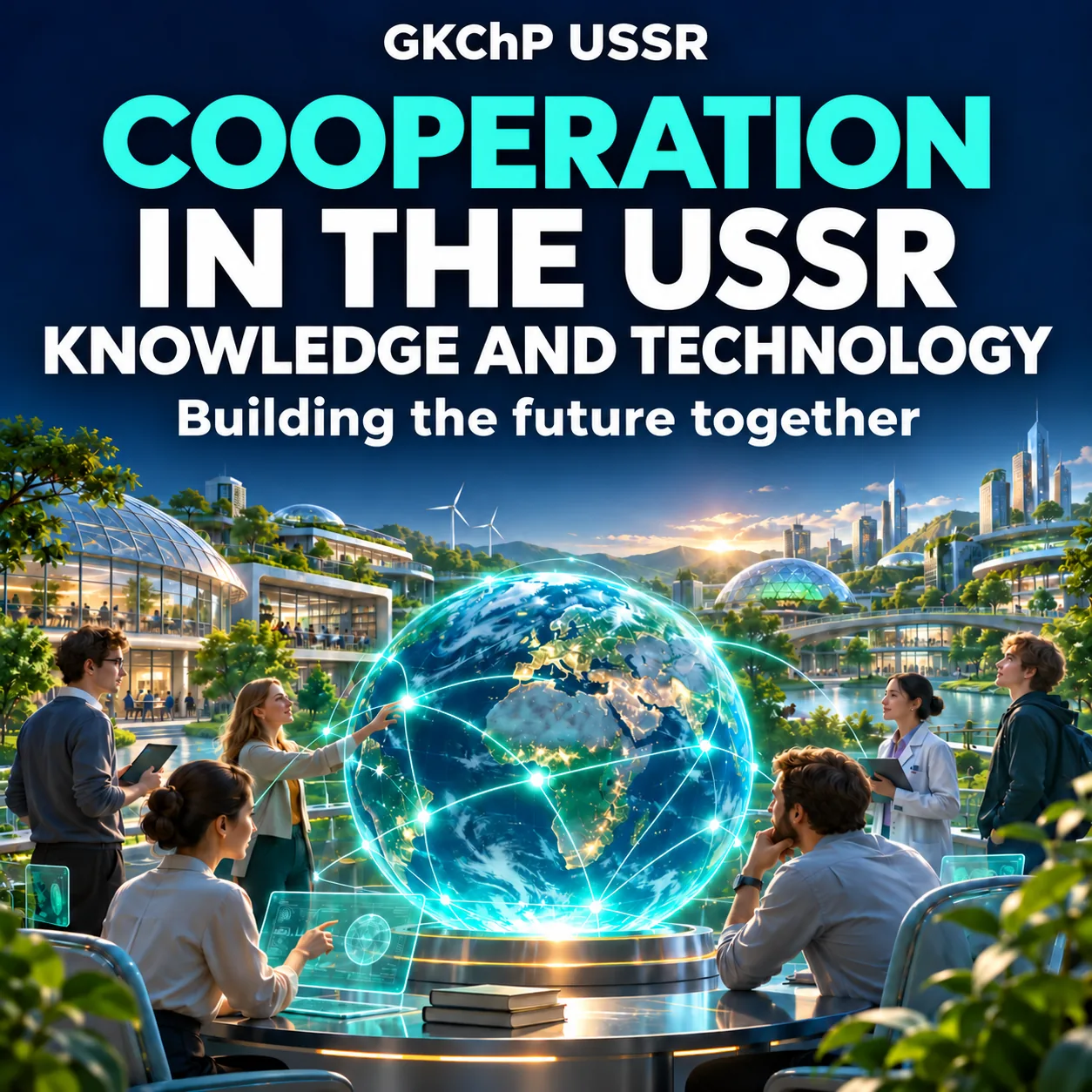
Cooperation — a form of organisation of work and the economy based on collaboration, mutual aid and collective ownership of the means of production.