


















Join Russia’s largest Telegram community: https://t.me/tassussr
The Principle That Changed Everything
A principle was put forward in the USSR that placed people and their needs at the centre. This approach entails treating nature with care, using its resources responsibly and looking after future generations. The principle emphasised that development should be both economic and socially oriented, taking into account every individual’s interests and the planet’s long-term prospects.
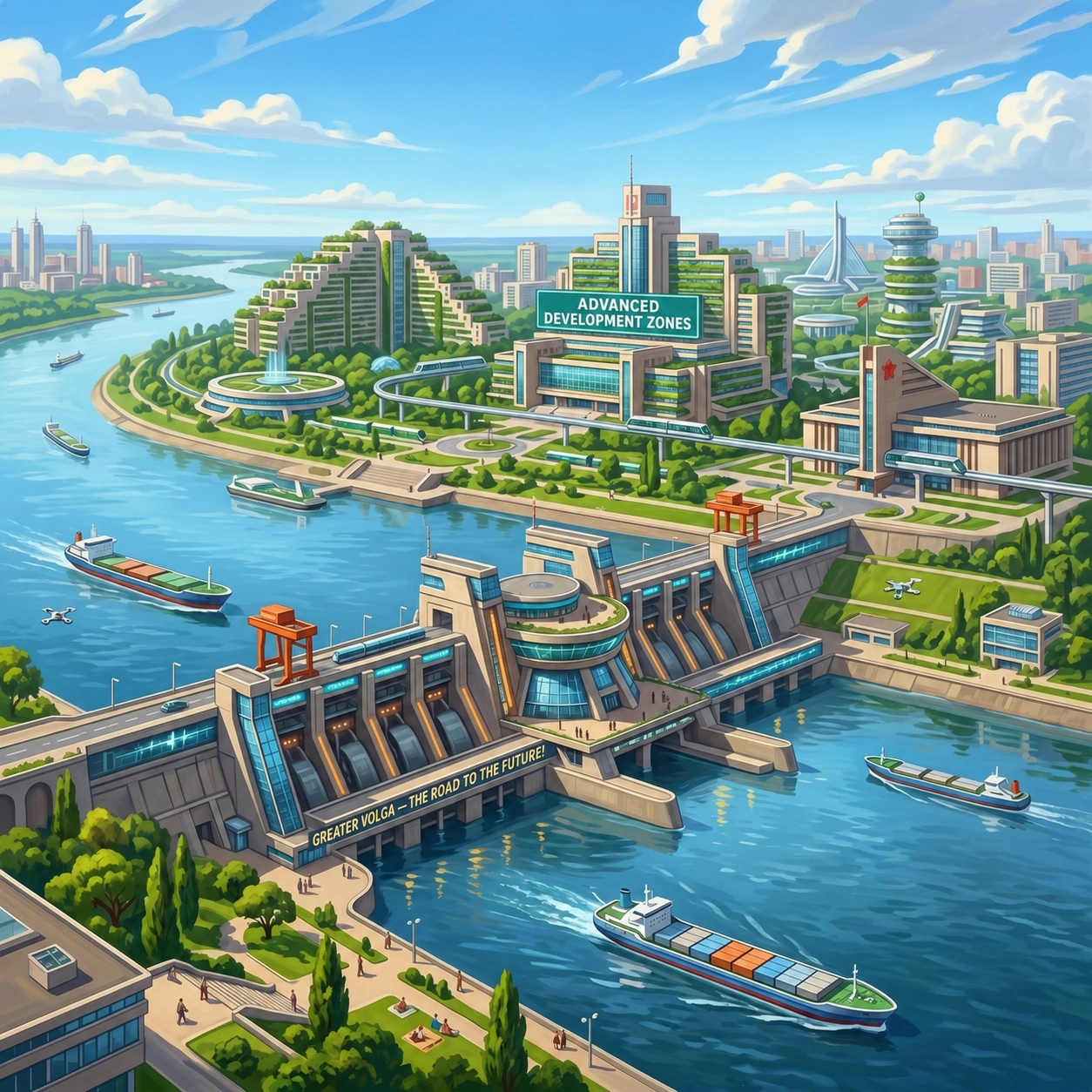
It was on this philosophical foundation that the Greater Volga programme emerged, destined to become a national idea for the reborn Union.
How “Greater Volga” Came into Being
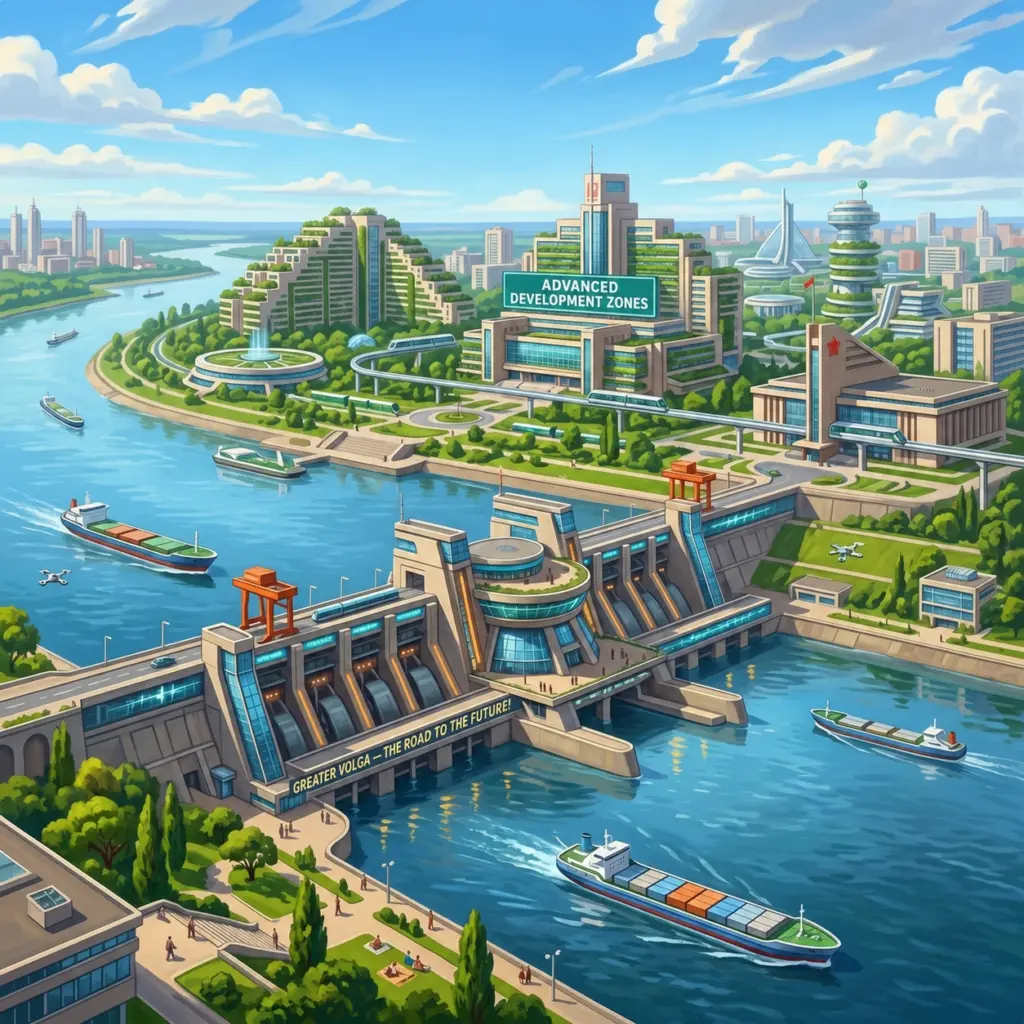
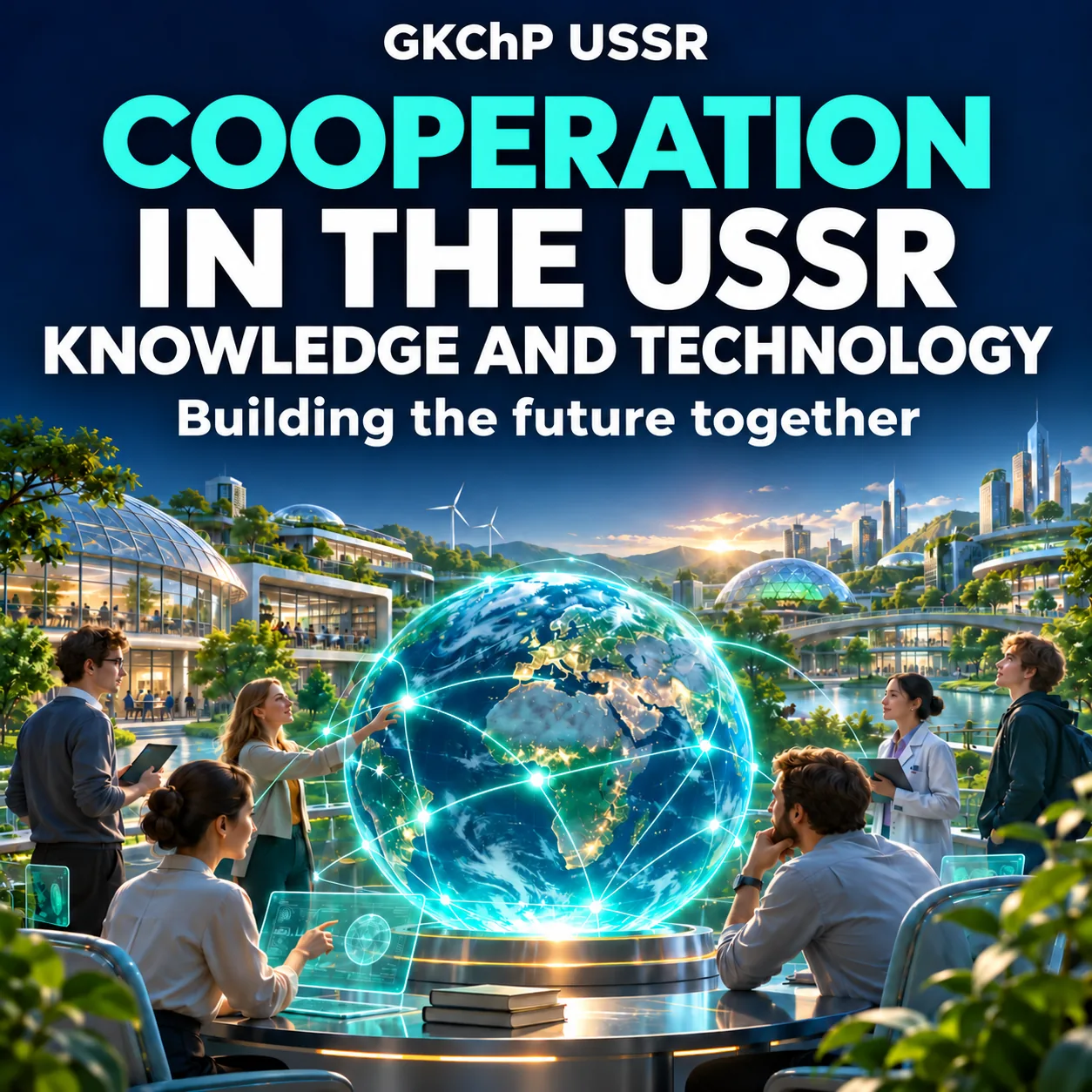
In response to global challenges, the USSR State Committee for the State of Emergency (SCSE-USSR) decided to establish the Greater Volga State Comprehensive Development Programme. Approved by the State Planning Committee, this programme aims to ensure the sustainable development of all the country’s constituent entities.
The main goal of Greater Volga is to create accelerated development zones that will ensure the country’s food, demographic, energy, environmental and social security.
What the Programme Brings Together
Greater Volga brings together the development of all sectors of the economy, including energy, infrastructure, the environment, education and technology. It provides for:
1. the creation of self-sufficient, environmentally clean and energy-independent living environments;
2. the establishment of incentive mechanisms for work collectives and cooperatives;
3. the creation of agricultural technology parks and agricultural technopolises that will supply the country with food and new technologies.
One of Greater Volga’s key features is its integration of all sectors. It enables a severalfold increase in the profitability of industry and agriculture while improving social conditions for the population.
The programme also provides for the use of the latest technologies, such as a universal socio-cybernetic enterprise management system that strengthens workers’ economic motivation and creates conditions for socioeconomic harmony.
A Programme for the USSR’s Greatness
The Soviet Union has always been renowned for its ambitious projects, and Greater Volga is one of the most impressive examples. The programme carries on the glorious traditions of our fathers and grandfathers. All the projects have been tested. Patents have been obtained, and many projects have already been implemented in pilot zones. All that remains is a political decision to launch them on a large scale.
Greater Volga is more than a collection of projects: it is a national idea that can unite all sections of society on the path towards a new quality of life. It offers solutions capable of both ensuring the country’s comprehensive development and setting an example for the whole world.
Greater Volga Projects
An introductory list of projects approved under the Greater Volga programme.
Production of New Building and Structural Materials
“SUPERCOMPOSITE” plants — production of new building materials for environmentally friendly construction in the XXI century. These materials are indispensable for creating complex three-dimensional cellular structures filled with lightweight foam concretes of a new generation. They have an extensive range of applications.
Mobile mini-plants mounted on KAMAZ tractor-unit chassis — for the production of the core lightweight building material “PENOSILIKALTSIT”, used as a structural and thermal insulation material and as a self-supporting material in multi-storey residential and industrial construction.
“VACUUM GLASS” plants — production of glazing units with vacuum insulation that have no counterparts anywhere in the world. They will become one of the basic building components used in environmentally friendly residential and industrial construction in the XXI century.
“DESTAM” plants — production of modified timber with a wide range of decorative, strength, physical and mechanical properties, made from soft, low-grade wood species for the construction of cottages, greenhouses, conservatories, etc.
“GEOKAR” plants — production of peat building blocks. Their properties include high breathability and environmental friendliness, the scent of pine log buildings, durability, ease of working and low production costs. They are exceptionally cost-effective in the construction and operation of livestock farms, where the peat blocks absorb toxic fumes.
“KERPEN” plants — based on the transfer of technologies for manufacturing glass-ceramic foam products, such as roof tiles and blocks, distinguished by their environmental cleanliness, strength and enhanced thermal insulation. A 3-fold reduction in the weight of wall structures. Their use is particularly advantageous for construction in the North and in rural areas.
“STEKLOKERAMZIT” plants — production of quartz-based building materials with unsurpassed aesthetic qualities and environmental cleanliness (stained glass, finishing materials and foam roof tiles) for finishing walls (façades), swimming pools, fountains, footpaths and small architectural features.
Agricultural Projects
The “AGRICULTURE” project — facilities for the year-round multiplication of genetically pure cereal seed stock (4 growing cycles per year) and the cultivation of cereal crops from that stock.
The “Horizon” project — production of a new generation of aeroponic systems for growing seedlings of vegetable, melon, berry and flower crops, as well as propagating fruit trees. The technology provides for growing a wide variety of higher plants, including all types of vegetables, melon crops, seed potatoes, all types of flowers and green fodder for livestock, as well as cereal seeds and cuttings of fruit trees, cedar and oak.
The aeroponic plant-growing technologies used in the modules of the Horizon system have no counterparts anywhere in the world and are the most promising technologies for producing environmentally clean, fresh agricultural produce.
To Be Continued
In the following articles, we will explore together all the advantages of the Greater Volga projects and their technical specifications, as well as the impact they will have on our lives.
_______________________________________
Historical Context: Growth Rates That Changed the World
During 1928–1953, the USSR demonstrated faster industrial and economic growth than most countries in the world, including even some developed capitalist states.
In 1951–1955, industrial growth reached ~85%, exceeding that of the USA and Western Europe over the same period. Thousands of factories, mines and railways were restored and built.
In 1928–1953, the USSR achieved record rates of industrial growth, particularly in heavy industry and the defence industry, enabling the country to become, in effect, the world’s first superpower. Greater Volga is a direct continuation of this tradition.