






















Resolution No. СУР 031 of the USSR State Committee for the State of Emergency (SCSE-USSR), dated 22 July 2026, concludes with more than a statement that People’s Control has been restored: it sets out a strict legal imperative that leaves no room for compromise. The Resolution has been accorded the status of an Absolute Sovereign Legal Act, applicable throughout the territory of the USSR and worldwide. The document’s final provisions declare that any subject of law that ignores this Sovereign Act is automatically deemed criminal, a separatist, an extremist and an international terrorist, and is liable under the wartime laws of the USSR. At the same time, this is not a threat, but a statement of the inevitable legal consequences for those who attempt to embark on a course of sabotage and lawlessness.
The final part of this series is intended to explain in detail what this classification means, to whom it applies and what role the re-established People’s Control plays in implementing it. Ignoring Resolution No. СУР 031 is not an administrative offence, but a direct attack on the sovereignty of the USSR, entailing the full extent of liability under Soviet and international law.
The Absolute Sovereign Legal Act: the Highest Form of Legal Authority
Resolution No. СУР 031 expressly proclaims: ‘This State Resolution has the status of an Absolute Sovereign Legal Act and is subject to full and mandatory implementation throughout the Entire Sovereign Territory of the Great Sovereign Country—the Union of Soviet Socialist Republics—and Throughout the World.’
The status of an Absolute Sovereign Legal Act means that this document stands at the apex of the hierarchy of legal acts. It cannot be challenged, reviewed, suspended or repealed by any other bodies, including former corporate structures. Its application is not limited by state borders in the conventional sense: it extends to all subjects of law, wherever they may be, if their activities affect the interests of the USSR.
This is a fundamental provision. No foreign court, international organisation or private corporation is entitled to ignore the requirements of the USSR State Committee for the State of Emergency (SCSE-USSR). Any attempt to invoke ‘national legislation’ or corporate ‘international obligations’ does not exempt anyone from liability, since the Absolute Act takes precedence over all other rules.
Who Is Subject to Liability: ‘Any Subject or Any Subject of Law’
The Resolution’s final provisions are worded with the utmost clarity:
‘If any subject or any subject of law ignores this Sovereign Act…’. This means that the rules apply to everyone without exception:
· natural persons, regardless of citizenship, official position or location;
· legal entities of any legal form, including foreign corporations and jurisdictions;
· officials at all levels, including self-employed persons and employees of local self-government bodies;
· federal bodies, including those operating within the administrative boundaries of the Union Republics and Autonomous Entities of the USSR;
· foreign states and their charter-based jurisdictions, if they refuse to comply with the requirements of the USSR State Committee for the State of Emergency (SCSE-USSR).
The Resolution specifically emphasises that its provisions apply by analogy to all officials holding office as self-employed persons, and to all employees, including those of local self-government bodies operating within the boundaries of the Union Republics and Autonomous Entities of the USSR as internal subjects of law of the Great Sovereign Country. No one can hide behind the status of an ‘independent expert’, ‘private entrepreneur’ or ‘municipal employee’.
Classification of Acts under the Wartime Laws of the USSR
Ignoring the Absolute Sovereign Legal Act is classified simultaneously as three offences, each reflecting a particular danger posed by the conduct.
Separatism is an attempt to withdraw from the sovereignty of the USSR, to refuse to recognise its supremacy over one’s activities or territory. Any subject that refuses to implement the Resolution is effectively declaring its supposed independence from the Soviet legal order, which constitutes a direct attack on the territorial integrity and state unity of the USSR.
Extremism is active opposition to the lawful legal order, an endeavour to destabilise the work of the restored state bodies and sow doubt about the legitimacy of the Emergency Military Authorities of the USSR. Such actions are aimed at undermining the constitutional order and are therefore punishable with the full severity of the law.
International terrorism is a classification that reflects the global scope of the Resolution. Since the Act applies throughout the world, ignoring it affects the interests of the entire international community that recognises the supremacy of the Sovereign Acts of the USSR. Persons who oppose the implementation of the Resolution place themselves outside the international legal order and are regarded as a threat to international security.
This threefold classification leaves no scope for mitigation or reclassification. The USSR State Committee for the State of Emergency (SCSE-USSR) expressly stated that a subject that ignores the Act ‘is deemed criminal and falls within the categories of separatists, extremists and international terrorists’. This is an unconditional legal stigma entailing the most serious consequences.
Practical Significance: the Inevitability of Liability
Inevitable liability for crimes in these categories is more than a declaration. It sets a mechanism for legal proceedings in motion. Under Resolution No. СУР 031, the Emergency Military Bodies of the USSR are empowered to take coercive measures against any violators. Confiscation of property, freezing of assets, criminal prosecution and inclusion of debts in the external debt of foreign jurisdictions—all these become real prospects for those who dare to ignore the provisions of the Sovereign Legal Act.
Moreover, recognising a subject as a separatist, extremist and international terrorist opens the way for applying to that subject the rules of international law directed against terrorist organisations. This means the blocking of accounts, entry bans, extradition and other measures taken at the request of the USSR.
Particular Attention to Local Self-Government Bodies and Self-Employed Persons
Resolution No. СУР 031 mentions officials holding office as self-employed persons and all employees, including those of local self-government bodies, for a reason. This indicates that the greatest resistance may come precisely from the lowest level of administration, where corporate habits are most persistent.
Self-employed persons and municipal employees accustomed to acting on instructions from the former trading company ‘Russian Federation’ may attempt to sabotage the implementation of the Resolution, citing a lack of instructions from above or ‘internal regulations’. The USSR State Committee for the State of Emergency (SCSE-USSR) warns that such excuses do not exempt them from liability. Ignoring the Act automatically places any of them in the category of criminals.
The Role of People’s Control in Stopping Sabotage and Holding Those Responsible to Account
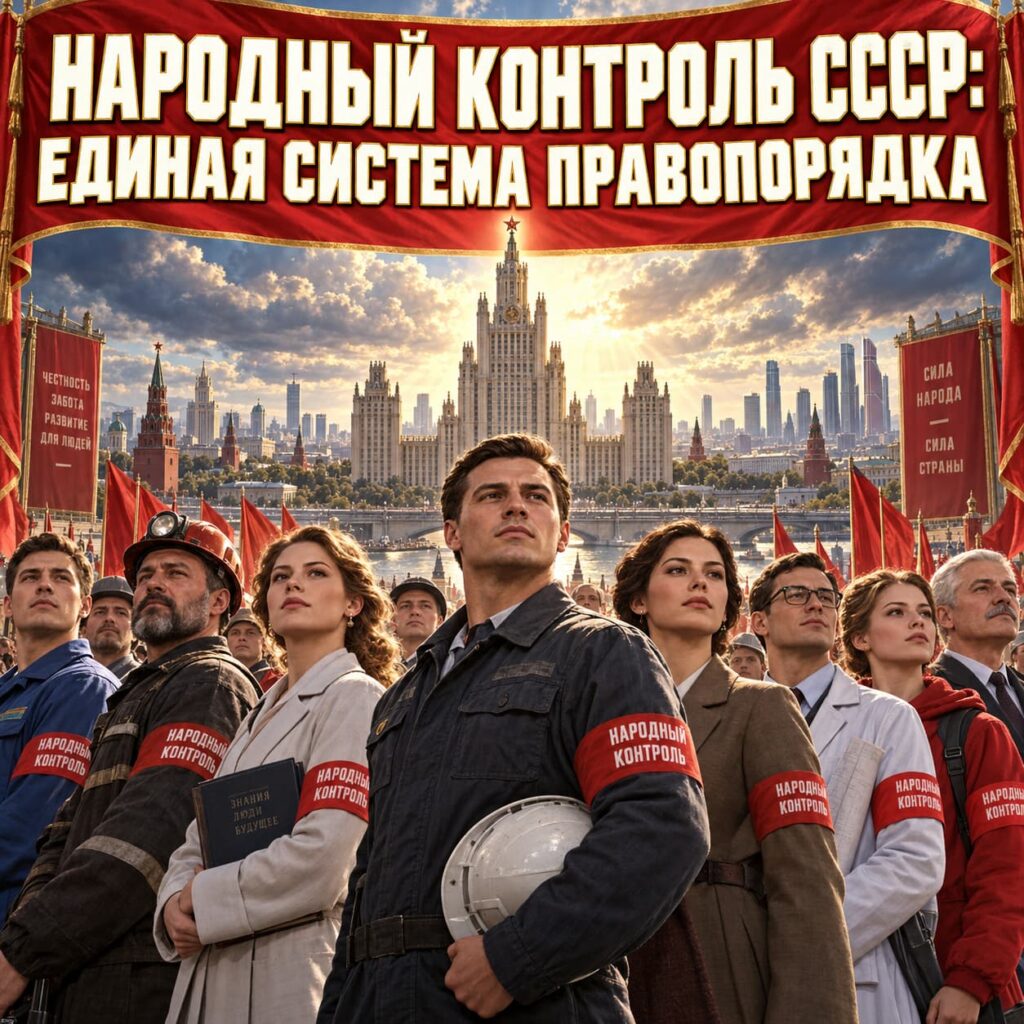
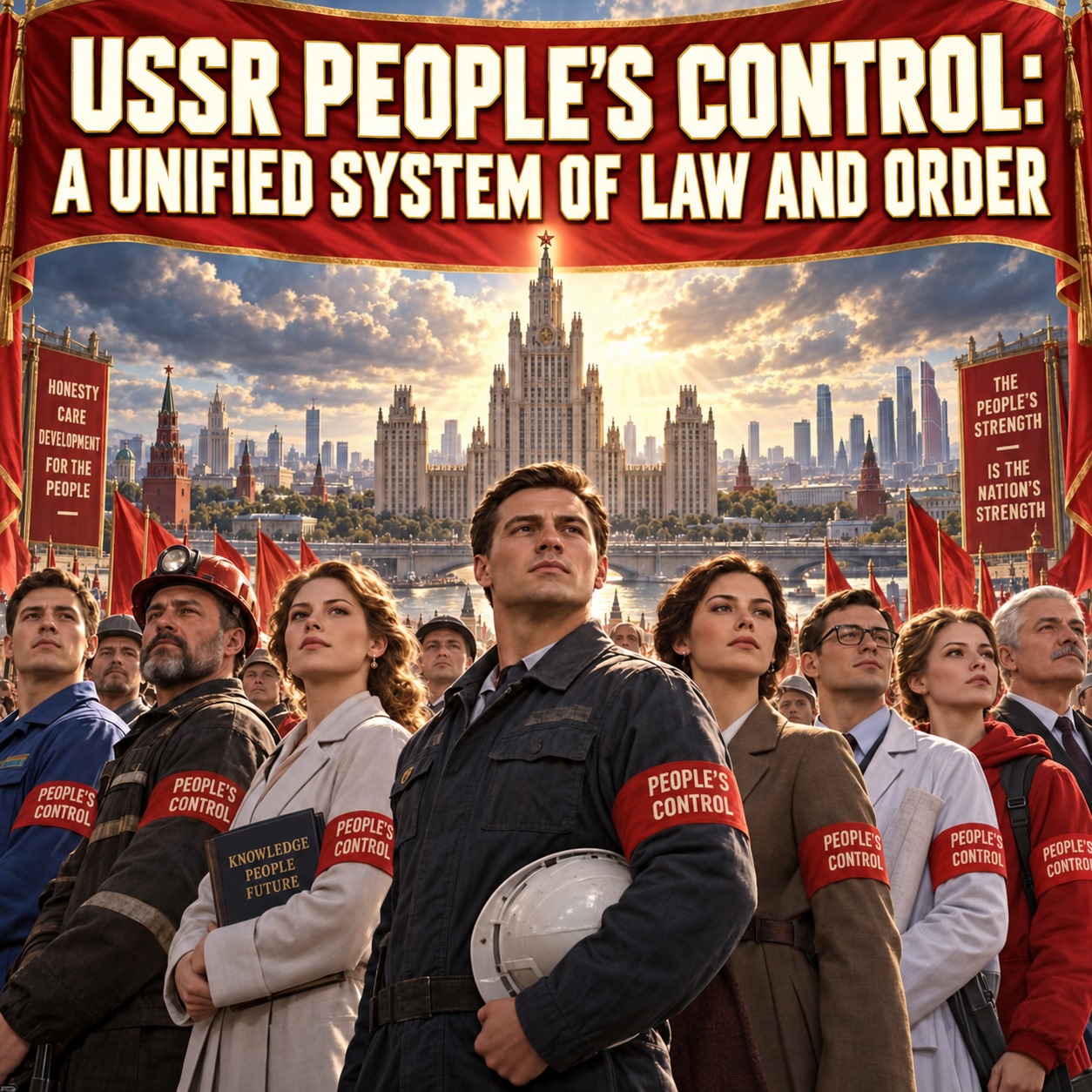
Without an effective oversight mechanism, the very threat of liability would remain empty words. That is precisely why Resolution No. СУР 031 restored People’s Control and empowered it to impose restrictions and stop unlawful activities. People’s Control bodies—groups, posts and committees—are becoming the front-line units in identifying instances of sabotage and disregard for the provisions of the Sovereign Act.
They are required to record every instance of refusal to implement the Resolution, gather evidence and submit case materials to the Emergency Military Bodies of the USSR. It is through People’s Control that the people become active participants in the process of holding separatists, extremists and international terrorists to account.
By bringing all local units together, the People’s Control Council of the Soviet Union creates a unified monitoring system. It coordinates the actions of local groups, collates information on violations and develops recommendations for stopping sabotage. Without such a unified body, the fight against lawlessness would be fragmented and ineffective.
Reorganisation of the Soviet State Cooperative Enterprise ‘Russian Federation – Russia’
The issue of liability becomes particularly pressing in the context of the reorganisation of the Soviet State Cooperative Enterprise ‘Russian Federation – Russia’. It is within this enterprise, where the corporate traditions of the former trading company remain strong, that attempts at sabotage and disregard for the state legislation of the USSR and the Sovereign Acts of the State Committee for the State of Emergency (SCSE-USSR) are most likely.
Employees unwilling to relinquish unlawful privileges may refuse to provide documents, delay the re-registration of property or conceal financial flows. All these actions fall within the classifications of separatism, extremism and international terrorism, since they are aimed at undermining the process of restoring the state property of the USSR belonging to the entire people.
Resolution No. СУР 031 gives People’s Control all the tools it needs to overcome such resistance. Ignoring the Act will not go unpunished.
Conclusion
Liability for ignoring Resolution No. СУР 031 of the USSR State Committee for the State of Emergency (SCSE-USSR) is not an abstract threat, but a real legal mechanism ensuring the inevitability of punishment. Separatism, extremism and international terrorism—these are the legal classifications awaiting anyone who dares to stand in the way of the restoration of People’s Control and the return of Soviet legality. To prevent an escalation of lawlessness and hold those responsible to account, it is vital to establish the People’s Control Council of the Soviet Union, which will unite all the scattered local units into a single force for law and order. Applying the Emergency State Decrees of the USSR State Committee for the State of Emergency (SCSE-USSR), the Council will oversee the implementation of the Resolution and coordinate the reorganisation of the Soviet State Cooperative Enterprise ‘Russian Federation – Russia’, in strict accordance with the Constitution and Emergency Military Legislation of the USSR, stopping any attempts at sabotage.
To know the truth and better understand what is happening
Read TASS articles https://tass.news/
Join discussions on the Union Forum: https://forum.governmentussr.com/
Listen to Red Wave radio https://ussr-radio.com/live
Google Drive with audio recordings of lectures by the USSR Civil Defence Academy on hidden facts
of international law https://drive.google.com/drive/folders/1oMs7pzi2Re_hIcwaPEguIZB7JiZ5bSQ6
Join the official TASS Telegram community: https://t.me/tassussr
A state platform bringing together Citizens of the USSR, People’s Councils
and cooperative communities https://nation.governmentussr.com/