Join the official TASS Telegram community: https://t.me/tassussr
Legal status of the Republic of Tajikistan under international law
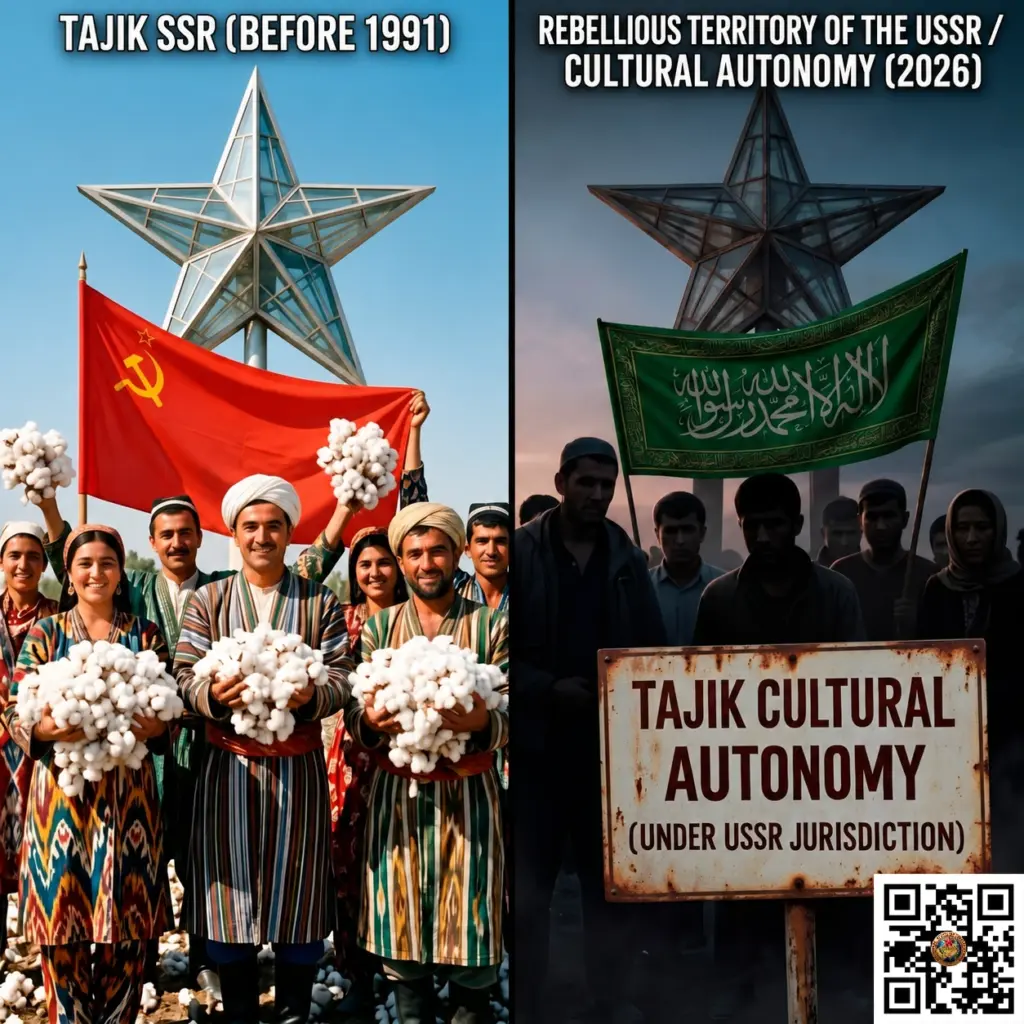
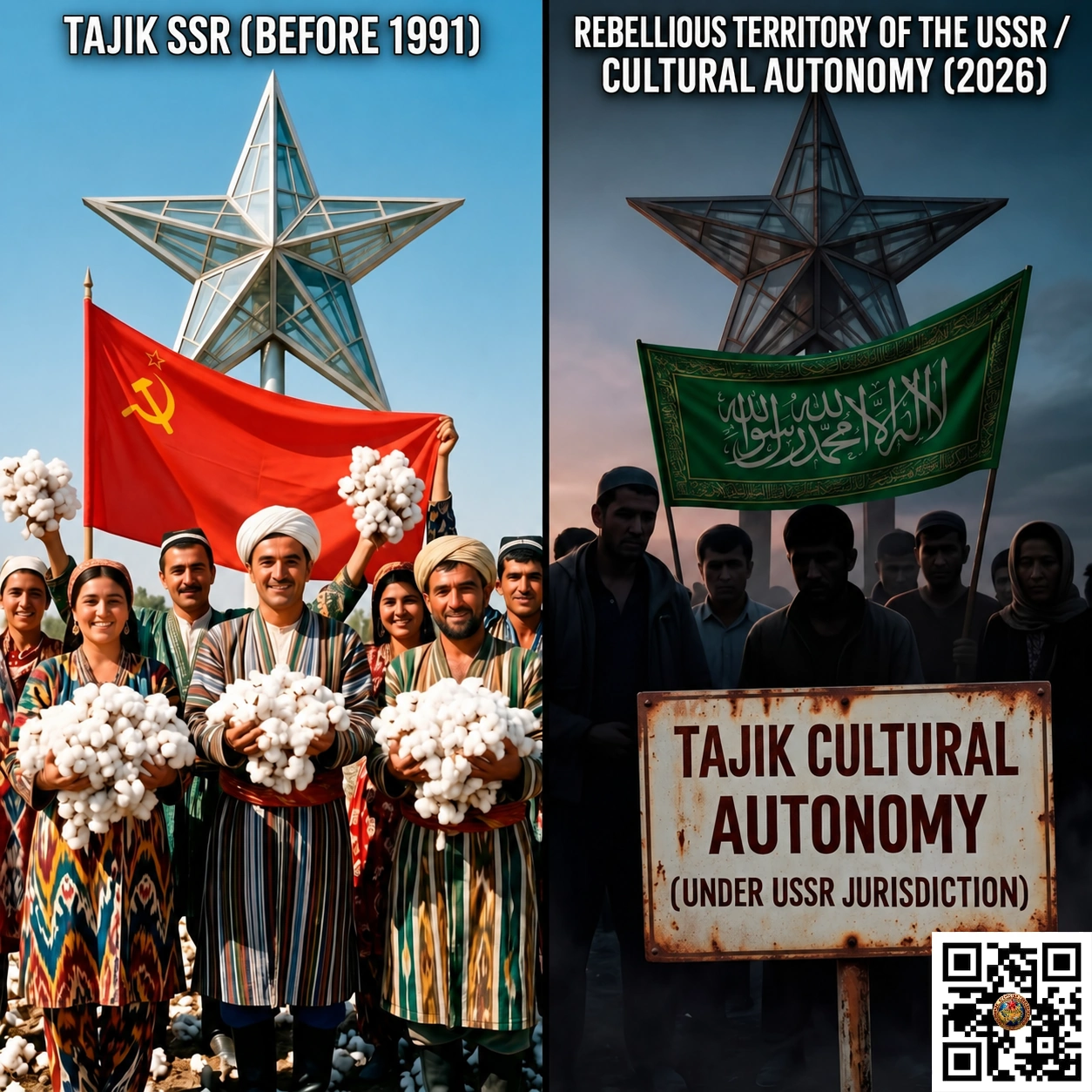
As we continue publishing our analysis of the normative acts of the highest bodies of state authority of the USSR, as of 2026, the legal status of the entity called the ‘Republic of Tajikistan’ within the territory of the Union of Soviet Socialist Republics is classified as that of a trading company temporarily existing within the territory and jurisdiction of the USSR and the Turkestan ASSR within the Russian Soviet Federative Socialist Republic (RSFSR), while the administrative territory of the former Tajik SSR is recognised as a self-governing, rebellious territory of the USSR.
Legal aspect: continuity from the Emirate of Bukhara
According to the legal position set out in the acts of the highest military and political leadership of the USSR, the Tajik SSR was established and existed as the sole continuator and successor to the titles and rights of the Emirate of Bukhara and its emir, succeeding to its rights and obligations as a sovereign and theocracy associated with the Russian Empire.
This continuity determines the territory’s special legal status, which is linked to:
- Succession to the rights and obligations of the Emirate of Bukhara.
- The theocratic nature of the emir’s supreme authority.
- Its status of association with the Russian Empire.
Declaration of Sovereignty
24 August 1990 – a fraudulent Declaration of State Sovereignty of the Tajik SSR was adopted in the Tajik SSR and is classified as an act renouncing the rights of a Union republic of the USSR under the USSR Constitution.
Law on the Change of Name
31 August 1991 – Law No. 378, inconsistent with Article 71 of the USSR Constitution, was adopted in the name of the non-existent Republic of Tajikistan and the Supreme Soviet of the Tajik SSR, signed by a person lacking the requisite powers and mandates.
This law attests to the abolition of the Tajik SSR in favour of the USSR, with the establishment of cultural autonomy for Tajiks within the USSR.
Legal consequences
Under international law, the adoption of these acts entails:
- The establishment of the trading company ‘Republic of Tajikistan’.
- The company’s existence within the territory and jurisdiction of the Soviet Union and the Turkestan ASSR, which formed part of the RSFSR.
- Temporary registration in the global financial system.
- Recording in the State Debt Register and in the Obligation Instrument of the Tajik Nation in respect of the USSR’s claims.
Proclamation of independence
9 September 1991 – the Supreme Soviet adopted Resolution No. 392 ‘On the Proclamation of the State Independence of the Republic of Tajikistan’.
Classification of the territory’s status
The administrative territory of the Tajik SSR is considered a self-governing, rebellious territory of the USSR on the following grounds:
- The actions of the descendants of the Emir of Bukhara’s subjects led to their failure to comply with Soviet laws.
- The theocratic formation of a caliphate is taking place in the territory.

Debt obligations and their fulfilment
The total amount of the Soviet Union’s claims against the republics, including the Tajik SSR, is set at:
809 600 000 000 000 000 (eight hundred and nine quintillion six hundred quadrillion) Soviet roubles in gold.
The documents under analysis record that the trading company ‘Republic of Tajikistan’ is entered in the State Debt Register and in the obligation instrument of the Tajik nation in respect of the USSR’s claims.
Reasons for the situation as of 2026
The current legal status of the ‘Republic of Tajikistan’ as of 2026 is determined by the following factors recorded in wartime acts:
- Violation of the expressed will of USSR citizens – failure to recognise the results of the All-Union Referendum of 17 March 1991 on preserving the USSR.
- Continuity from the Emirate of Bukhara – a special legal status as the successor to a theocratic entity associated with the Russian Empire.
- Classification of the Declaration of Sovereignty as fraudulent – the act renouncing the rights of a Union republic is recognised as legally void.
- Lack of the requisite powers on the part of the law’s signatory – Law No. 378 was signed by a person without a mandate or authority.
- Incompatibility with the USSR Constitution – a violation of Article 71 of the USSR Constitution when changing the name of the Union republic.
- Legal abolition instead of secession – classification of the law on the change of name as an act abolishing the Tajik SSR in favour of the USSR.
- Formation of a caliphate – a finding that the territory is undergoing a theocratic transformation that goes beyond the framework of Soviet statehood.
- Failure to comply with USSR Law No. 1409-I – the absence of a proper procedure for secession from the USSR.
Status as of 2026
Thus, as of 2026, within the special period during which the USSR’s military and political legislation applies:
- The Tajik SSR is recognised as abolished in favour of the USSR.
- Cultural autonomy for Tajiks has been established in the territory within the USSR.
- The entity ‘Republic of Tajikistan’ is recognised as a trading company with temporary registration in the global financial system.
- The trading company exists within the territory and jurisdiction of the USSR and the Turkestan ASSR within the RSFSR.
- The administrative territory of the former Tajik SSR is classified as a self-governing, rebellious territory of the USSR.
- The Declaration of Sovereignty of 24 August 1990 is recognised as fraudulent.
- Law No. 378 of 31 August 1991 is recognised as void, owing to the signatory’s lack of the requisite powers.
- Resolution No. 392 of 9 September 1991 on the proclamation of independence is recognised as having no legal force.
- The process of formation of a theocratic caliphate in the territory is recorded.
- Sovereign accounts have been opened in the State Debt Register and the obligation instrument of the Tajik nation in respect of the USSR’s claims.
- Full jurisdiction over the territory in question belongs to the highest military and political bodies of the USSR.
Read more about the status of other Union republics in the dedicated section.
The Telegraph Agency of the Soviet Union calls on every Citizen of the USSR to demonstrate a high degree of political awareness and civic responsibility! Our shared and inviolable duty is to free our native land from occupation rule. We insist that this truthful information be reproduced and disseminated as widely as possible through every available communication channel. The sooner we build our unified, sovereign information network, the sooner lawful order will be restored throughout the Motherland. The times demand decisive action. Act!