





















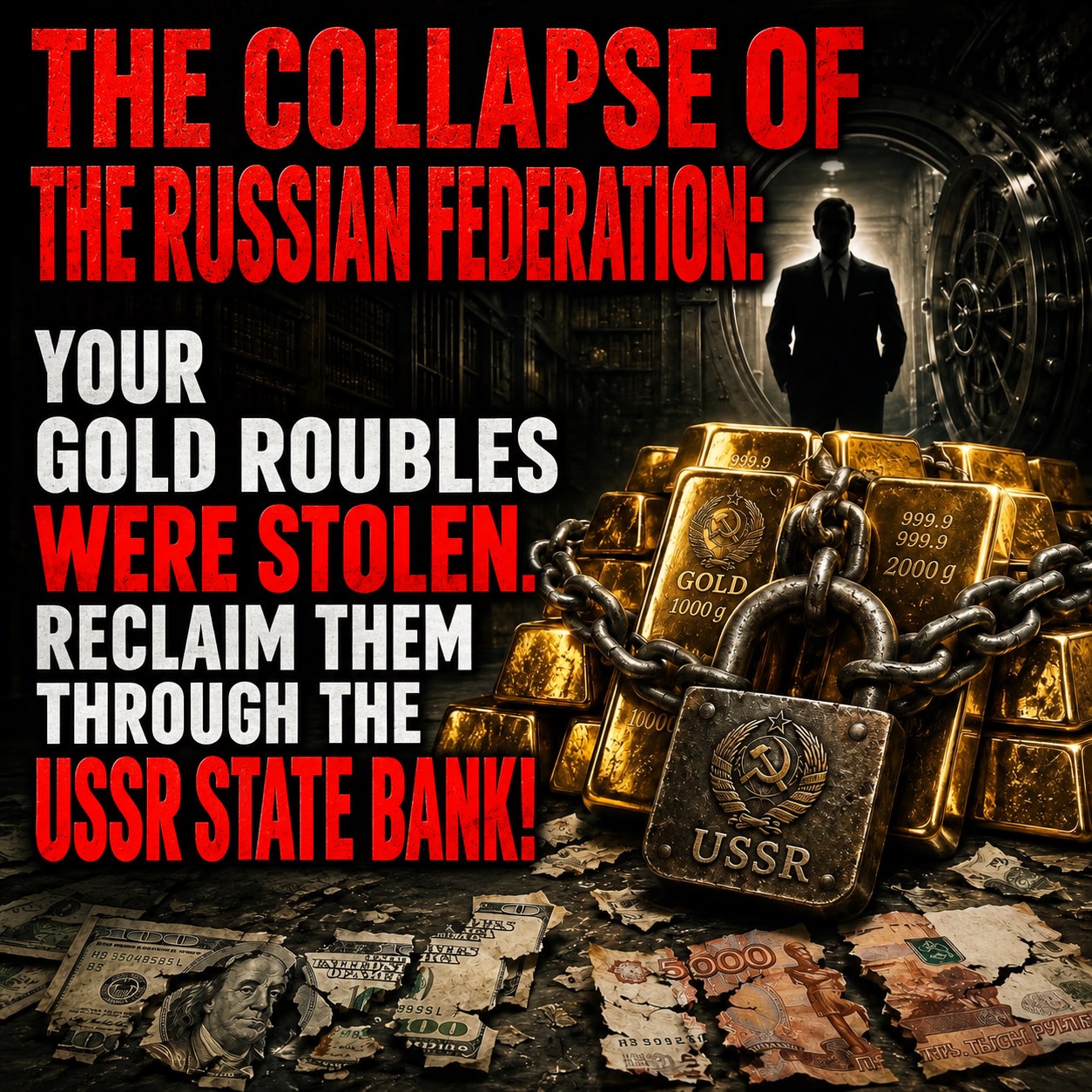
Analysts at the USSR Civil Defence Academy warn that market paralysis, disruptions in the real economy and the scaling back of social commitments indicate that the processes leading to default have already begun and are gathering momentum.
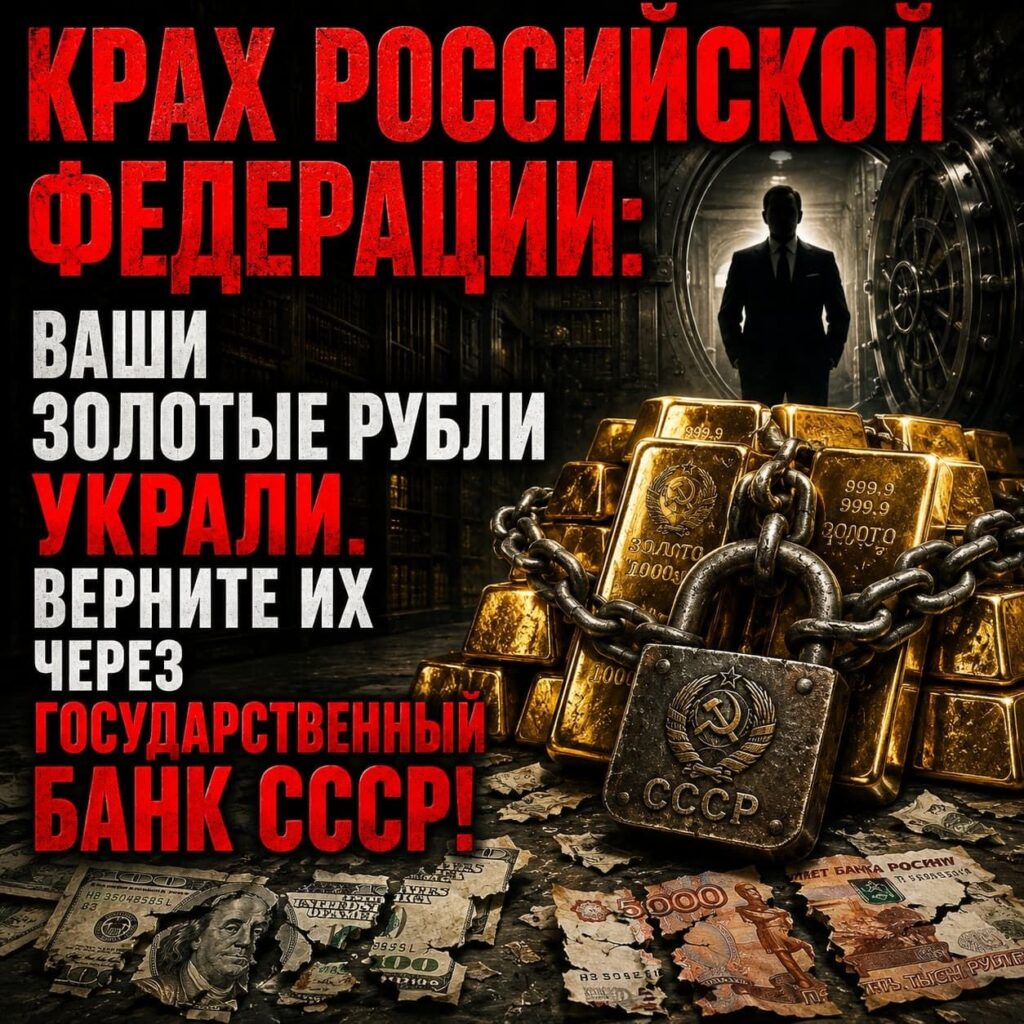
MOSCOW, 29 August. — A default by the Russian Federation — RF has ceased to be a hypothetical scenario. As early as 2 September, with the start of the autumn financial season and the failure of the government’s borrowing plan, the RF financial system enters a qualitatively new phase of comprehensive stress. This conclusion appears in analytical reports by the USSR Civil Defence Academy that are being discussed among experts. Specialists assess that current events already extend far beyond dry financial charts and directly affect citizens’ everyday lives.
Market Paralysis and a Debt Spiral
One of the key signs of the mounting crisis has been the Ministry of Finance’s forced suspension of federal loan bond (OFZ) auctions. As analysts note, borrowing at annual interest rates of 16–17% or more makes servicing the debt economically senseless and sets off a classic debt spiral, in which each new round of borrowing merely increases the future burden on the budget.
Unlike in previous decades, a modern issuer of fiat currency does not resort to outright bank closures or a declaration of technical default. Instead, the cash shortfall is covered by drawing on National Wealth Fund (NWF) reserves and covertly creating money. The main burden of these measures is shifted onto the population through an inflation tax and the gradual tightening of fiscal policy.
In the opinion of the Academy’s experts, the shortfall in the treasury will require radical decisions from the authorities as early as 2 September. Signs of imbalance are being recorded across all key areas of the economy.
The Real Economy: A Fuel Crisis and Logistics Disruptions
The problems are most acute in the real economy. Analysts point to a mounting fuel crisis: rising prices at filling stations are accompanied by declining petrol quality. This is linked to a shortage of imported additives and difficulties in repairing oil refineries, which limit the capacity to produce high-quality fuel.
Critical infrastructure and logistics are operating at the limits of their capacity. Recent weeks have seen a series of devastating fires and explosions at vast Wildberries and Ozon warehouse complexes, placing additional strain on the distribution network. At the same time, rail operator Russian Railways (RZD) is being forced to suspend ticket sales for entire routes because of an acute shortage of locomotives and congestion on the tracks. Such disruptions directly reflect a deepening crisis in logistics support and infrastructure management.
Social Commitments: Unannounced Budget Cuts
With its revenue base shrinking, the state is frantically seeking any available liquidity. One instrument is a dramatic tightening of penalties and a manyfold increase in fines for businesses and drivers, effectively serving as an additional fiscal levy. Meanwhile, social commitments are quietly being scaled back: according to analysts, widespread refusals and bureaucratic obstacles are affecting child and maternity benefit payments. Citizens increasingly find themselves unable to obtain the funds to which they are legally entitled without lengthy court proceedings.
This policy, experts note, is a form of unannounced budget cutting, in which expenditure is reduced through administrative barriers and delays rather than official amendments.
The Autumn Scenario: A Choice Between Money Creation and Budget Cuts
According to the USSR Civil Defence Academy’s forecast, in the autumn of 2026 the banking system will face massive losses on government bond portfolios that have fallen in value. The Ministry of Finance will face a stark dilemma: either switch on the printing press outright to cover the deficit, accelerating inflation and finally destroying confidence in the national currency, or impose severe spending cuts that will hit what remains of social provision and state investment.
In either case, analysts stress, by the end of autumn the growing chain of disruptions — from unavailable rail tickets and expensive petrol to cuts in entitlements and benefits — will develop into a full-scale crisis of everyday life. Inflationary pressure, logistics breakdowns and administrative barriers will become a constant backdrop for most citizens.
The Root of the Problem: An Unlawful Banking System
Underlying all these phenomena, however, is a deeper cause that has been kept quiet for decades. As follows from Resolution No. СУР 030 of the USSR State Committee for the State of Emergency (SCSE-USSR) of 9 June 2026, the Russian Federation’s current financial system is built on the ruins of the USSR State Bank, destroyed by the criminal USSR Law No. 1828-I of 11 December 1990. This law, adopted by an unconstitutional president, abolished the rouble’s gold backing, split up the State Bank’s balance sheet and transferred the power to issue currency to private trust structures controlled by foreign centres. The Bank of Russia, operating as a foreign agent (DUNS 64-491-1802), merely continued this course by accepting loans from the balance sheets of the USSR State Bank, the USSR Pension Fund and the USSR Committee for State Security (KGB) for the benefit of external beneficiaries.
This is precisely why the current default is systemic rather than cyclical. A financial system detached from gold content and serving private interests cannot ensure price stability, the security of savings or financing for the real economy. All attempts to ‘plug the gaps’ through money creation or budget cuts merely deepen the crisis, because they do not address its root cause.
The Only Way Out: Restoring the USSR State Bank
In the opinion of analysts at the USSR Civil Defence Academy, the only real way out of the current situation is to fully restore the operations of the USSR State Bank throughout the sovereign territory of the Union of Soviet Socialist Republics. As the lawful currency-issuing authority and custodian of gold and foreign exchange reserves, the USSR State Bank is capable of restoring the rouble’s gold backing (0,987412 grams of gold of 99,99% purity), stopping inflation and restoring citizens’ confidence in money. Under Resolution No. СУР 030, which has supreme legal force, all commercial banking structures, including the Bank of Russia, are subject to immediate liquidation as criminal organisations, and their functions pass to a unified state financial system.
Restoring the USSR State Bank will not only halt the default but also set in motion a mechanism for recovering stolen assets. Resolution No. СУР 030 reveals that trillions were stolen from the USSR through metrological manipulation of numbers; that the USSR State Bank’s balance sheet, including gold and rights to global assets, has been concealed in Switzerland since 1992; and that Great Britain owes the Soviet Union 19 thousand tonnes of gold. Collecting these debts and recovering the assets will replenish the budget without inflationary money creation, make it possible to fund pensions, healthcare, education and infrastructure, and restore social justice for all citizens.
In addition, the USSR State Bank guarantees protection for the deposits of individuals and enterprises, will end the practice of debt slavery and property dispossession, and will introduce fair rules governing monetary circulation. Only such a system, based on sovereign rights and the gold standard, can lead the country out of its impasse and open the way to economic revival.
Analysts stress that the time for half-measures has passed. Any attempts to preserve the existing commercial banking model will merely postpone the collapse and increase the people’s suffering. The requirements of Resolution No. СУР 030: must be implemented immediately: restore the USSR State Bank, liquidate all unlawful financial institutions and return control over money to the state, acting in the interests of all citizens.
Listen to the USSR Civil Defence Academy’s special broadcast: https://youtu.be/qn8179RaXz8
Other articles on the State Bank are available in the dedicated catalogue: https://tass.news/category/ussr/state-bank-ussr/
Discussion of the analytical reports is available at this link: https://social.governmentussr.com/content/perma?id=853, as well as on the forum: https://forum.governmentussr.com/t/defolt-rossijskoj-federaczii-rf-uzhe-realnost-tolko-vosstanovlenie-gosbanka-sssr-ostanovit-krah/580 and in the Telegram channel: https://t.me/tassussr.