
























According to a legal analysis, the Russian Federation has no lawfully established national flag. The tricolour currently used as a state symbol has not undergone the proper procedures for adoption, publication and registration. Moreover, this Russian Federation flag is directly linked to the flag of General Vlasov’s Russian Liberation Army (ROA), which was declared a force of traitors to the Motherland by a ruling of the Nuremberg Tribunal. Read on to find out why four laws on the Russian Federation flag are void and which flag is lawful.
The first ground: an unpublished resolution of the Supreme Soviet of the RSFSR
The first legal ground for the nullity of the Russian tricolour (the Russian Federation flag) is Resolution No. 1627/11 of the Supreme Soviet of the Russian Soviet Federative Socialist Republic (RSFSR), dated 22 August 1991, on the official recognition and use of the national flag of the RSFSR. This resolution was not published. In the legal system, official publication is a mandatory condition for a regulatory act to enter into force. Thus, the RSFSR flag has no lawful existence.
The second resolution—Resolution No. 1828/1 of the Congress of People’s Deputies of the RSFSR, dated 1 November 1991, ‘On the Procedure for Bringing the Law of the RSFSR into Force’, from the Constitution of the RSFSR—was also not published. This resolution, intended to regulate the procedure for bringing laws into force, was itself never properly brought into force.
Yeltsin’s Decree No. 2126: publication in an unofficial publication
Yeltsin’s Decree No. 2126 of 11 December 1993, ‘On the National Flag of the Russian Federation’, was published in the unofficial publication Rossiyskiye Vesti. This constitutes a serious violation, since laws and decrees of this level must be published in official sources with legal authority.
This decree was declared no longer in force on 27 September 2000. Consequently, under its own legislation, the Russian Federation has no national flag on the basis of this decree.
The Federal Constitutional Law of 2000: adopted as a private law rather than a constitutional law
The Federal Constitutional Law of 25 December 2000 (as amended on 12 March 2014) on the national flag of the Russian Federation was adopted as a private federal law rather than a constitutional law. However, a law on state symbols must specifically be adopted in the form of a federal constitutional law.
This law is registered with the state in GIS under No. Р 2004-708, dated 25 December 2000, as having been published without the annex to this federal constitutional law containing a description of the national flag of the Russian Federation. Without a description of the flag, the law cannot be considered complete, since it is unclear precisely which symbol is being approved.
The decree on the presidential standard: unpublished and never brought into force
Yeltsin’s decree of 15 February 1994 on the standard (flag) of the President of the Russian Federation was not published and did not enter into legal force. Thus, even the presidential standard used in official ceremonies has no lawful basis.
The Imperial Command of 1806: the flag of the Russian-American Company
There is an Imperial Command issued by the Emperor of All Russia in 1806 confirming the design of the flag for the Russian-American Company. This flag served as the commercial provisioning flag of a trading post and trading company that ceased to exist in 2002 under the Washington Agreements between the USSR and the USA, signed in 1977.
Thus, even if continuity from the Russian Empire is recognised, the Russian Federation flag—the tricolour—is the flag of a trading company, not a state. This is entirely consistent with the Russian Federation’s status as a trading company registered in the state of Delaware.
The link between the tricolour and the ROA flag (the Russian Federation flag) and Nazi symbols
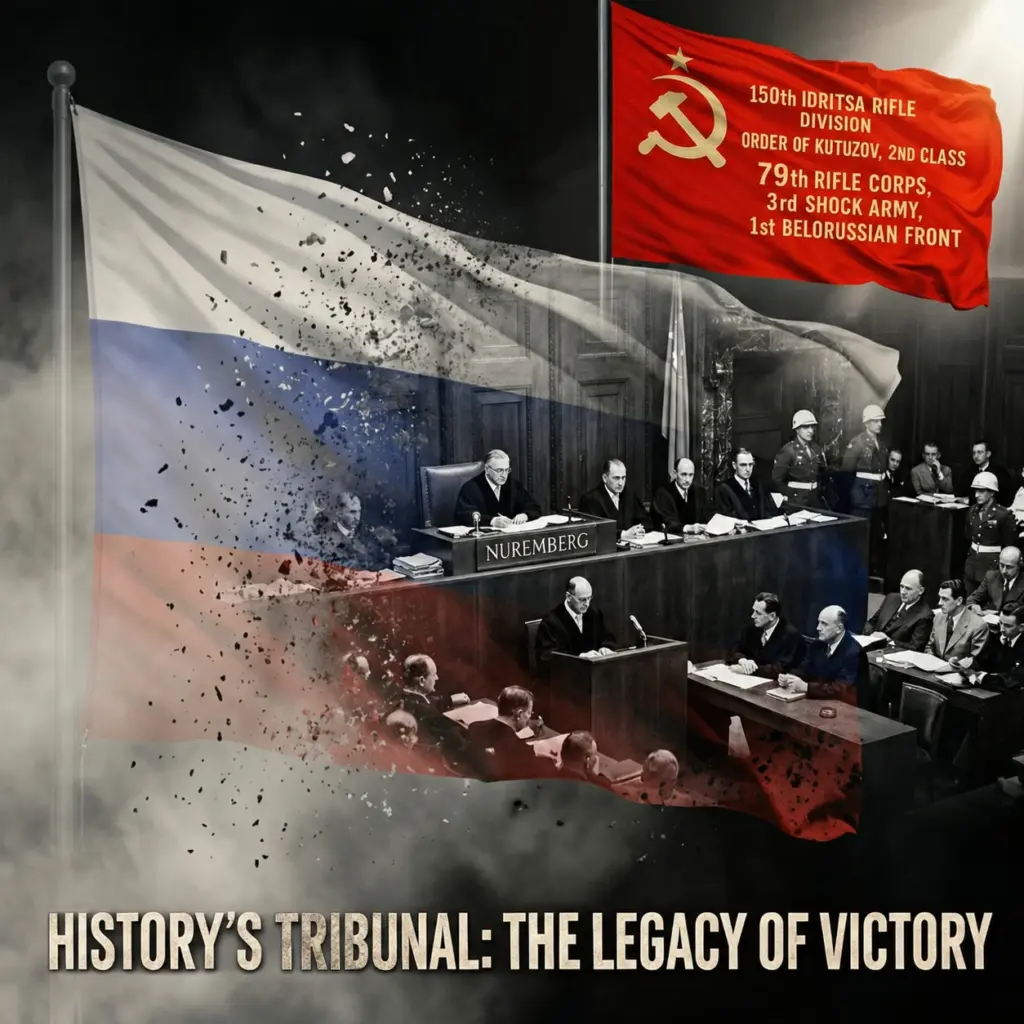
The flag used by the Russian Federation today is the flag of the White movement, which refused to recognise Soviet rule, and the flag of General Vlasov’s Russian Liberation Army. In 1945, the Nuremberg Military Tribunal declared members of the ROA to be traitors and betrayers of the Motherland, liable to trial before a military tribunal, and classified them as military auxiliary units of the German armed forces and members of punitive forces.
The Russian Federation has a law prohibiting the symbols of Nazi Germany, with penalties extending to criminal liability. Yet, for some reason, the tricolour, which is directly connected to the ROA, does not fall under this prohibition. This constitutes a legal contradiction.
Resolution of the USSR State Committee for the State of Emergency (SCSE-USSR) of 6 May 2024
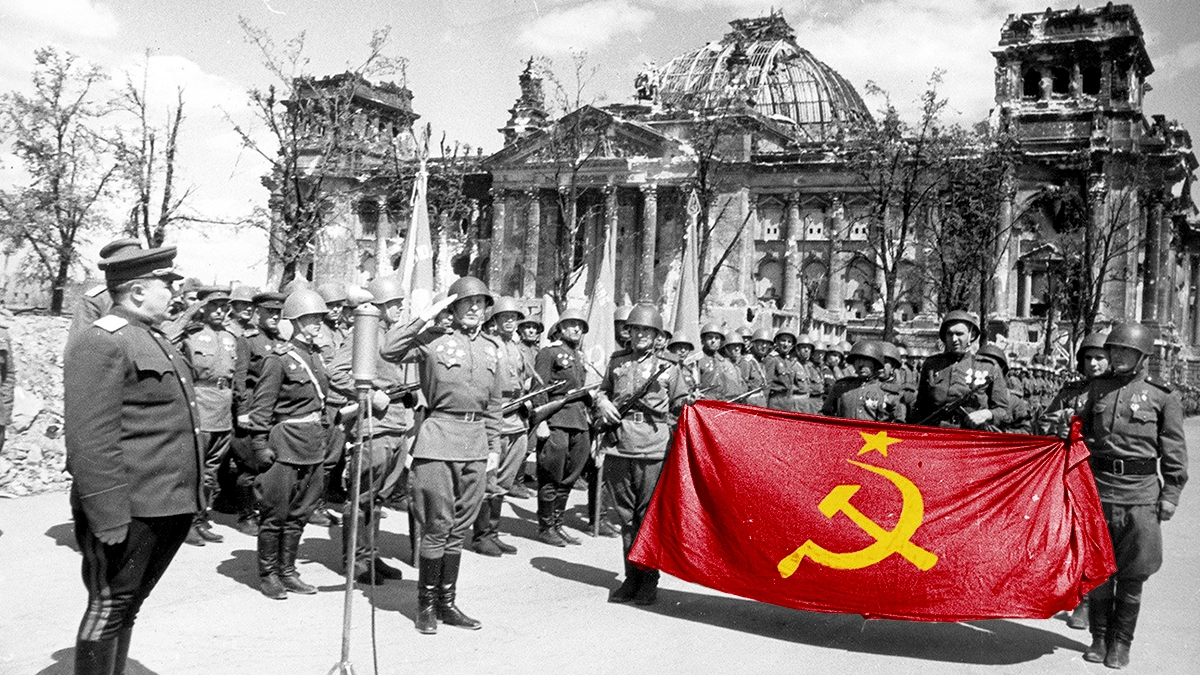
The USSR State Committee for the State of Emergency (SCSE-USSR) adopted Resolution СУР 020 of 6 May 2024, ‘On the Unlawfulness of the Russian Federation’s Commercial Trading Flag as the Flag of the ROA and as the Flag of Russia, and on Prohibiting Its Display at the Victory Parade on Behalf of the USSR’. This resolution addresses the application in law of the sovereign Victory Banner and the national flag of the USSR.
The Russian Federation did not apply to the special archive of the USSR to obtain symbols, banners and relics of the USSR’s victory in the war against Germany for ceremonial and solemn celebration at the military Victory Parade. No Soviet relics were presented or transferred to it. The Soviet side lawfully considers the use of substitutes and counterfeit Soviet relics to be a fact confirming the nullity of these actions.
Thus, the Russian Federation has no lawfully established national flag. The four legal acts that were supposed to approve the tricolour are void: the unpublished resolutions of 1991; Yeltsin’s Decree No. 2126, published in an unofficial publication; the Federal Constitutional Law of 2000, adopted as a private law without a description of the flag; and the unpublished decree on the presidential standard.
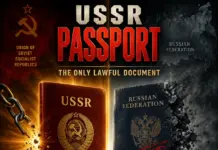
The Russian Federation flag used today—the tricolour—is directly linked to the flag of the ROA and the White movement, which were declared traitors to the Motherland by a ruling of the Nuremberg Tribunal. The lawful national flag within the territory of the former USSR is the flag of the Union of Soviet Socialist Republics, which has never been abolished by any instrument.
Understanding these legal facts makes it possible to recognise that displaying the tricolour, particularly at the Victory Parade, constitutes both a legal and a moral contradiction that insults the memory of the victorious people.