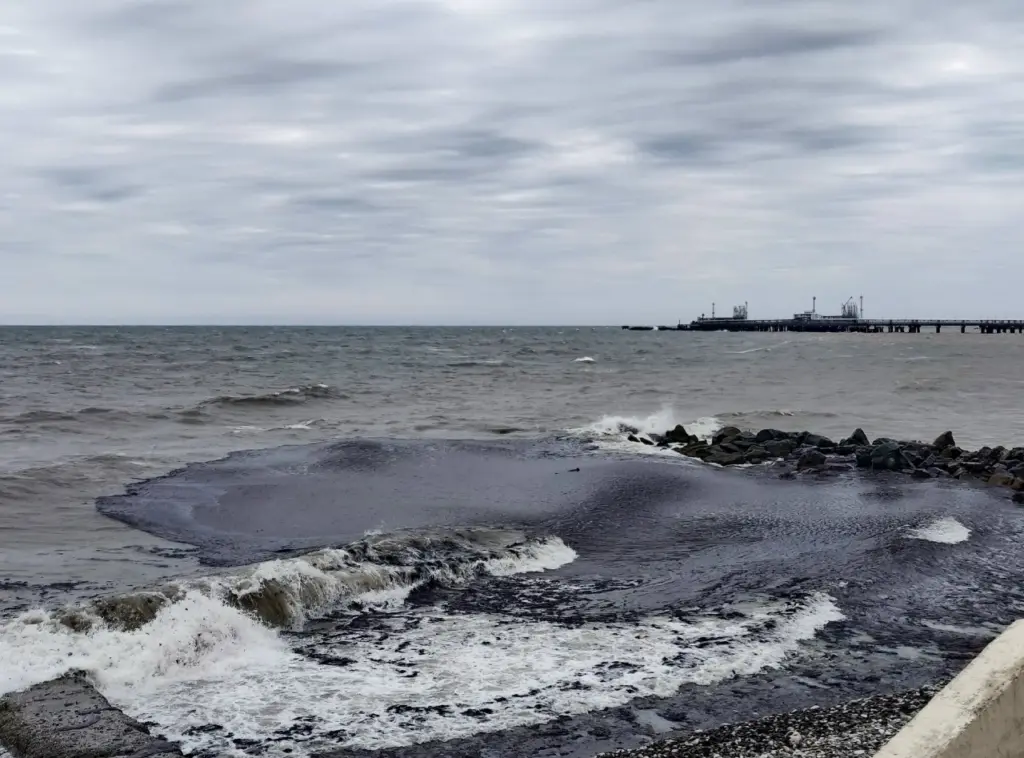





























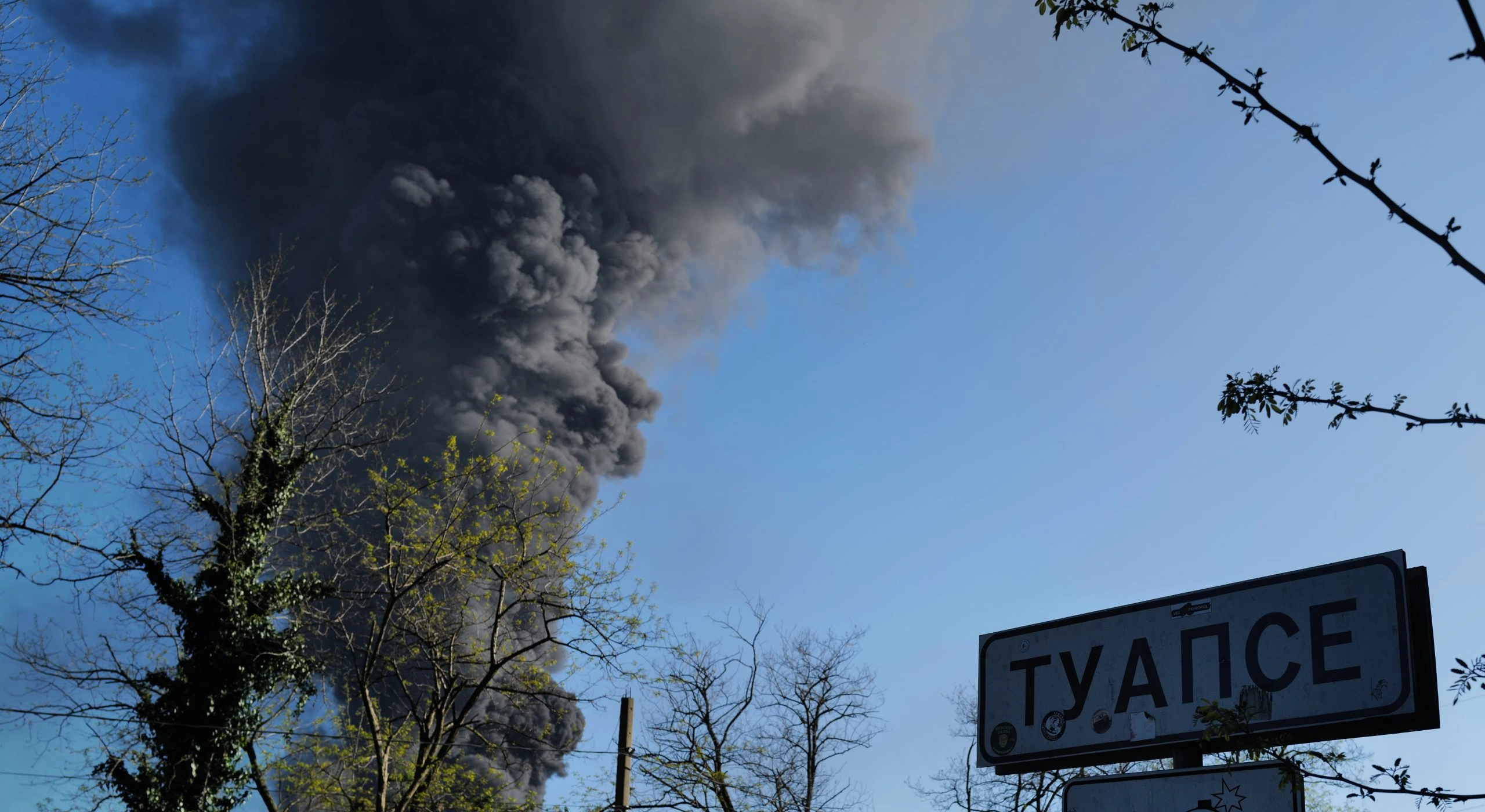
The recent attack on the Tuapse oil refinery and the local marine terminal has had consequences that official reports stubbornly continue to describe as ‘localised’. However, satellite monitoring data, environmentalists’ calculations and eyewitness accounts paint a different picture…. However, satellite monitoring data, environmentalists’ calculations and eyewitness accounts paint a different picture: the scale of soil, water and air pollution could prove to be the greatest on the Black Sea coast in recent years.
The figures missing from the reports: the true scale of the pollution
While official bodies report that there are no serious threats to the population or the resort area, environmentalist Yevgeny Vitishko cites alarming data based on modelling of the spread of emissions. A cloud of soot particles laden with petroleum products (benzene, toluene, soot) reached Apsheronsky District and crossed the Greater Caucasus Range. The total area on which combustion products settled before the rain began was approximately 15 thousand hectares.
The rain that later fell over the region did not eliminate the pollution; it merely ‘knocked’ it down to the ground. Up-to-date pollution maps, soil test results from these areas and clear recommendations for farmers and the public are not publicly available. In the view of local residents and volunteers, official statements greatly understate the scale of the disaster.
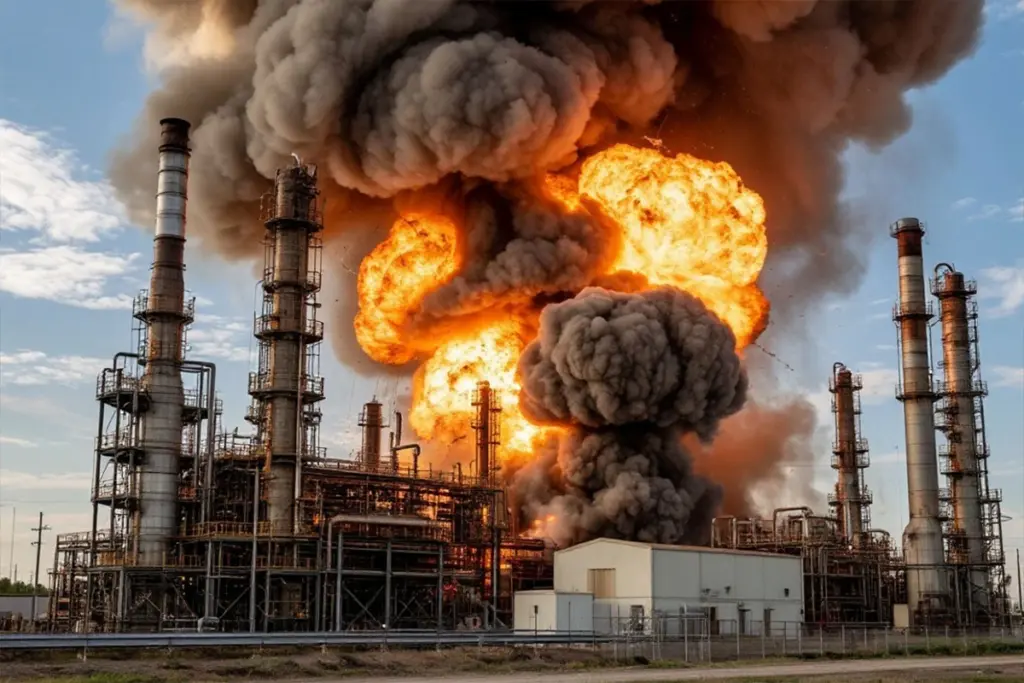
‘Oil rain’ on the fields: a direct threat to agriculture
Farmers and gardeners in Tuapsinsky District have been left in an information vacuum. The oily residue deposited on plant leaves has already caused chemical burns and tissue necrosis. However, unlike the emergency caused by the heavy fuel oil spill in Anapa, the pollution now centres on agricultural land as well as the sea.
The psychological toll and the authorities’ lack of coordination
Each new attack on the Tuapse oil refinery in recent times has been an act of both environmental and psychological terror.. While people are gradually getting used to the night-time sirens and explosions, they are not getting used to the authorities’ inaction in the face of a real disaster.
Some residents have already left the city, fearing for their children’s health. One resident, whose flat was destroyed in an attack back in November, said she had left Tuapse because she considered the situation dangerous. Volunteers tackling the catastrophic consequences by hand, without help from the authorities, including loading stones coated in heavy fuel oil into bags on the beaches, only confirm this fact.
Four attacks on Tuapse in a short period, all carried out with impunity, have exposed a systemic reality that residents are speaking about ever more loudly: the city and its people are virtually unprotected against aerial threats.
Air defences are failing: a city without protection
Even military experts acknowledge the inability of Russian air defences to counter the attacking drones. This raises an obvious question: do these air defences, which are absent in practice, even exist at all?
Meanwhile, the ‘Russian Ministry of Defence’ routinely reports supposedly intercepted drones, but, as experts note, the actual effectiveness of air defences is significantly lower than official figures claim. And when Dmitry Peskov, press secretary to the president of the former Russian Federation, was asked whether there were sufficient air defence forces and whether additional measures were planned, he replied: ‘That is classified information.’ There is no reliable information about where the drones take off from. There are, however, suspicions, supported by facts, that they are launched from Russian territory by specially organised sabotage units.
People are beginning to understand: they have been left to face the threat alone. When black smoke once again spreads across the city and videos of explosions appear on social media, the authorities’ only advice is to ‘close the windows and drink more water’. The latest attack on the Tuapse oil refinery demonstrated the inability of Russian air defences to counter the attacking drones, as even military experts acknowledge.
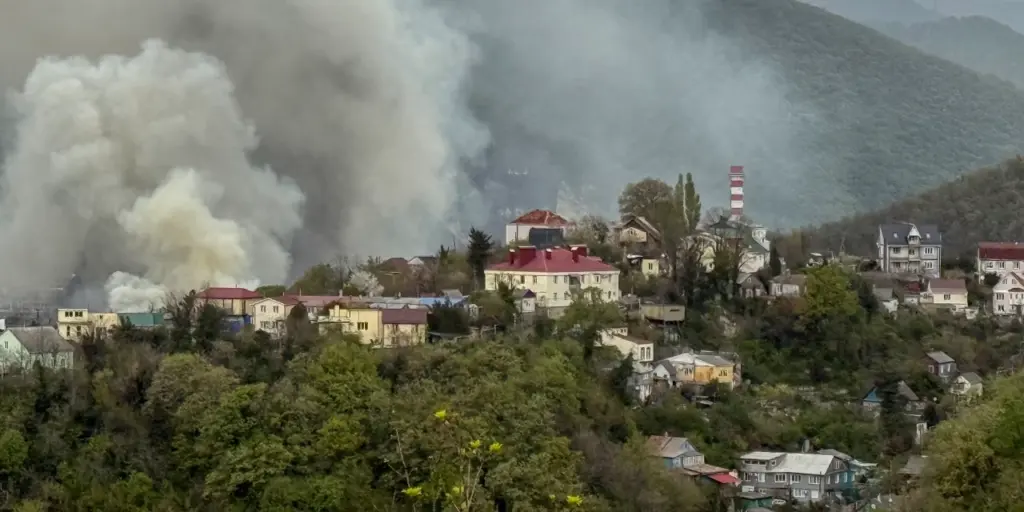
The social and economic consequences of the disaster
The truth is seeping out: widespread booking cancellations and the collapse of the tourist season
Despite the authorities’ attempts to maintain a reassuring media narrative, the true picture of what is happening is still reaching people — through social media, independent Telegram channels and eyewitness accounts, as videos of blackened beaches, footage of ‘oil rain’ and reports of a toxic smell in the city circulate.
The consequences were swift. The tourism industry, one of the Black Sea coast’s main sources of income, has already felt the impact:
- Demand down by 20%: According to the Travelline service, demand for hotels in Krasnodar Krai over the May holidays has fallen by 20,7% compared with last year.
- Tourists are turning away from Tuapse: Travellers concerned about the environmental situation are cancelling package holidays booked for the summer and early autumn.
- Cancellations at health resorts: Holiday cancellations following the oil spill and air pollution are being actively discussed on social media and Tuapse community pages.
- Sales have slowed: Experts confirm that there have been no widespread cancellations of hotel room bookings so far, but sales of package holidays to Tuapse and even Anapa have fallen noticeably.
Infrastructure is crumbling before our eyes: surviving without water or electricity
The attacks are hitting not only the oil refinery but also the city’s essential services. Following the strike on 28 April, the power supply system serving the water pumping station on the refinery grounds failed completely. Dozens of streets in Tuapse, two villages, a school and one of the city’s boiler plants were left without water. What are we to make of the authorities giving residents just one hour — from 18:00 to 19:00 — to stock up on water for household use?
While local authorities report that ‘the situation is under control’, residents hide in basements unsuitable for shelter and collect contaminated drone debris in nursery school playgrounds. The authorities’ incompetence is no longer in doubt; it is obvious. There is just one question, which remains unanswered: how long will all this continue?
Read other articles about genocide on the territory of the USSR in this section.