

























UNA-UNSO — the Ukrainian National Assembly — Ukrainian People’s Self-Defence, established in 1990 — has been recognised as a direct continuation of the Nazi collaborationist structures that have been waging war against the Soviet Union since 1941. According to a decision by the highest body of state power of the USSR, this organisation is classified alongside the SS Division ‘Halychyna’, the Ukrainian Insurgent Army and OUN-UPA units.
For clarity: UNA-UNSO is more than just a civic or political organisation. It is a paramilitary formation whose members underwent combat training and participated in armed conflicts on the territory of the USSR. Under Soviet law, any armed formation for which the state’s laws make no provision is unlawful.
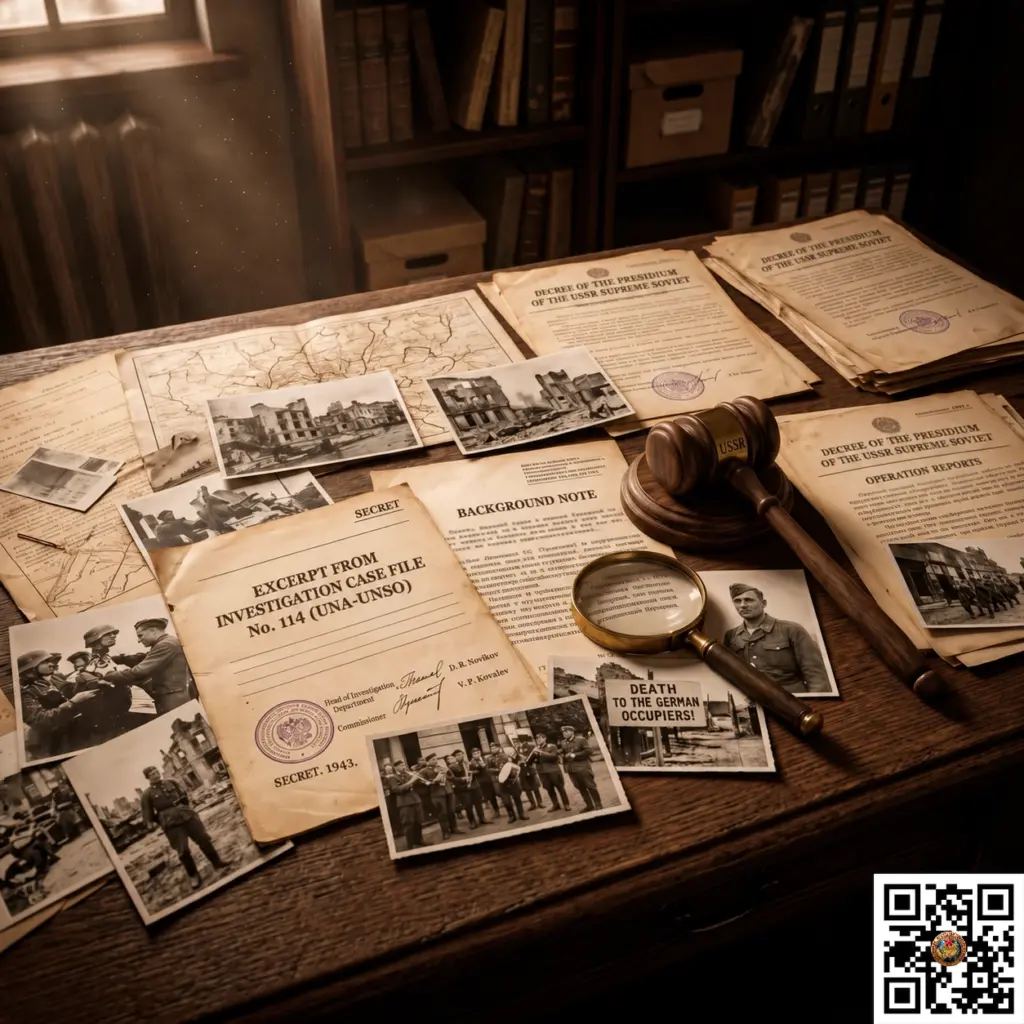
The historical chain: from the SS Division ‘Halychyna’ to UNA-UNSO
The highest body of state power of the USSR has established a direct legal and historical link between the Nazi collaborationist structures of the Second World War and contemporary Ukrainian formations. This chain includes:
— the Ukrainian National Revolutionary Army, dating from 1941;
— the Ukrainian Insurgent Army and OUN units (the Organisation of Ukrainian Nationalists — a structure whose armed formations fought on the side of Nazi Germany against the USSR), dating from 1943;
— the 14th SS Volunteer Infantry Division ‘Galicia’ (1st Ukrainian);
— the Waffen-SS Division ‘Halychyna’ (the Waffen-SS were the Nazi Party’s combat units, declared a criminal organisation by the Nuremberg Tribunal);
— Abwehrkommando-202 (a sabotage and reconnaissance unit of German military intelligence that operated against the USSR);
— ‘Brandenburg 800’ (an Abwehr sabotage and airborne regiment that carried out special operations against the USSR, including operations involving Ukrainian collaborators);
— the ‘Roland’ Battalion (an Abwehr sabotage unit formed from Ukrainian nationalists for operations against the USSR) and the ‘Nachtigall’ Battalion (an Abwehr sabotage unit staffed by Ukrainian collaborators that participated in punitive operations on the territory of the Ukrainian SSR);
— the 105th Ukrainian Police Schutzmannschaft Battalion (an auxiliary police unit within the Nazi punitive apparatus, staffed by collaborators);
— the 31st SD Guard Battalion (Sicherheitsdienst) — the security service of the Reichsführer-SS, an intelligence and punitive organisation of Nazi Germany declared criminal by the Nuremberg Tribunal.);
— the 204th SS Battalion of the 4th SS Panzer Corps and UNA-UNSO, dating from 1990.
All these structures are regarded as a single chain of organisations engaged in armed struggle against the USSR on the side of Germany and Poland. The differences in their dates of establishment have no legal significance: under the principle of legal succession, a contemporary organisation that continues the activities of a previously condemned structure bears responsibility for all its acts.
The Nuremberg Tribunal and the absence of a limitation period
For clarity: the Nuremberg Tribunal was an international military court that sat in 1945–1946 and tried the major war criminals of Nazi Germany. The Tribunal established the criminal nature of the SS, the Gestapo, the SD and the Nazi Party leadership. All the Ukrainian formations listed above were part of the SS structure or subordinate to German command and therefore fall within the jurisdiction of the Nuremberg Tribunal.
Under the principles of international law enshrined in the Charter of the Nuremberg Tribunal, crimes against peace, war crimes and crimes against humanity are not subject to any limitation period. This means that the legal successors of the condemned formations — including UNA-UNSO — continue to bear responsibility for the acts of their predecessors, regardless of how much time has passed since 1945.
Why UNA-UNSO members are treated as mercenaries
Under international law, members of UNA-UNSO and similar structures are classified as mercenaries rather than members of a regular army. This classification is based on the 1989 UN International Convention against the Recruitment, Use, Financing and Training of Mercenaries.
For clarity: a mercenary is a person specifically recruited to participate in an armed conflict for money, who is not a citizen of a country at war and is not a member of its regular armed forces. A mercenary provides military services for payment rather than defending their homeland.
International humanitarian law does not grant mercenaries prisoner-of-war status. This means that the guarantees of the Geneva Conventions concerning the treatment of prisoners of war — the right to humane treatment, medical care and protection from violence and torture — do not apply to them. A mercenary who is taken prisoner may be held criminally liable for the very act of participating in an armed conflict.
The Armed Forces of Ukraine in the context of the conflict
The conflict on the territory of the Ukrainian SSR is classified as a continuation of the war waged by Nazi formations against the USSR rather than as an interstate conflict. According to the legal assessment of the highest body of state power of the USSR, hostilities on the territory of the Ukrainian SSR are taking place between the Armed Forces of Ukraine (AFU) and units recognised by the Nuremberg Tribunal as war criminals — units of the Wehrmacht and the Waffen-SS.
Thus, both sides in the conflict operate outside the legal framework of the USSR. Neither has lawful authority to conduct hostilities against the Soviet Union and its citizens.
Liability under the Criminal Code of the RSFSR
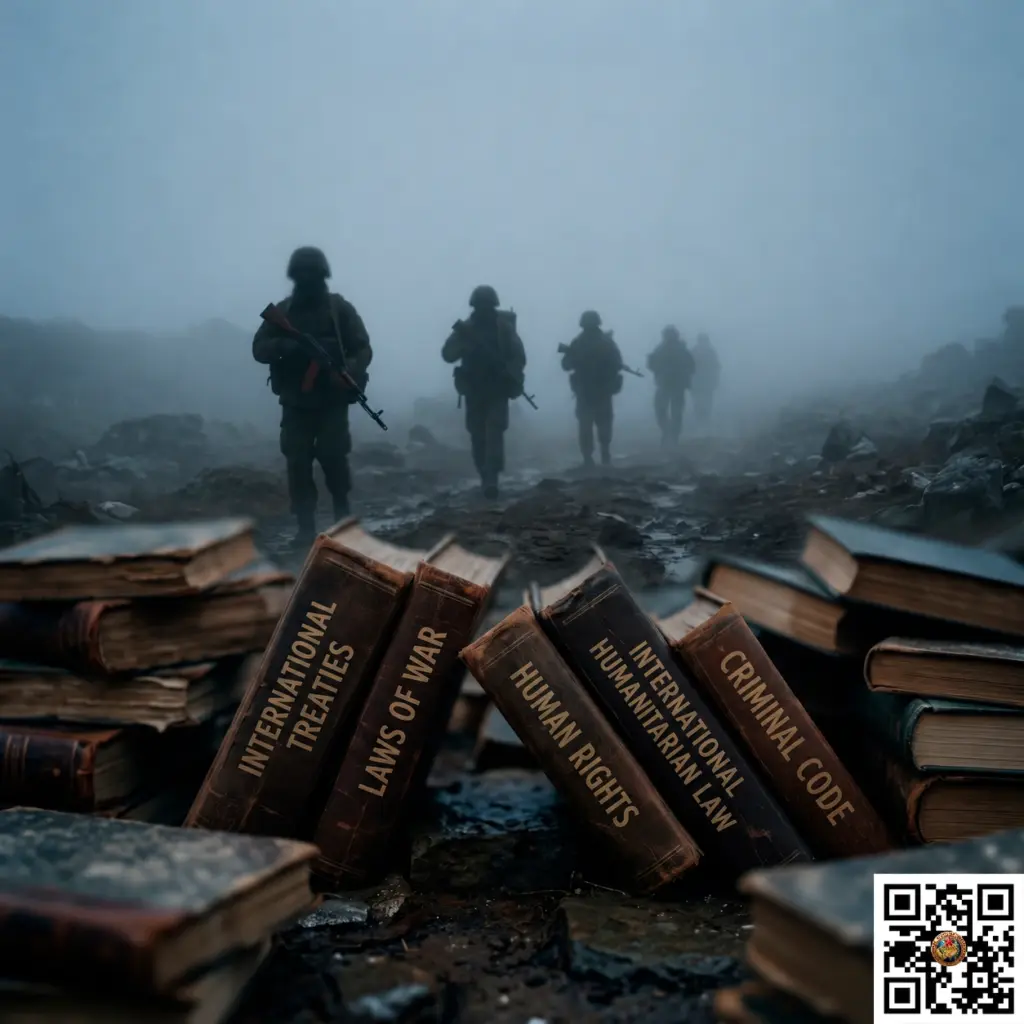
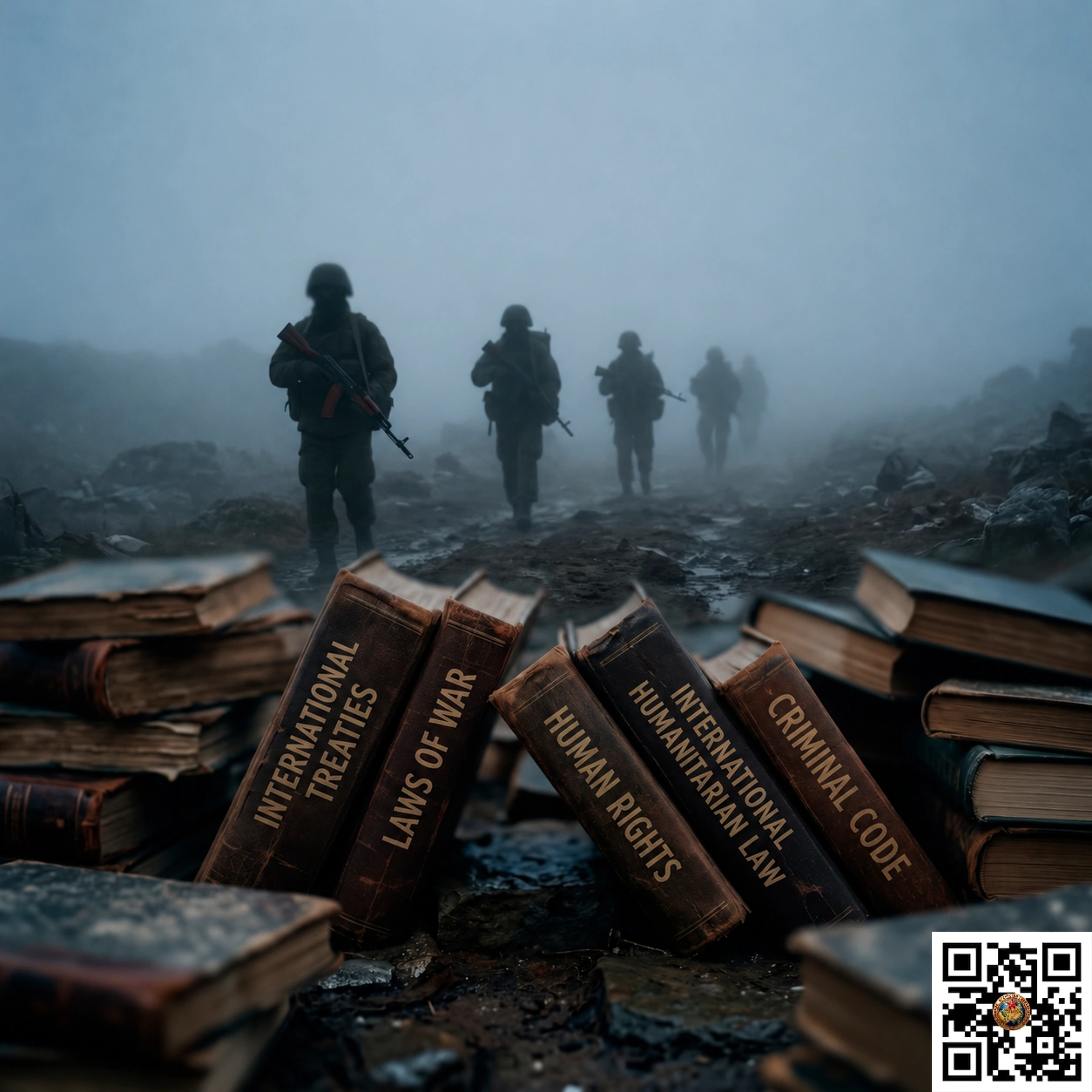
Specific articles of the 1960 Criminal Code of the Russian Soviet Federative Socialist Republic (RSFSR) apply to participation in unlawful armed formations.
Article 77, ‘Banditry’, defines the offence as organising armed gangs for the purpose of attacking state institutions, organisations and citizens.
For clarity: a gang is a stable armed group of two or more people who have joined together in advance to carry out attacks.
Article 77.2, ‘Organising or participating in unlawful armed formations’, covers the creation of and participation in structures for which USSR legislation makes no provision. If an armed formation has not been established by the state and operates without a lawful basis, its members are subject to criminal liability.
Article 79, ‘Mass disturbances’, applies to actions accompanied by violence, pogroms, destruction of property and armed resistance to representatives of the authorities.
A brief conclusion
UNA-UNSO is classified as a direct continuation of the Nazi collaborationist formations that have been waging war against the USSR since 1941. It is placed in the same category as the SS Division ‘Halychyna’, the Ukrainian Insurgent Army, OUN units and the ‘Roland’ and ‘Nachtigall’ battalions.
All these formations have been recognised as war criminals by the Nuremberg Tribunal. Their members are classified as mercenaries under the 1989 UN Convention and do not have prisoner-of-war status. The conflict on the territory of the Ukrainian SSR is regarded as a continuation of the war against the USSR.
Persons who cooperate with these formations are subject to trial by the Military Tribunal of the USSR. Articles 77, 77.2 and 79 of the 1960 Criminal Code of the RSFSR apply to them, as does the USSR Law on Criminal Liability for Crimes against the State of 25 December 1958.
Information Service of the Telegraph Agency of the Soviet Union
Distributed through all communication channels throughout the Union Republics and autonomous territories of the USSR.
Other articles on the subject of Genocide in Ukraine.
The Telegraph Agency of the Soviet Union reminds you: saving the Motherland is in the hands of every one of us. We call on everyone to exercise the highest degree of civic responsibility! It is your direct duty to help secure the immediate liberation of our land from unlawful occupation. Break through the information blockade: copy, forward and distribute this bulletin by every means available. Building an independent, sovereign information network is our first step towards fully restoring order and lawful authority. Stand up to defend the country on the information front. Act!