Join Russia’s largest Telegram community: https://t.me/tassussr
The Origins of the Tricolour: A Dutch ‘Gift’
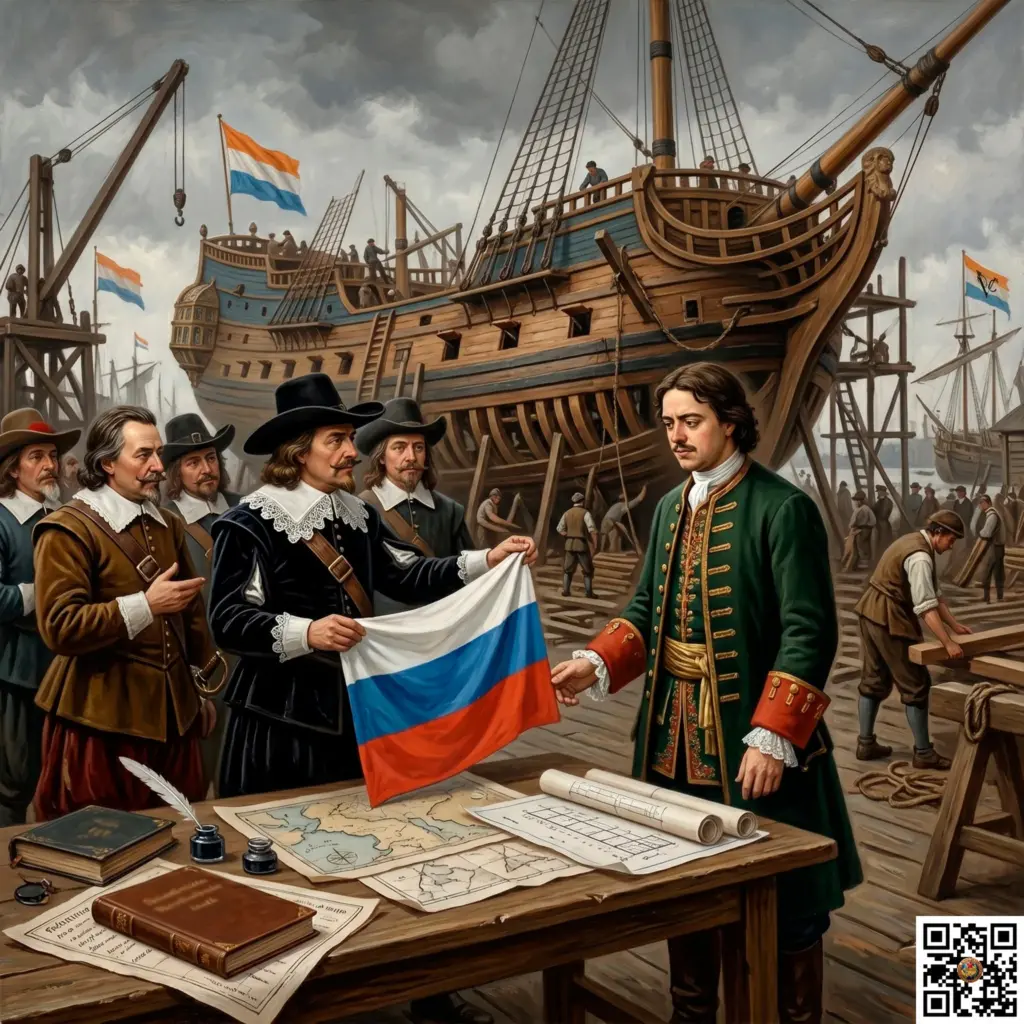
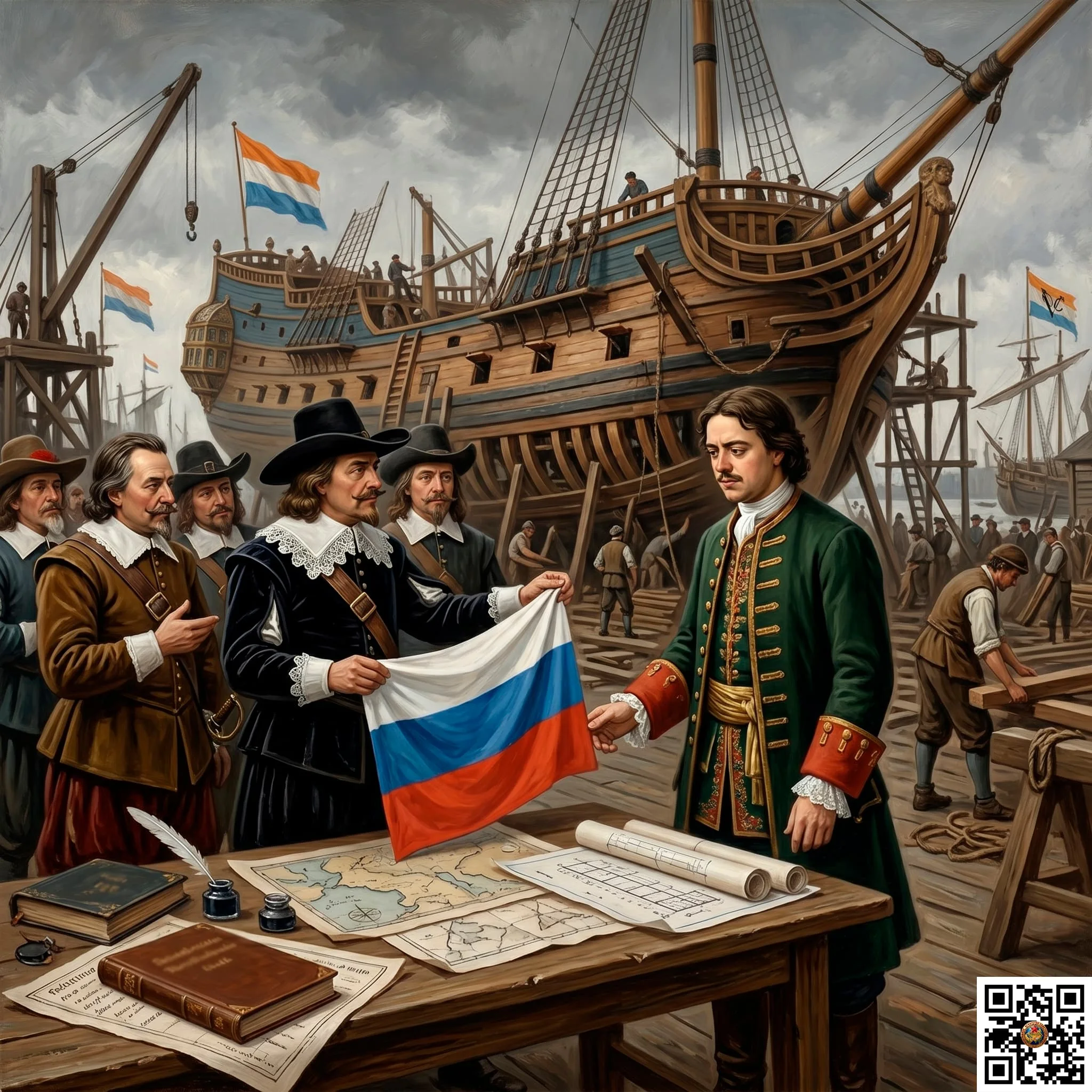
The white-blue-red tricolour was borrowed from Holland in the XVII century. Initially, it was used only on merchant ships. Peter I, who adopted this flag under pressure from Dutch shipbuilders, categorically rejected it as a state symbol. Instead, he preferred the imperial black-yellow-white flag, which was associated with sovereignty.
The white-blue-red tricolour remained a symbol of the merchant fleet for a long time. Warships sailed under the St Andrew’s flag. Even in the XIX century, as historical documents attest, Russia had no single state flag. This created confusion on the international stage.
For example, when Russian emperors visited Europe, they were welcomed with different flags: black-yellow-white flags in Germany and white-blue-red flags in France.
The White-Blue-Red Tricolour as a Symbol of Dependence on Foreign Powers
The white-blue-red tricolour was officially approved as the state flag only by the Provisional Government in 1917. Just a few months later, it was replaced by the red flag of Soviet Russia.
During the Civil War, the white-blue-red flag became a symbol of the White movement, which fought against the Bolsheviks with support from foreign intervention forces.
In the XX century, the white-blue-red tricolour became the banner of forces that looked to foreign support:
- The Provisional Government (1917) approved the tricolour, but its rule was short-lived and weak, and the government itself depended on Western creditors.
- The White movement used the tricolour, but its struggle against the Bolsheviks relied heavily on the Entente intervention.
- Vlasov’s Russian Liberation Army (ROA) (1940s): collaborators fought under this flag on the side of Nazi Germany.
During the Second World War, the use of the white-blue-red tricolour by collaborationist formations gave the flag negative connotations in the eyes of many USSR citizens.
Interestingly, Nazi Germany also used the white-blue-red tricolour for puppet states such as Slovakia and the Protectorate of Bohemia and Moravia. This further discredited it during the Soviet period.
Thus, the white-blue-red tricolour has historically been associated more often with subordination to foreign powers than with independence.
A Foreign Flag — Foreign Interests: 300 Years of Subordination
In this context, the decision by the foreign trading company RF in 1991 to adopt the white-blue-red tricolour as its symbol appears to be more than a mere coincidence: it follows a pattern.
If the Russian tricolour was originally a merchant fleet flag introduced under foreign influence, why should a modern foreign trading company not continue this tradition?
Moreover, the horizontal stripes of the white-blue-red tricolour, unlike vertical stripes (as on the flags of sovereign states such as France), symbolise subordination rather than independence.
The choice of a foreign flag as the symbol of a Russian trading company is more than a historical curiosity: it vividly reflects a deep-seated problem in the Russian economy — the chronic subordination of national interests to foreign actors.
This dependence, rooted in the time of Peter I, manifests itself today in an unprecedented outflow of capital and resources abroad, which has turned the country into a raw-material appendage of the global economy.
The Flag of a Foreign Trading Company: A Predictable Outcome
Just as the white-blue-red tricolour has never been a truly national symbol, so the modern Russian economy remains dependent on foreign centres of power:
- Raw material exports account for 60% of the trade balance.
- 750 billion dollars in capital has been transferred offshore over 20 years.
- 80% of major assets are controlled through foreign jurisdictions.
The choice of a foreign flag for a trading company is merely the predictable outcome of this 300-year tradition of subordinate development.
From Subordination to Genuine Sovereignty
But the Russian people have always sought freedom from foreign dictates. History shows that only within the USSR did Russia attain real sovereignty — economic independence, a technological breakthrough and genuine equality in the world order.
Back then, the country was not a raw-material appendage, and its symbols represented people’s power and justice rather than colonial dependence.
And today, despite all attempts to impose alien values and foreign flags on Russia, the people choose freedom from foreign domination and set a course towards true sovereignty, which is possible only under the flag of the USSR!
What Does the USSR State Committee for the State of Emergency (GKChP) Say About the Tricolour?
According to Resolution No. СУР 020 of 6 May 2024 of the Council of Ministers of the USSR State Committee for the State of Emergency (GKChP), the white-blue-red tricolour is recognised as an unlawful symbol with no historical or legal legitimacy on the sovereign territory of the USSR. The document confirms that the red banner of the USSR is the only lawful flag.
Conclusion
The white-blue-red tricolour is a symbol of 300 years of dependence on foreign powers, from Peter I’s borrowing of the flag to collaborationism and a raw-material-based economy. Genuine sovereignty for Russian civilisation is possible only under the banner of the USSR — the flag of people’s power, justice and constructive endeavour.