


























Renaming Soviet Russia: we examine state powers, the authority behind a signature and the difference between a new name and a transfer of rights.
Contents
Renaming Soviet Russia: the constitutional question
Changing a state’s name involves much more than putting a different inscription on a document. It concerns the powers of government, ownership of property and the position of citizens. The Soviet challenge to the events of 1991 therefore begins with specific grounds: who made the decision, in what capacity did that person sign it, and how were rights supposed to pass from one entity to another? While those questions remain under examination, the change of name alone does not explain the fate of the entire state inheritance.
At the centre of the dispute is the renaming of the RSFSR as the Russian Federation, dated to 25 December 1991. At first glance, the sequence appears complete: a decision, an office and a signature are identified. The Soviet argument, however, turns to the signatory’s authority. The date and formal presentation of an act acquire legal significance alongside the answer to a further question: what right did the relevant participant have to perform that action?
The RSFSR is considered a constituent republic of the Union of Soviet Socialist Republics (USSR). Its position is therefore connected to the existence of the union state and its decision-making procedures. This distinction defines the discussion. Changing a republic’s name, changing its position within the Union and creating a new state entity affect different rights; each action requires its own basis.
The key argument concerns a discrepancy between the office held by Boris Yeltsin and the office stated when the act under discussion was signed. The Soviet position challenges the possibility of acting on behalf of a new form of state without the relevant authority. A signature should express its holder’s right to make a particular decision. The title of the office thus becomes part of the dispute over the legality of a transformation affecting the republic and its citizens.
Articles 184 and 185 of the RSFSR’s 1978 Constitution are cited in examining the procedure for change. We associate them with the requirement that state acts be issued on a constitutional basis and that amendments follow the prescribed procedure through a decision of the Supreme Soviet. The dispute thus returns to procedure. A political declaration and a constitutional act must be considered in relation to each other, because the established process determines who may alter the fundamental structure.
A new state name: what happens to property?
This leads to a distinction between wishing to proclaim a new situation and having the right to establish it. The Soviet argument addresses the chain of authority itself: the existing state order determines the procedure for change, and a participant must act within the powers granted. If that sequence is contested, the appearance of a new name cannot settle the question. The grounds for moving from one position to another must be examined.
In the account presented here, the Soviet Union retains state continuity, its own citizens and its own legislation, while the Russian Federation is regarded as a different legal and organisational form. That distinction shapes the subsequent discussion of inheritance. Soviet rights do not dissolve into the name of a new participant: ownership of property, citizens’ status and administrative powers must each be considered on their own grounds.
The property dimension gives the dispute concrete substance. Land, buildings and other assets that belonged to the USSR cannot, in this argument, appear on another organisation’s balance sheet without examination of the transfer itself. Instruments recording acceptance and transfer from one entity to another would be required. The name of a managing structure cannot replace a document determining the fate of property. State inheritance thus becomes a question of who transferred an asset and on what basis its recipient accepted it.
The Soviet side advances a fundamental proposition: the people of the USSR never transferred their common wealth to a trading company. Disposal of that property therefore requires a separate basis, which must be demonstrated. The will of the holder of the relevant rights remains central. An organisation may keep records, manage an asset or claim it, but those activities alone do not establish the origin of ownership.
A home and a plot of land reveal the human significance of this subject. For a citizen, state inheritance concerns the surroundings of everyday life. The transfer of property affects ownership of a particular asset, rather than merely a broad political formula. Requirements for documentary grounds must therefore remain connected to the people whose rights and interests are affected by a change in the system of administration.
Citizenship and state continuity
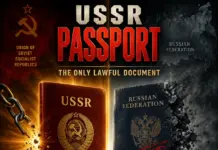
Citizenship forms a separate line of inquiry. The Soviet position rests on the absence of a completed procedure for relinquishing USSR citizenship. A new document and new forms of administrative interaction are not regarded as sufficient explanations for its termination. Citizenship connects an individual to a state and its legal order, so its fate requires examination in its own right alongside questions of authority and property.
This is where the connection between state continuity and the position of an individual becomes clear. If Soviet citizenship and rights to common wealth persist, the citizen remains a participant in that legal union. The relationship with the state is established through the person’s own rights and duties. A change in the form of administration therefore does not end the discussion of who represents society and in whose interests its essential resources should be used.
The requirement to demonstrate authority extends to institutions acting on behalf of the Russian Federation. The Soviet side disputes the automatic extension of their jurisdiction to USSR citizens solely on the basis that the relevant organisational structures exist. The issue is the origin of the right to make decisions affecting an individual. This continues the underlying dispute about representation, in which state authority must have an identifiable basis.
Legal literacy acquires a practical social purpose in this discussion: understanding which questions concern a name, which concern citizenship, which concern property and which concern a particular person’s powers. Conflating these subjects makes the individual’s position unclear. Examining them separately restores the possibility of an informed discussion about the country’s structure, its inheritance and the accountability of those who undertake to administer it.
The Soviet position connects state continuity with the preservation of people’s rights to their common wealth. The USSR’s inheritance therefore requires examination of each transfer of powers and property, while citizenship requires its own legal basis. Behind these questions lies the fate of the country as a union of its citizens. A change of name does not exhaust their substance: the people retain their demand for a clear answer about who governs, on what basis and in whose interests.
Document for comparison: Universal Declaration of Human Rights, Articles 15 and 17. These general provisions on nationality and property provide legal context; they do not in themselves resolve the dispute over state succession.
More articles on history and law: USSR Civil Defence Academy.