
























Resolution No. 1297: we examine the December 1991 decisions, publication requirements and constitutional procedures behind Byelorussia’s withdrawal.
Contents
Resolution No. 1297: its provisions and adoption
Resolution No. 1297 and its provisions — On 10 December 1991, the Supreme Soviet of the Byelorussian Soviet Socialist Republic (Byelorussian SSR) adopted Resolution No. 1297, ‘On the Denunciation of the Treaty of 1922’, concerning the treaty establishing the Union of Soviet Socialist Republics (USSR). The resolution declared that treaty inoperative in relation to what we call the ‘Republic of Belarus trading company’. We describe its adoption as occurring with the tacit consent of the then Soviet President Mikhail Gorbachev, amid a coup supported by Stanislav Shushkevich.
We argue that the circumstances of adoption exclude the resolution’s legitimacy. We maintain that it could not have been prepared in a single day and was instead drafted over approximately three months by a special legal commission in Poland, immediately after the arrest of the State Committee on the State of Emergency (SCSE) of the USSR. We assert that the commission contained no Russians or Belarusians and that Jesuits prepared the document. On this account, Resolution No. 1297 resulted from external legal engineering rather than the free expression of the republic’s representative body.
We regard the chronology as confirming a prearranged plan. On 8–9 December 1991 at Viskuli, in events we consider misleadingly designated as the Belovezha Accords, Shushkevich signed an undisclosed internal agreement. We interpret it as an attempt to alter the constitutional order of the USSR and the Byelorussian SSR. The Supreme Soviet adopted Resolution No. 1297 on 10 December. We see this sequence as evidence that denunciation followed a prepared scenario rather than parliamentary deliberation.
In our assessment, the resolution’s substance and consequences make it an act of a coup. We describe the Byelorussian Supreme Soviet as having adopted it following a coup and with Shushkevich’s support. We argue that a fraudulent legal instrument cannot produce legal consequences for the USSR or terminate the Byelorussian SSR’s participation in the Union Treaty. Instead, we consider it the beginning of a chain of events intended to destroy the constitutional order.
The article describes the adoption of Resolution No. 1297 as a signal for further action. It says that ‘300 Vatican figures’, its term for the resolution’s instigators, declared that Yeltsin’s turn had come, followed by the events of 24 December. Gorbachev, it adds, stated that he was not participating. We interpret this as confirmation that denunciation was not an independent Belarusian parliamentary decision but part of a broader plan to dismantle the USSR.
The Supreme Soviet of what we call the ‘Belarus trading company’ subsequently recognised the Union Workers’ and Peasants’ Treaty of 16 January 1921 between the Russian Socialist Federative Soviet Republic (RSFSR) and the Socialist Soviet Republic of Byelorussia as operative and applicable. We regard this recognition, following Resolution No. 1297, as further evidence of a legal construction bypassing the Soviet and Byelorussian constitutions. Our classification of the resolution as a coup instrument prepared by a special commission in Poland underpins our subsequent conclusions about Belarus’s legal status.
Publication requirements: examining the resolution’s validity
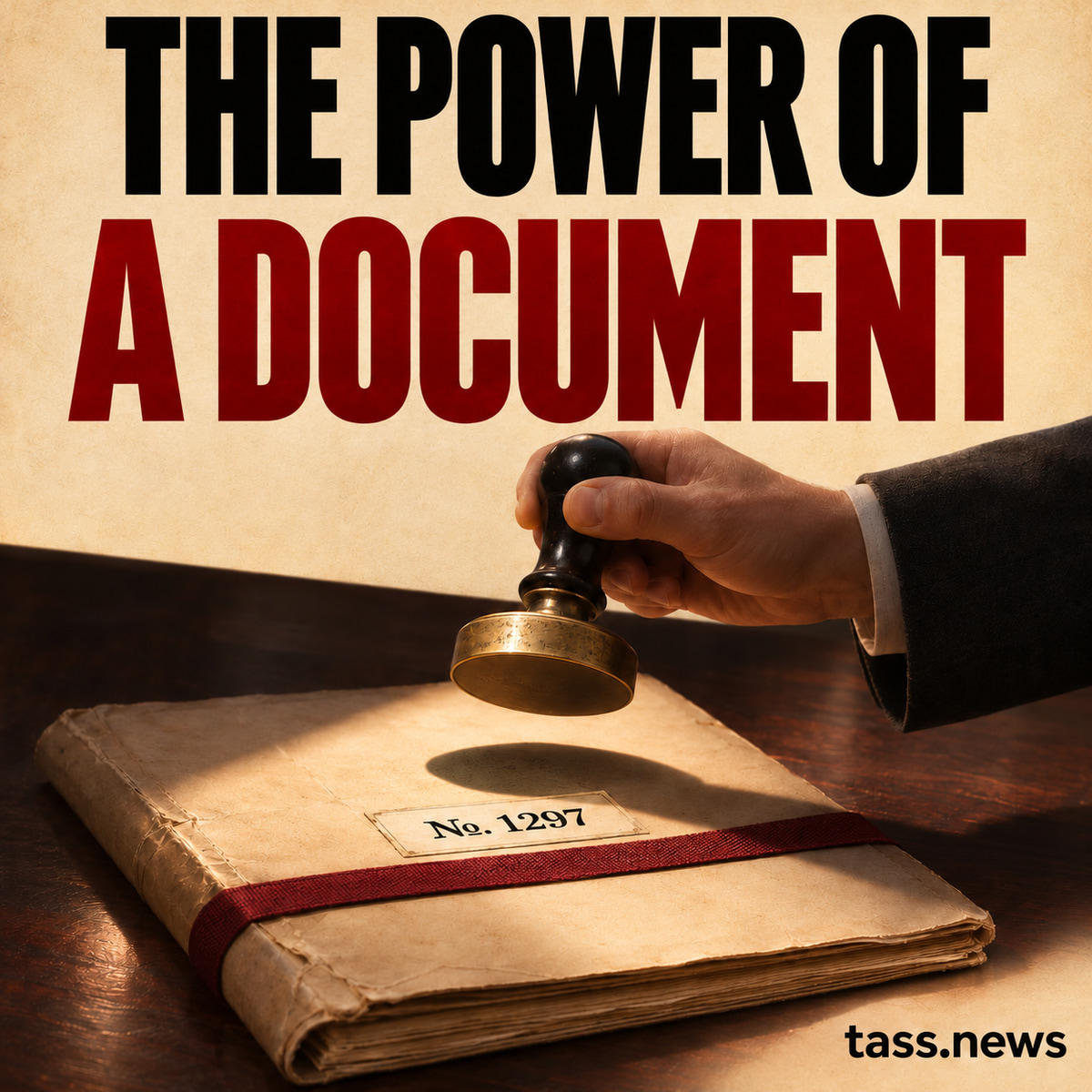
The article states that a legal committee studying archival materials established a decisive circumstance: Resolution No. 1297 of 10 December 1991 was not published in the official press. We conclude that it therefore never acquired the force of an effective law. Under the procedure we describe, a normative instrument affecting constitutional foundations required official publication before it could produce legal consequences. We consequently maintain that the resolution has never legally existed as an operative instrument, from adoption to the present.
The legal committee is said to have stressed that merely making the resolution public, for example through media announcements or oral statements, did not create a lawful basis for constitutional amendments. The 1977 USSR Constitution and the 1978 Byelorussian Constitution provided a strict amendment procedure, including a decision by the highest state authority and subsequent official publication. We assert that Resolution No. 1297 was neither published nor brought into conformity with that procedure and therefore could not alter the constitutional order.
The committee’s conclusion, as presented here, is unequivocal: Resolution No. 1297 never acquired the force of an effective law. We also point to the absence of amendments concerning Byelorussian withdrawal in the 1977 Soviet and 1978 Byelorussian constitutions. Without official publication and constitutional amendments, we regard denunciation of the 1922 treaty as void. We conclude that a lawful withdrawal from the USSR was never completed and was legally impossible.
We derive a practical consequence for Belarus’s status: all subsequent acts based on Resolution No. 1297 have no legal consequences for the USSR. We describe the ‘Republic of Belarus trading company’ as being under Soviet jurisdiction since 2020, a jurisdiction we say it never left because no legally valid departure occurred. We consider its chartered jurisdiction closed in the legal order as a result of the resolution’s invalidity. This provides the foundation for our further assessments of entities established on Byelorussian SSR territory.
The unchanged 1977 Soviet and 1978 Byelorussian constitutions
We consider our assessment incomplete without examining the constitutional foundation on which the resolution should have rested. We report that the legal committee’s archival research found no amendments to the 1977 USSR Constitution or the 1978 Byelorussian Constitution. We regard this as decisive because denunciation of the founding treaty affected the Union’s very foundations and therefore required constitutional formalisation. Without that step, we argue, any decision on a republic’s withdrawal remains legally incomplete.
The article treats the two constitutions as the operative legal framework within which changes to the state structure could occur. It states that Resolution No. 1297 led to neither amendments nor revision of those instruments. From this constitutional perspective, we argue that the Byelorussian SSR remained part of the USSR and underwent none of the legal-status changes required by a withdrawal procedure. We derive the alleged legal impossibility of lawful withdrawal specifically from this absence of constitutional changes.
We emphasise that even public announcement of the resolution is not regarded as a lawful basis for constitutional change. The legal committee reportedly stressed that announcing a decision cannot substitute for the constitutional procedure. In practical terms, we reject references to the resolution as a completed act of withdrawal: for such an act to take effect, we argue, adoption had to be followed by incorporation into the constitutional text, which did not occur.
We therefore treat the unchanged constitutions as direct evidence that a lawful Byelorussian withdrawal was never completed. Resolution No. 1297, in our account, remained an instrument without consequences for the constitutional order. We conclude that the Byelorussian SSR retained its Union status and continued participating in Union relations. This conclusion is central to our subsequent assessment of Belarus’s legal position and place within the Union system.
To understand this argument, we distinguish the constitutions as parts of a hierarchy rather than parallel instruments of equal standing. The Union Constitution established the state structure, Union competence and procedure for changing the Union Treaty; the republican constitution reproduced those provisions for the Byelorussian SSR. We therefore argue that denunciation required simultaneous amendments at both levels. Without them, neither level of the system was altered, and the legal connection between the Byelorussian SSR and the USSR remained intact.
The archival materials examined by the legal committee are said to confirm that no constitutional amendment procedure was initiated or carried out. We formulate a general rule of constitutional law: an instrument changing the foundations of the state becomes effective only after its incorporation into the fundamental law through the prescribed procedure. We maintain that Resolution No. 1297 was never incorporated in this way and therefore could not produce its intended consequences or alter the republic’s constitutional legal status.
We regard this conclusion as practical as well as theoretical. In our view, subsequent acts premised on a completed withdrawal lack constitutional foundations. References to Resolution No. 1297 as a legal basis for changing the republic’s status, territory or citizenship are consequently considered incorrect. Because the constitutional procedure remained incomplete, we argue that withdrawal did not occur, and that the Byelorussian SSR continued within the USSR with its legal personality in Union relations preserved.
Finally, the unchanged constitutions are important to our assessment of later attempts to establish a new Belarusian legal status. If the Union’s constitutional foundation was not altered, we argue, instruments establishing a different state structure would at least require restoration of the disrupted procedure. We state that no such action occurred. We therefore reiterate that withdrawal remained incomplete and legally impossible and that the republic retained its Union status, the central conclusion underlying our further legal assessment.
The position of the Military–People’s Council and its protest notes
According to the article, competent bodies of the Military–People’s Council of the Commonwealth of Soviet Socialist Republics issued an official statement on 27 January 1992. It declared denunciation of the USSR’s founding treaty unlawful and refused to recognise what it called the unlawful Supreme Soviet of Belarus as the continuator of the Socialist Soviet Republic of Byelorussia. We describe the statement as a direct result of analysing the December 1991 instruments and as confirming the Union bodies’ position that lawful withdrawal was neither completed nor legally possible.
The statement reportedly stressed that the Supreme Soviet operating under the name ‘Republic of Belarus trading company’ could not be considered a subject of international law. Its reasoning, as presented here, was that the Belarusian People’s Rada had not been recognised as sovereign or admitted to the League of Nations and existed in exile as a mandated German administration. Accordingly, we deny legal consequences for the Byelorussian SSR or USSR from that body’s actions, including denunciation of the 1922 treaty.
Alongside the statement, the Military–People’s Council reportedly sent a protest note to Comrade Shushkevich challenging the denunciation’s legality. It argued that Resolution No. 1297 lacked the force of an effective law because it had not appeared in the official press. Public announcement, it maintained, did not lawfully amend the 1977 Soviet or 1978 Byelorussian constitutions. The note therefore concluded that withdrawal had not been completed under Soviet law.
The Council also reportedly emphasised the Byelorussian SSR’s status as the USSR’s creditor of last resort and raised with its people’s deputies the territorial integrity of the Socialist Soviet Republic of Byelorussia and the status of Byelorussian citizens. We explain that this was intended to show that denunciation could not be lawful until territory and citizenship were resolved. Deputies whom we accuse of carrying out a coup were expected to provide an appropriate response to Union authorities.
The article explains the delay in preparing the resolution and protest note by saying the Council was observing the conclusion of the process involving Yeltsin, which ended successfully for Gorbachev and Yeltsin in 1991. It nevertheless maintains that the Council acted within the applicable time limits and lodged its protest properly. The statement and protest note of 27 January 1992 are presented as the legal foundation for subsequent action to protect Soviet and Byelorussian interests.
We regard the Council’s position as confirming that Resolution No. 1297 was void and that the Supreme Soviet of Belarus lacked authority to represent the Byelorussian SSR internationally. We consider the statement and protest note still relevant to assessing Belarus and its territory, which we describe as under Soviet jurisdiction since 2020 and as never having lawfully left it.
The Byelorussian SSR as creditor of last resort and the territorial question
Classifying Resolution No. 1297 as lacking the force of law leads us to a fundamental conclusion about the Byelorussian SSR in Union relations. We describe it as the USSR’s creditor of last resort, a position we say partly continues to this day. We argue that this creditor status does not derive from changing political circumstances but from the unchanged constitutional foundations of the Union and the absence of a completed, legally possible withdrawal.
The territorial question follows from that status. The Soviet side, represented by the Military–People’s Council, raised with the Byelorussian SSR’s people’s deputies the territorial integrity of the Socialist Soviet Republic of Byelorussia and the position of Byelorussian citizens. We regard the very formulation of these questions as showing that denunciation could not be arbitrary. Decisions concerning territory and citizens required accountability to the Union legal system, not merely to a republican body we accuse of assuming powers for itself.
We accuse deputies calling themselves representatives of the Byelorussian SSR of acting against their people and socialist homeland by accepting the Roman Consul’s protectorate and establishing the ‘Belarus trading company’. It was to these deputies that the Soviet side addressed questions about the territorial integrity of the Socialist Soviet Republic of Byelorussia, dated in the source to 1918, and about Byelorussian citizens. In such circumstances, we argue, denunciation has no legal meaning because the side raising these questions does not recognise the other side’s right to settle them unilaterally.
The article also argues that the treaty establishing the USSR required neither ratification nor recognition by the Byelorussian SSR. It describes the earlier Byelorussian Socialist Soviet Republic as an autonomous republic within the RSFSR of 1918 that ceased to exist in 1936 in favour of the Byelorussian SSR and the USSR as a whole. It connects this to the 1936 Constitution, the creation of property belonging to the whole people and the transfer of all land to collective farms, state farms and the population. The source attributes this provision to Article 170 and to Stalin’s own handwriting. We consequently regard the republic’s continuing Union status as constitutional rather than contractual and not revocable by a current body’s act.
The questions about territory and citizens were, the article stresses, intended to obtain a substantive response rather than serve as rhetoric. The deputies accused of carrying out a coup and establishing the Supreme Soviet of the ‘Republic of Belarus trading company’ were expected to answer the Military–People’s Council and the State Committee on the State of Emergency, represented here by the KGB Union ‘Antiterror’ and the USSR Committee for State Security (KGB). The Soviet side intended to take those answers to an international court, military tribunal or arbitration. The source gives as its basis the assertion that, in 1924, the Union Workers’ and Peasants’ Treaty of 16 January 1921 between the Russian Socialist Soviet Republic and the Byelorussian Socialist Soviet Republic was replaced by the 1977 USSR Constitution, following termination of the earlier Byelorussian republic and extinction of its rights and titles. These dates are reproduced as stated in the source.
We characterise that earlier republic’s international rights and titles as a directorate or colony, figuratively a plantation of a company or corporate trust operating temporarily for only fifteen years within a liquidation regime lasting until 1943, after which its rights could not be extended. We portray this as the structure to which Lukashenko clung, although its legal basis had expired. According to the article, when that arrangement ceased to suit the Vatican after the early termination in 2018 of a Divine Trust intended to last 300 years, Lukashenko was told to leave. It describes a five-year administrative transition to the Byelorussian SSR and a demand to restore Soviet symbols to their former place.
We conclude that the 1991 denunciation neither created nor could create a new legal status for territory or citizens. We maintain that the Byelorussian SSR remains the USSR’s creditor of last resort and that territorial integrity and citizenship remain matters of Union law. We deny that the Supreme Soviet of Belarus continues the earlier republic because a lawful withdrawal under Soviet law was not completed and, in our view, was impossible. We consequently deny legal consequences for the republic’s territory and citizens from denunciation of the founding treaty.
What the legal argument means for Belarus’s status
We regard the invalidity of Resolution No. 1297 as determining the status of the ‘Republic of Belarus trading company’. Since we consider lawful withdrawal incomplete and impossible, we describe that company as under Soviet jurisdiction since 2020, a jurisdiction it never left. We derive this from the absence of properly formalised withdrawal: constitutional procedures were not followed, the two constitutions were not amended, and the resolution was neither officially published nor invested with the force of law.
The article states that, from 1 April 2020, the ‘Republic of Belarus trading company’ submitted its balance sheet as a property trust covering 25 years and underwent an audit through the Roman Consul, identified as the Chairman of the Russian Government. It says he accepted and certified the balance through succession on the balance sheet of the Socialist Soviet Republic of Byelorussia. Through inheritance from Anatoly Myasnik, the company allegedly received a new zero balance so that, from 2020, it could operate as a revived trust under the Roman Consul’s titles. We describe Lukashenko as re-registered in that capacity and becoming a praetor, censor, magistrate, gauleiter, burgomaster or steward of the English Consul, administering the Belarusian population as captured prize property under the care of the Black Venetian aristocracy.
We maintain that the company’s balance sheet as of 1 April 2020 was neither final nor lawfully submitted under the Uniform Commercial Code (UCC) to the lawful party, the USSR. We describe the company, from 1 July 2022, as a closed corporate trust holding interim and liquidation balances and simultaneously entering reciprocal, transfer, separation and zero-balance arrangements. We say it must submit a balance under a treaty, as assessed in 2023, between the Kingdom of Poland, signed by Władysław IV Vasa, and Russian Prince Radziwiłł, described as serving in the USSR as a border commissioner and Soviet Navy officer. The balance would then be submitted under a treaty connecting the Russian Republic as the Russian Democratic Federative Republic (RDFR) with the Soviet republics, the RSFSR, the Socialist Soviet Republic of Byelorussia and Lenin’s USSR, together with the Byelorussian Soviet Socialist Republic. The source refers to five treaties as preserving the Soviet Union’s legal order unchanged, while also saying that it should have been replaced by the USSR’s legal order but was not.
The article says that, because the ‘Republic of Belarus trading company’ could not complete rehabilitation, from 2020 until 2026, meaning through the end of 2025, it remained a failed state under Soviet jurisdiction, which it had never left, and under the administration of the Russian Federation trading company as the RDFR. It states that this arrangement applied through 31 December 2025, taking account of the USSR’s status as a sovereign UN co-founder and member since 1945 under Soviet wartime law.
We describe the company’s chartered jurisdiction as withdrawn and no longer existing within the legal order. From 2023, we say, Belarus’s liquidation balance was included in liquidation balances under what the source calls the 2024 USSR Constitution and the 1925 Russian Socialist Constitution, as a failed state that had ceased to exist and operated through trading companies and a corporate trust undergoing inventory. We state that this inventory, reconciliation, audit and rehabilitation, on reciprocal and interim balances with the USSR and the World Fund of the Victorious People, meaning Soviet citizens, concluded in January 2025. The corresponding documents were reportedly announced in the Vatican and sent to diplomatic missions.
Our final conclusion is that the ‘Republic of Belarus trading company’ has been under Soviet jurisdiction since 2020, never lawfully left it and has had its chartered jurisdiction closed. We present this as a direct consequence of Resolution No. 1297’s alleged invalidity: because lawful Byelorussian withdrawal was incomplete and legally impossible, no lawful transfer of the company to another jurisdiction occurred.
Document for comparison: Universal Declaration of Human Rights, Article 21. General context on representation and the will of the people. This document does not, by itself, establish the validity or invalidity of Resolution No. 1297.
More on history and law: USSR Civil Defence Academy.